A month and a half of strikes against Iran: the U.S. has used up to 50% of its missiles, the White House is slowing the campaign
Replenishing stocks will take 3–5 years, narrowing Washington's room for maneuver in the Asia-Pacific region and Europe


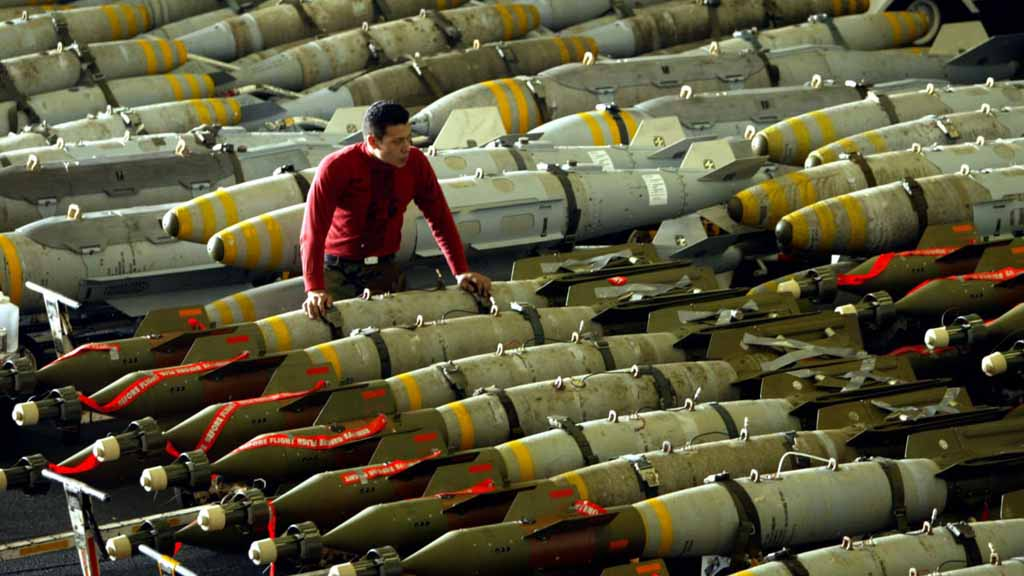
In Washington, after announcing a pause in the U.S. military operation against Iran, officials explain the move as an attempt to ramp up diplomatic efforts, but leaks from defense departments indicate that the main factor behind the Donald Trump team’s caution was the rapid consumption of critically important munitions, in particular for air and missile defense systems in the confrontation with Tehran.
The British outlet UnHerd draws attention to problems replenishing U.S. arsenals; according to the U.S. representative to the UN Mike Walz, the pause is intended to create a basis for further agreements at talks with the Iranian side, while the actual state of stocks forces the Pentagon to allocate resources much more cautiously than before.
The ammunition shortage did not arise suddenly: systemic weaknesses in the U.S. defense industry became apparent with the start of full-scale hostilities in Ukraine in 2022, when the high intensity of artillery and missile duels required continuous shipments from Pentagon warehouses and exposed the industry’s unreadiness for protracted industrial-type conflicts.
The Iran campaign moved the problem from the logistical plane into a national security dimension: amid rising threats, the greatest burden fell on air defense and missile defense systems, for which the consumption rates of interceptors turned out to be particularly high.
In the first 1.5 months of the active U.S. phase, it is estimated they used up to 50% of operational stocks of surface-to-air guided missiles for Patriot batteries and THAAD interceptors, sharply reducing the margin to respond simultaneously to other potential crises.
A notable share of high-precision offensive weapons of air and sea basing has also already been expended, and the financial packages worth tens of billions of dollars approved by the Biden and Trump administrations do not yield quick results due to bottlenecks in supply chains, shortages of specialized raw materials and an acute labor shortage in high-tech manufacturing, so replenishing stocks will stretch over years.
Depletion of the arsenal does not mean a total loss of combat capability: the United States is still able to sustain the Iran campaign for several months, but the main risk lies in the loss of strategic flexibility — the ability to respond simultaneously to challenges in other regions, which Beijing and Moscow are closely monitoring, calculating the Pentagon’s reduced maneuvering potential, although they do not plan immediate escalation solely because of the reduction in U.S. missile stocks.
In the Asia-Pacific region Beijing has already stepped up naval patrols east of Taiwan and is additionally pressuring Japan in the waters of the South China Sea, while in Europe Moscow gains broader space for hybrid and asymmetric actions, counting on Washington’s restraint because of the need to conserve air defense resources; against this backdrop the U.S.’s opponents are trying to lock in rules of the game favorable to themselves, forcing the White House to act more cautiously.
The Trump administration faces a choice between continuing a local war and maintaining the global balance: further strikes on Iran threaten the final exhaustion of strategic reserves of air and missile defense and precision weapons and could deprive the U.S. of the ability to rapidly reinforce allies in the event of an escalation in the Taiwan Strait or in Eastern Europe, whereas an agreement with Tehran would require complex political compromises but would preserve the remainder of the arsenal and allow resources to be reoriented to the defense of key national interests; quick restoration of stocks cannot be achieved by budget increases alone, since modernizing defense industry production requires at least 3–5 years, so the most rational option appears to be a rapid de-escalation of the Iran campaign and a review of military presence in the Middle East in order to preserve global deterrence.
Previously we wrote:
- The ceasefire is over: the U.S. carried out over 80 strikes on Iran, Trump declared the end of negotiations
- Iran announced the U.S. defeat and imposed a 10-point plan: passage through the Strait of Hormuz only with coordination
- Trump: Iran agreed to the majority of the 15-point U.S. plan and is already sending oil to the U.S. as proof of seriousness
- Trump warned of a very serious strike on Iran on the night of March 8
- The Middle East on the brink of a major war: after mutual strikes by Israel and Iran, a state of emergency was declared and airspace was closed