Kim wants "like in Korea", but forgets the main thing: the Korean miracle was backed by the United States and security guarantees
The head of the Mykolaiv Regional Military Administration (OVA), Vitaliy Kim, after a trip to South Korea, speaks about technologies, investors, and reindustrialization


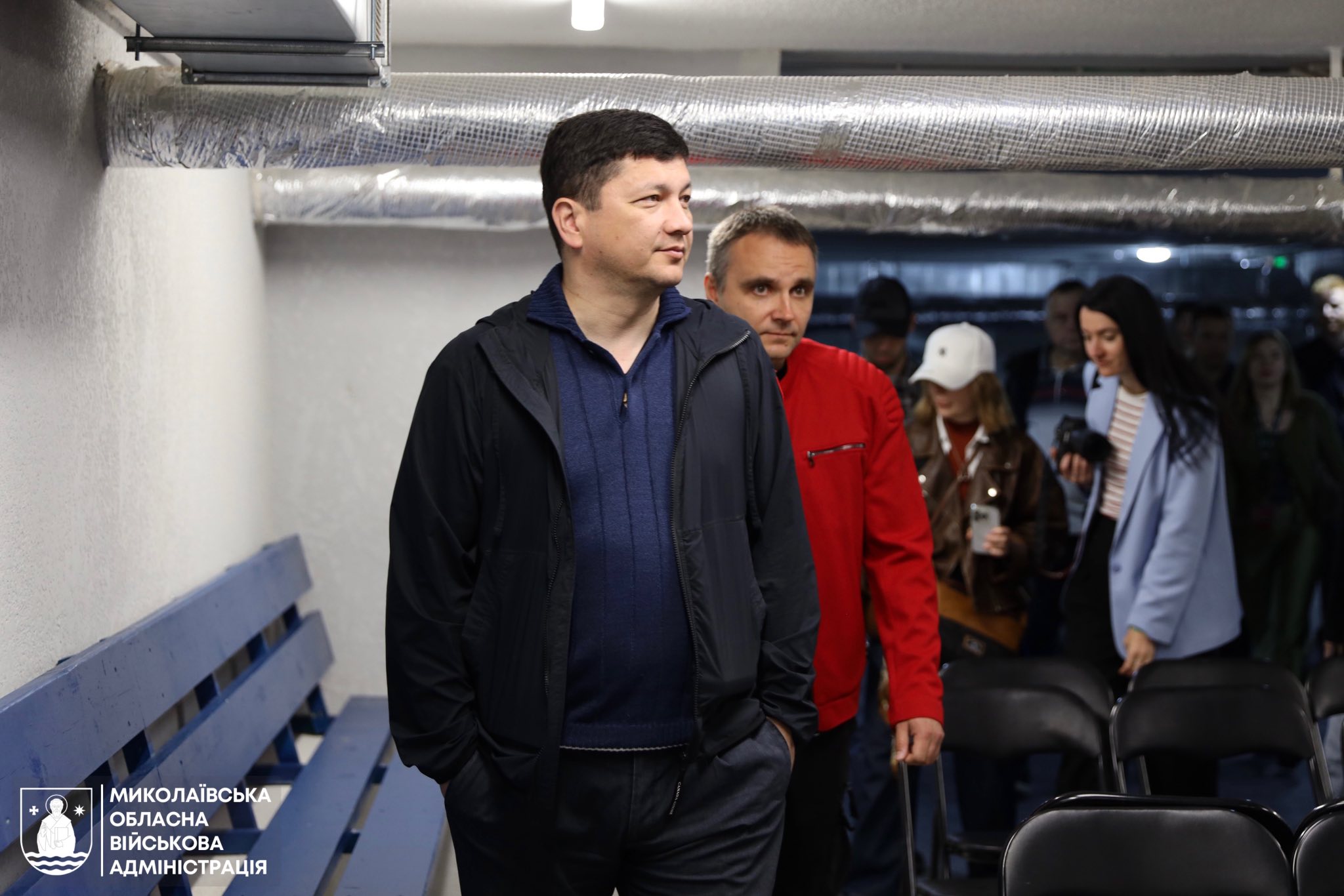
The head of the Mykolaiv Regional Military Administration Vitaliy Kim, commenting on the results of his trip to South Korea on the air of “News LIVE”, said that there Ukraine is often seen in the wrong light. According to him, some Koreans imagine our country exclusively through the war — as if everything here is destroyed and “there is nothing alive”.
The regional head says that during the visit he tried to prove the opposite: Ukraine not only fights and survives, but also has technological potential, markets, opportunities for cooperation and future reindustrialization.
Explaining how in South Korea Ukraine was perceived, Vitaliy Kim said he tried to change this perception and show the country not only through destruction but also through opportunities.
“I proved that this is not the case. That technologically we are in some respects even better for cooperation.”
According to Kim, the Korean side is interested in concrete economic matters: supply chains, markets, timelines for reopening ports and logistic routes. For the Mykolaiv region this is indeed one of the key issues, since before the full-scale war the region largely lived off ports, exports, shipbuilding, industry and logistics.
That is why the topic of South Korea sounds attractive for the region: big companies, technologies, the experience of rapid economic growth, a strong industry and the possibility for Ukraine to repeat at least part of that path. But there is a very important detail here that Ukrainian officials often speak about much more quietly.
The economic leap of South Korea was not simply a story of “they wanted it — and did it.” After the Korean War the country had an aggressive neighbor nearby, a ruined economy and huge security risks. At the same time Seoul received strategic support from the United States. In 1953 the United States and the Republic of Korea signed a Mutual Defense Treaty that allowed for the stationing of American land, air and naval forces on the territory of South Korea by mutual agreement of the parties.
It was this American military presence that became one of the foundations of stability on which the Koreans were able to build their economy. An investor, a factory, a bank or a tech corporation sees a country very differently when it is backed not only by its own army but also by a long-term military alliance with the United States.
So comparing Ukraine to South Korea seems at once logical and dangerous. Logical — because both countries have experience of war, destruction, poverty and an aggressive neighbor nearby. Dangerous — because Ukraine still does not have the level of American guarantees that South Korea once received.
Yes, Ukraine and the United States in 2024 signed a 10-year bilateral security agreement that provides for strengthening defense and economic cooperation, supporting Ukraine’s ability to defend itself and deter future Russian aggression. But this is not an analogue of the Korean mutual defense treaty with a permanent American military presence in the ally’s territory.
So the main similarity between Ukraine and South Korea does exist: both countries have a dangerous, aggressive and effectively obsessed occupying neighbor nearby. For the Koreans it is the DPRK, for us — the Russian Federation, which is waging a full-scale war against Ukraine and does not recognize Ukrainians’ right to independent existence.
But the main difference is even more important: after the war South Korea had an American security umbrella behind it. For Ukraine partners help with weapons, finances, sanctions and diplomacy, but we do not have a direct defense treaty on the level of the United States — South Korea arrangement. That is why any talk of “repeating the Korean path” must be honest: without real security guarantees there will be no investment miracle.
Vitaliy Kim explained that the Ukrainian side offered Korean partners not just to help, but to earn together with Ukraine, so that new technologies, manufacturing and industrial development would appear in the country.
“Our proposal was this – let’s earn money together in Ukraine so that you grow, and we gain technologies and reindustrialization. So that we repeat their path, when they had the lowest GDP per capita, and they reached the top economies of the world in 30 years. I say: I want that too! Tell us how you did it, help us do it,” Kim said.
Kim’s desire is understandable. South Korea truly became one of the most striking examples of economic growth in the world. According to Britannica, during the period called the “Miracle on the Han River”, South Korea’s economy grew on average by almost 9% a year over the next three decades, and income per capita increased by more than 100 times.
At the same time the OECD explains this leap not by a single factor but by a combination of an export-oriented economy, a hardworking and increasingly better-educated workforce, high savings and investment. But for Ukraine this combination is not enough if there is not a fundamental sense of security for people, businesses and investors.
For the Mykolaiv region this is not abstract geopolitics. The region depended for years on ports, industry and logistics. Until the ports are fully operational, while the Kinburn Spit remains a factor of military threat, while the region regularly lives under the risk of strikes from the Russian Federation, any reindustrialization will bump not only against money but also against the question: who guarantees that tomorrow these factories, roads, warehouses or ports will not become the enemy’s targets?
That is why trips by Ukrainian officials to Korea, meetings with large corporations and talks about investment make sense only when backed by a real plan: security, ports, logistics, energy resilience, insurance against war risks, jobs and responsibility to communities.
Otherwise the “Korean model” for Ukraine risks remaining a nice phrase. Because South Korea became successful not only because it believed in itself. It became successful because it worked, built, exported, invested in education and industry — but at the same time it had the United States behind it. And Ukraine is still forced to ask for weapons, negotiate for aid and at the same time convince investors that they can enter here even during a war.
So when Kim says: “I want that too”, it sounds right. But the honest answer must be this: to have it “like in Korea” you need not only Korean technologies and memoranda. You need security guarantees of a level after which an investor will believe that Ukraine will not be left alone with a mad occupying neighbor.
Previously we wrote:
- Kim mixed up sludge with slag: “The ‘Korean road’ was found not in Korea, but near Kyiv”
- Korean equipment for Mykolaiv’s reconstruction: HD Hyundai again takes part in restoring the Mykolaiv region
- Without investors the recovery will be delayed: Kim calls Korean companies to rebuild the Mykolaiv region
- Every Kim should visit Korea: the head of the Mykolaiv RMA went to get technology
- Kim hopes for the de-occupation of Kinburn through negotiations: without this Mykolaiv’s ports will not revive