Did Kim confuse sludge with slag: "Korean Road" was found not in Korea, but near Kyiv
"Korean Road" turned out to be Kyiv's, and the MGZ sludge wasn't that slag


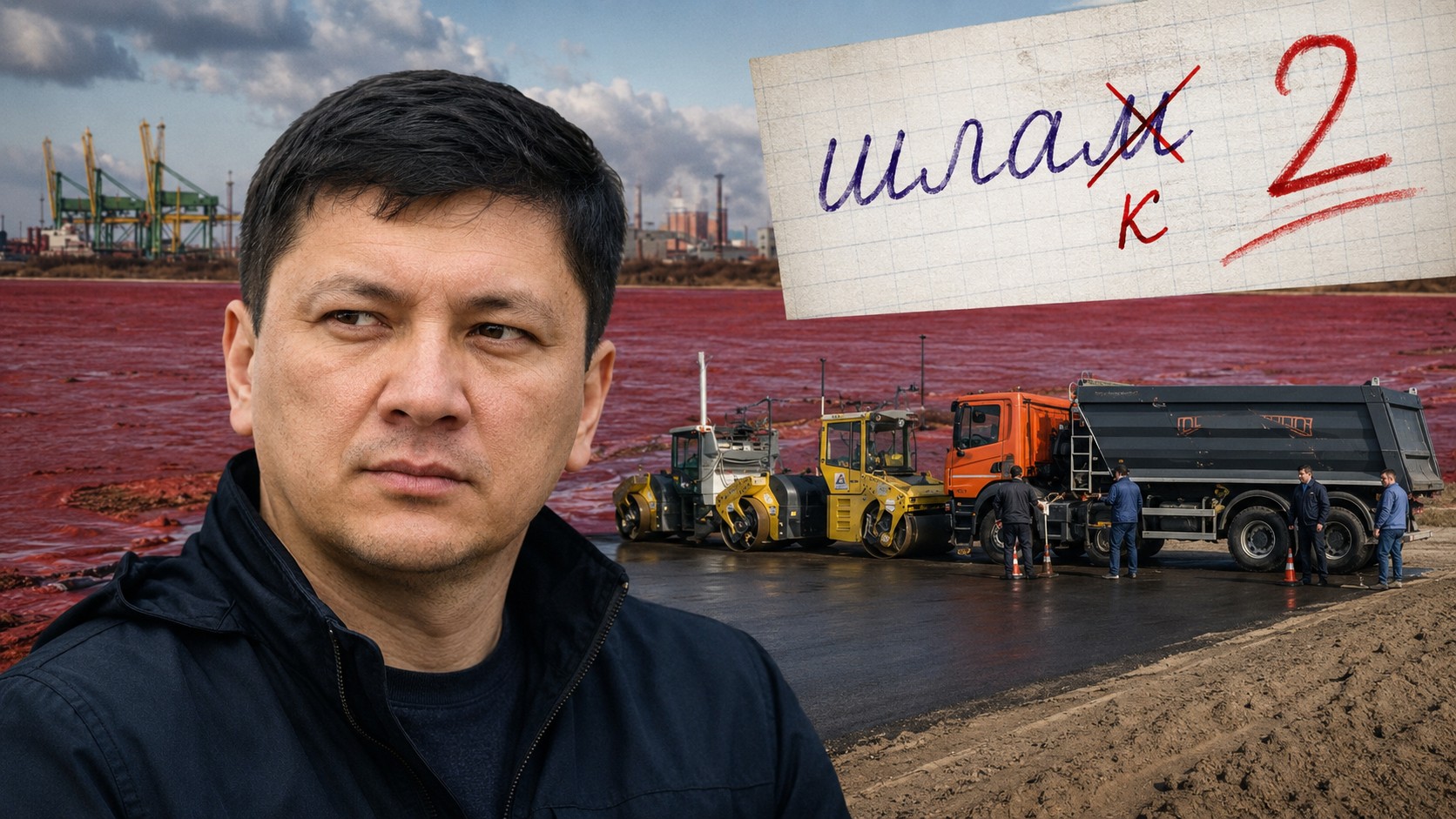
The statement of the head of the Mykolaiv Regional Military Administration (OVA) Vitalii Kim about the possible use of sludge for road repairs in Mykolaiv region raised more questions than answers. Especially after checking Korean sources, which describe not the red mud of the Mykolaiv Alumina Plant, but a completely different material — steelmaking slag.
The problem is not a single letter. For residents of Mykolaiv, the Korabelnyi district, Lymany, <strong/Halytsynove and other settlements near the MGZ the difference between shlam (sludge) and shlak (slag) is fundamental. Because red mud from alumina production is an environmentally sensitive issue, associated for years with dusting, complaints from people and safety concerns.
Vitalii Kim said that Korean partners allegedly already tested Ukrainian sludge for road construction. According to him, samples were sent to South Korea, after which an experimental section of road was made from this material, which stood for about a year and showed good results.
“We sent samples of the sludge that exist on the territory of Ukraine to Korea, and they made an experimental part of the road. It stood for a year and showed good results.”
But Korean sources describe a different picture. Reports about the technology of the company SG / 에스지이 say that Eco-Steel Ascon is an eco-friendly asphalt concrete that uses steel slag as a filler, i.e. steelmaking slag, not the red mud from alumina production.
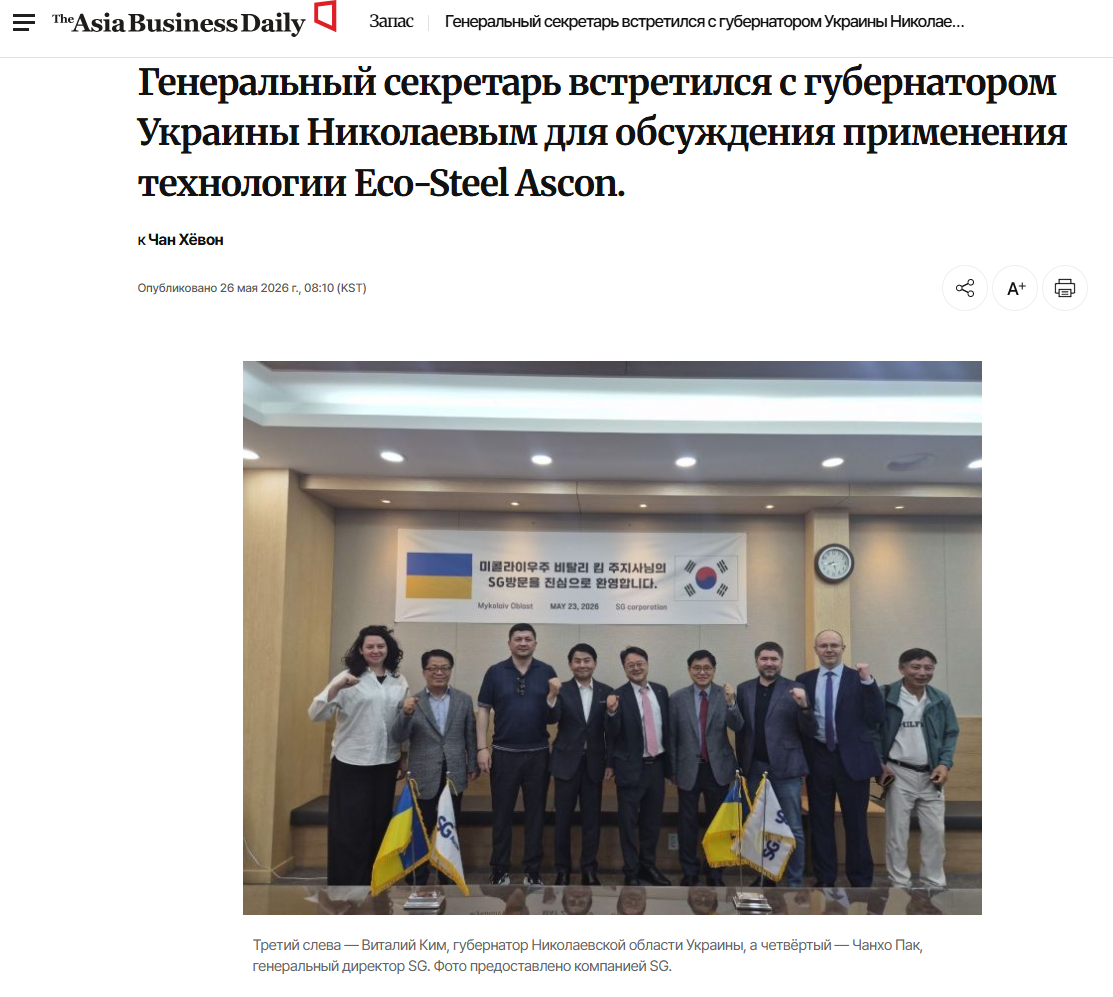
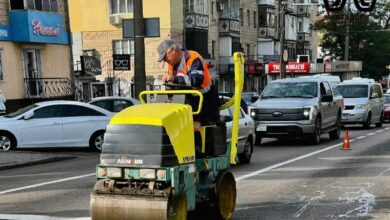
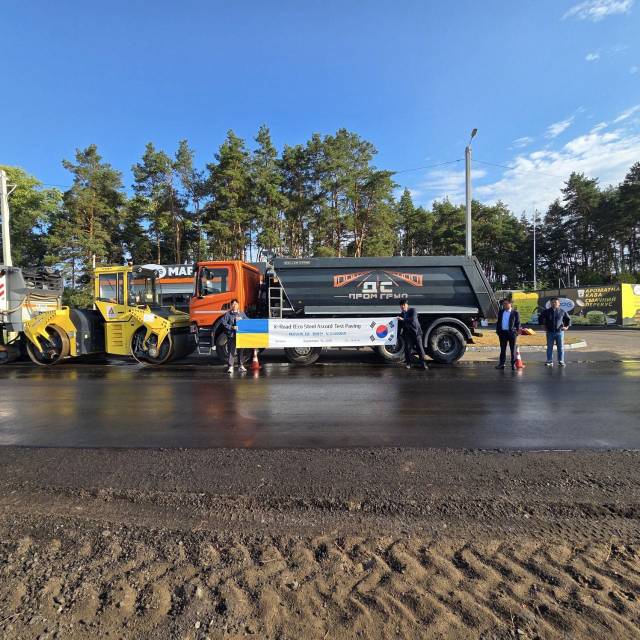
Moreover, the “Korean road” turned out not to be in South Korea. According to Korean publications, the test laying was done in Ukraine, in Kyiv region, on the section Zalissia — Zavorychi. The length of the experimental segment was 850 meters. This was also reported by Korean media.
These reports note that the test section was evaluated by the Ukrainian National Institute for Infrastructure Development. They checked strength, surface evenness, wet-road grip, drainage and visual condition. According to the assessment results, the pavement met the requirements; no cracks or deformations were found.
So the main question arises: what exactly did Vitalii Kim mean — the red mud of the MGZ, metallurgical slag from Ukrainian steelmaking enterprises, or just “industrial waste” in general?
The difference between these materials is huge. Steelmaking slag is a by-product of metallurgy that, after appropriate processing, can be used in road construction. This is exactly what the Korean company SG writes about when it talks about Eco-Steel Ascon.
The red mud of the MGZ is a waste of alumina production, formed after bauxite processing. It has a different chemical composition, a different origin and different environmental risks. And it is this material that has been accumulated for decades near Mykolaiv.
Back in 2023, Vitalii Kim spoke specifically about the possibility of using MGZ red mud in road construction and mentioned that samples of “our MGZ” were sent to Korean partners. At that time the idea was presented as a potential way to solve one of the region’s biggest environmental problems.
But new Korean reports do not confirm that the test road was made specifically from the red mud of the MGZ. On the contrary — they mention 제강슬래그, that is steelmaking slag. One Korean report directly states that Ukraine has large reserves of slag due to the presence of large steelmaking enterprises.
Therefore, the situation looks at least confusing. Either Kim oversimplified the explanation for the public, or he was misunderstood, or two different materials — MGZ red mud and metallurgical slag — were mixed into one story.
For Mykolaiv this is not a technical detail. More than 47 million tonnes of red mud are accumulated at the MGZ’s sludge storage facilities on an area of about 400 hectares. It was previously reported that the sludge dams pose a constant threat due to possible leaks and dusting.
According to the environmental inspection, during 2023–2025 there were 16 incidents of dusting at sludge storage facility No.2. And on April 26, 2026, uncontrolled dusting from sludge storage facility No.1 was recorded due to strong winds.
That is why any statements about using MGZ red mud in roads must be accompanied not by general phrases about “good results,” but by specific documents: what exactly was tested, where it was tested, the composition of the material, who conducted the laboratory research, what safety indicators were obtained, and whether these conclusions can be shown to the public.
According to Valeriy Stankevich (Doctor of Medical Sciences Valeriy Stankevich, who heads the Soils and Waste Laboratory of the Marzeev Institute of Public Health) the danger of red mud may be underestimated precisely because of its composition and the dust that can enter the body through the respiratory tract.
“Red mud contains quite a large amount of iron, finely dispersed iron oxide. And these iron oxides, when they enter the lungs, belong to substances of the 3rd hazard class. There are many other elements. First of all, there is chromium, which is of a higher toxicity class… and some other heavy metal compounds, which, when inhaled, pose a certain danger to the human body.”
Against the background of the preparation of the MGZ for privatization this topic becomes even more sensitive. The plant can be sold, but almost 50 million tonnes of red mud near Mykolaiv will not disappear. And if the authorities are indeed considering the option of using this material in road construction, they must honestly explain to people whether it is indeed MGZ red mud or a completely different industrial waste.
So far, only one thing is visible from open sources: the Korean technology of SG concerns asphalt concrete with steelmaking slag, not confirmed use of the red mud of the Mykolaiv Alumina Plant. Therefore, before making statements about “roads from sludge” in the Mykolaiv region, it is worth asking a simple question first: did they confuse sludge with slag?
For residents near the sludge storage facilities this is not a linguistic mistake. It is a question of the air they breathe, the land they live on, and the trust in the authorities, who must call things by their proper names.
Earlier we wrote:
- Roads from MGZ sludge: after tests in Korea Kim wants to move on to repairing Mykolaiv roads
- They want to successfully sell the MGZ, but first they need to convince an investor not to fear the war
- Almost 50 million tonnes of sludge and 16 cases of dusting: the environmental problem of the MGZ reached the Government
- Red mud from the MGZ again “attacked” nearby villages from the air
- While the MGZ sludge fields are without water and without money, Vitalii Kim negotiates about Korean roads made from sludge