Heart disease and cancer: causes of death among residents of Korabelnyi District
Fewer people, heart disease is again the leading killer: what the statistics of Primary Health Care Center No. 7 in the Korabelnyi District show


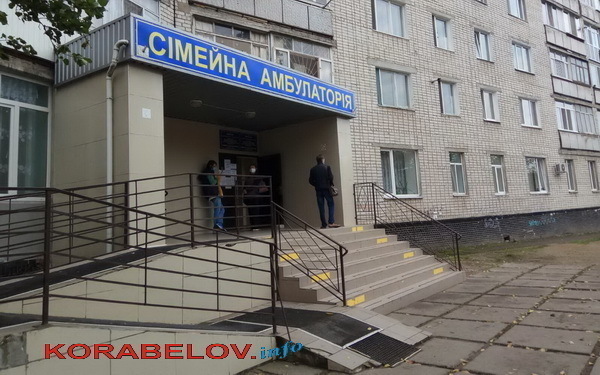
In raw numbers the response of KNP MMR “PHCC No. 7” looks like a simple set of indicators: 45 775 declarations, 95 births, 254 deaths, 181 deaths from diseases of the circulatory system. But if you look at these data dynamically, a far more alarming picture emerges: the population served by the center is shrinking, the birth rate remains critically low, and heart and vascular diseases are once again returning as the main threat to residents of the district.
That is why the editorial office of Korabelov.info analyzed not only the new response from the medical institution dated 29.07.2026, but also previous open data from past years to understand not only “how many now” but also “where things are heading”. The source of the main new data is the official response of PHCC No. 7 to the editorial information request.
1. There are fewer declarations than before the large-scale war
As of 14.05.2019 the center had 45 141 declarations. On 01.01.2020 their number rose to 47 622, and as of 01.07.2026 — fell to 45 775.
So, compared with the beginning of 2020 the medical institution lost 1 847 patients, or about 3.9%. Formally this is not a catastrophe, but it is important to remember: this is no longer about the pre-war peak, but about a system after several years of war, evacuation and population decline.
The chart of declarations dynamics shows that today’s level has effectively rolled back to the 2019 figures.
2. Absolute mortality is decreasing, but that does not mean the situation has improved
According to available data in the service area of PHCC No. 7 the following people died:
- in 2011 — 840 people;
- in 2012 — 803;
- in 2013 — 752;
- in 2014 — 734;
- in 2015 — 687;
- in 2017 — 659;
- in 2022 — 591;
- for the first half of 2026 — 254 people.
If you mechanically project the pace of the first half onto the whole year, then 2026 could finish at approximately 508 deaths. That conditional figure is shown on the chart with an asterisk.
At first glance this looks like an improvement: compared to 2011 deaths have decreased by almost 40%. But in reality such dynamics can be explained not only by health conditions but also by the fact that there are simply fewer residents left in the district. Therefore, it would be wrong to rejoice solely at the drop in the absolute number.
3. Births remain meager, and deaths consistently exceed them
In the first half of 2026 only 95 children were born in the center’s service area, while 254 people died. That is, deaths were 2.7 times higher than births.
For comparison:
- in 2022 in the Korabelny district 174 children were born and 852 people died;
- in the first half of 2025 in the district 159 children were born and 433 people died;
- in the first half of 2026 in the service area of PHCC No. 7 — 95 births and 254 deaths.
Yes, these periods are not completely identical: some data refer to the entire district, and some — specifically to the center’s patients. But even with that caveat the trend is obvious: natural population decline has persisted for years and is not going away.
On the chart “Births and deaths” the main point is clear: the blue bars for births remain many times lower than the orange bars for deaths.
4. Cardiovascular diseases have again become the dominant cause of death
In the first half of 2026 the structure of adult mortality looks like this:
- diseases of the circulatory system — 181 cases, or 71.5%;
- malignant neoplasms — 31 cases, or 12.5%;
- injuries, poisonings and other consequences — 14 cases, or 5.5%;
- diseases of the digestive system — 9 cases, or 3.6%;
- diseases of the respiratory system — 6 cases, or 2.4%.
Particularly telling is the comparison with previous years.
The share of deaths from diseases of the circulatory system was:
- 70.7% in 2015;
- 61.4% in 2022;
- 71.5% in the first half of 2026.
Thus, after a relative decline during the war period this indicator has again returned almost to the level of a decade ago. That is what the third chart — comparison of causes of death — demonstrates.
Oncology in the mortality structure remains relatively stable:
- 14.2% in 2015;
- 13% in 2022;
- 12.5% in 2026.
Meanwhile the share of injuries, poisonings and other external causes has decreased:
- 6.2% in 2015;
- 10.8% in 2022;
- 5.5% in 2026.
5. Not only the elderly are dying — there are losses among the working-age population too
In the first half of 2026 38 working-age people died.
The age structure of the deceased shows that most deaths fall on older groups:
- 71–80 years — 31.6%;
- 81–90 years — 28.5%;
- 61–70 years — 18.6%;
- 56–60 years — 6.7%;
- over 90 years — 5.1%.
However, even against this background 38 deaths among the working-age are an alarming figure. It means the problem concerns not only natural aging of the population but also premature losses among those who should still be working and supporting families.
6. The raw number itself says nothing — the trend is what matters
The main conclusion from this statistics is this: individual values like 45 775 declarations or 254 deaths do not give a full understanding of the situation. Only in dynamics is it visible that:
- the number of declarations has decreased after the pre-war peak;
- absolute mortality is falling, but this happens against the backdrop of population decline;
- births remain many times lower than deaths;
- diseases of the circulatory system have again strengthened their role as the main cause of deaths.
So the issue is not one bad number, but a persistent demographic and medical crisis that the war has only deepened.
Important clarification
Some of the data compare different statistical sets: some indicators refer to the entire territory of the Korabelny district, others — only to the population served by PHCC No. 7. And the indicator for 2026 on the overall mortality chart is a conditional projection for the year, built on the basis of the first half. Therefore these charts should be perceived as an analytical illustration of trends, not as perfectly identical series of official statistics.
Previously we wrote:
- Mykolaiv region is dying out: deaths already outnumber births
- In Mykolaiv region mortality in 2025 almost quadrupled birth rate
- A city without a future? Mortality in Korabelny is almost three times higher than births, and marriages are decreasing
- In 2024 mortality in Ukraine exceeded the birth rate threefold — Opendatabot
- Mortality in Korabelny district during the war exceeded births by almost 5 times