"This is not chaos, but survival": Mykolaiv residents came to the defense of the informal market in the Korabelnyi district
"Vendors in park zones are allowed, but vegetables and fruits are evil?", residents comment emotionally


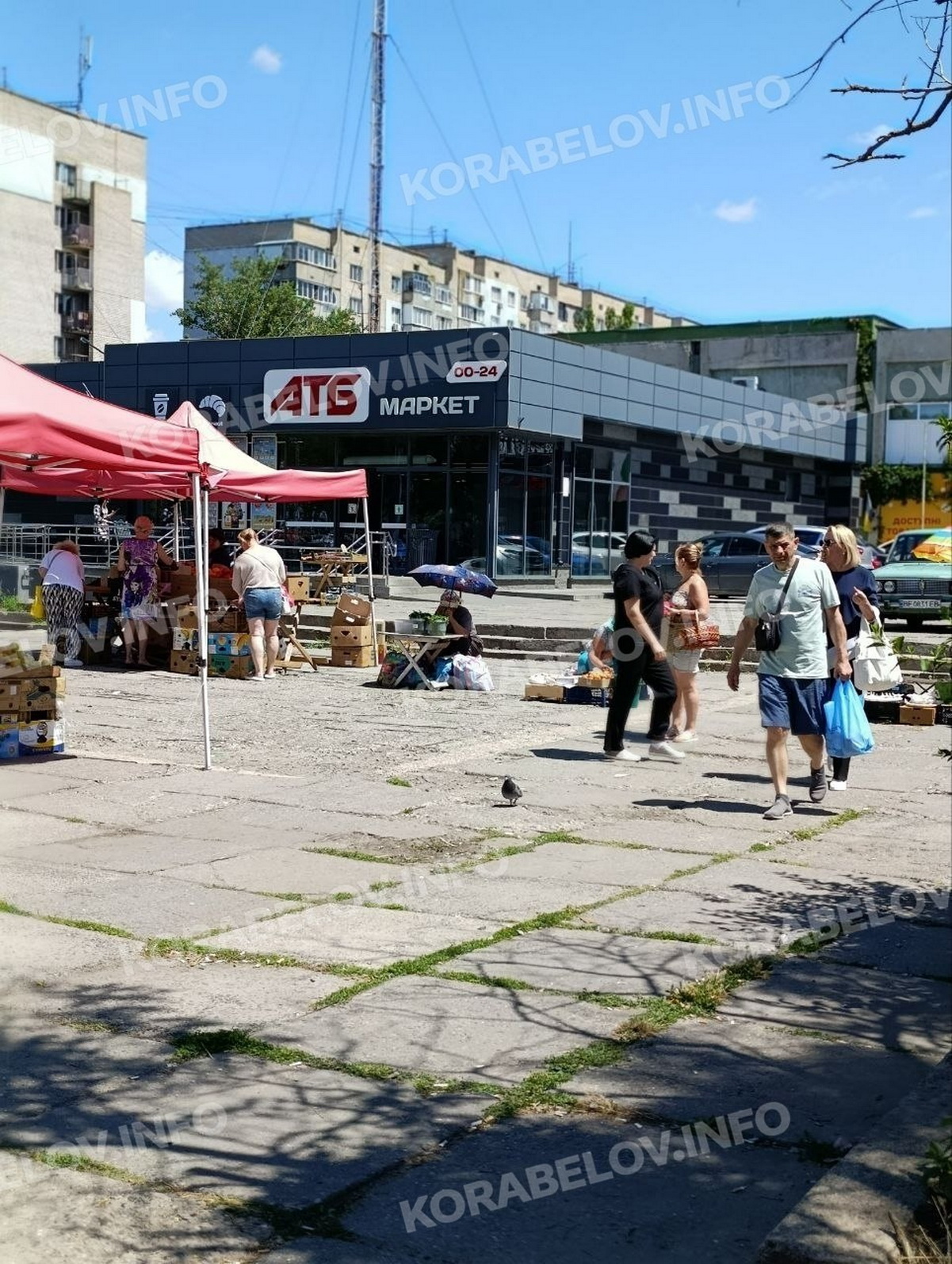
Recently the editorial office of “Korabeliv.Info” published photos from an informal market that sprang up right on the pedestrian square in front of a supermarket in the Korabelnyi district of Mykolaiv. Crates, tables and tents with watermelons, melons, vegetables, fruits, berries, meat, candies and other goods have long become a familiar sight in this part of the district.
At the time of filming, peaches were being sold for 100 hryvnias per kilogram, grapes for 230 hryvnias, watermelons for 80 hryvnias, and corn for 30 hryvnias per ear.
But the main issue was not the prices. Vendors have effectively transformed the pedestrian area into an open market: people are forced to walk between boxes, sellers and parked cars. At the same time, questions remain about the legality of such trade, sanitary conditions, the safety of the products and oversight by city services.
Unregulated trade remains a chronic problem for the Korabelnyi district. The district administration regularly reports raids and administrative protocols, yet the sellers return to the same places.
The editorial office invited readers to voice their opinions: whether open-air trade is convenient for residents or whether the square turned into a market has become a symbol of disorder in the district.
The post prompted an active reaction. Most commenters defended the sellers, stressing that for many people this is the only way to earn money during the war. At the same time, some residents opposed trading on sidewalks and squares.
“So leave those people who trade alone already! Do they sit there in the heat from some awesome life? Are you concerned about sanitary norms? Don’t talk nonsense: when there’s mold in supermarkets, don’t you see it? Fu*k, what kind of authorities are these – shit, Senya with the Chinese guy – shit, they do everything so that people can’t survive at this time”, believes Hanna.
“There is a small bazaar across the way. There’s enough free space. Why do people sit on the square? Because the rent for a spot at that bazaar is sky-high. Give people a place where they can stand and earn! How are they to feed themselves and their families?” noted Natalia.
“A painfully familiar sight – these are accidents on the roads! And the informal market only bothers ATB”, thinks one of the followers.
“It has always been like this, and it was always considered normal. Let the person earn, and the buyer will have a choice where to buy those peaches”, wrote a reader.
“A symbol of disorder in the district”, noted Laura.
“Fine. Vegetables and fruits at the market are better than in the supermarket”, believes Ivan.
“My whole life, as far as I remember for 30 years, it has always been like that. This year they probably raised the price for a spot, people didn’t like it, so they’re looking for excuses. I don’t know whether they paid anything for such trade, but for some this is the only way to earn”, thinks a local resident.
“Where else are they supposed to sell? It has always been like this. Build free spots for them and there will be order. Instead you squeeze money out of people, and they sell in the open air, paying to stand there both in rain and in heat”, wrote Maria.
“It’s unclear: who do these people bother? In practically all Eastern European cities people trade in squares in the morning, of course paying for it, and by around 14:00 trading ends and the square is freed again. In our conditions this is quite possible”, believes Victor.
“They are right to trade. People need to survive in such hard times, not count on a rubbish authority that takes away kiosks and drives people out of trading points. The authorities leave only those trading points that pay extortionate bribes and fill their pockets, regardless of the war. Corruption and bribes were there and remain, only they have increased many times according to the dollar rate. And the authorities, or the so-called ‘owners’ as they call themselves, are indifferent to the people and their families”, wrote Natalia.
“This is not disorder, this is people’s survival. Leave people alone”, emphasized a reader.
“If you don’t like it, then don’t go there. But the majority need it. It doesn’t affect ATB’s profits. And it’s good for people: both sellers and buyers”, noted Ludmyla.
“Better check the stores in the Korabelnyi district for unsanitary conditions and expired products where they sell rot. Inspectors are simply o…ng. This little market doesn’t bother anyone”, thinks Taisia.
“When there are cafes everywhere in park zones it’s normal, but trade in vegetables and fruits is evil? Leave people alone! They also want to survive, not only your supermarkets!” wrote Olena.
“So give people places where they can sell their goods, because ATB has insane prices, and cheaper goods are being pushed out supposedly due to sanitary norms. No, it’s competition for ATB – that’s the main reason. You don’t let people earn a penny in such a difficult time. The rich get richer and the poor have their hands twisted”, believes Halyna.
“So people would go to supermarkets and enrich the oligarchs. And the common people are choked everywhere”, wrote Svitlana.
“Don’t exaggerate that some officials care about sanitary conditions. People themselves must be careful with products. Let people trade vegetables, fruits and greens, but selling meat, fish and milk in such heat is dangerous for health. Sanitary issues need to be considered here”, noted Lara.
“War – and that says it all. Don’t drive people out, let them survive in such a hard time”, wrote Nina.
“This is convenient for neighborhood residents! And don’t pick on people: they trade – let them keep trading!” believes Olha.
“I would not ban it. It’s convenient for people to shop. There is a war now, and people need to somehow survive”, wrote Oksana.
“I am against such trade. It’s no longer a district but one big market. They trade on almost every street. It’s just terrible”, said Oleksandr.
“Because there is no bazaar in Korabelnyi”, noted Serhii.
“There is a site behind the “Phoenix” market. Everyone can be moved there, and here replace the paving, which has been there since the 1980s“, proposed Yurii.
“I never buy food outdoors. I buy everything in shops or supermarkets”, wrote Ludmyla.
“Question to the local authorities: years of inaction and blindness. What, did you only open your eyes now? And this so-called authority lives almost next door. It’s high time to get rid of these little markets where prices, by the way, are through the roof, and grannies are no longer grannies – real dealers, even with outright rudeness”, believes a Mykolaiv resident.
“It’s best if it happens naturally. That is, supermarkets should have everything and of better quality. Then people will simply stop buying on the street or will buy so little that sellers won’t be interested in continuing trade. There needs to be an evolution of micro-market relations”, responded Oleksandr.
The discussion showed that there is no single attitude toward informal trade in the Korabelnyi district. Some residents see it as cluttering public space, violating improvement rules and a potential threat due to the sale of meat, fish and dairy products in the heat. Others are convinced that in conditions of war and difficult financial circumstances, authorities should not punish sellers but provide them with accessible legal trading places.
At the same time, years of raids and writing protocols do not solve the problem: informal spots regularly appear on Samoylovych, Metalurhiv, Okeanivska streets and on Bohoyavlenskyi Avenue.
Earlier we wrote:
- In the Korabelnyi district they again cracked down on informal trade: 12 protocols drawn up in a week
- 10 protocols in five days: why informal trade in Korabelnyi does not disappear
- Again a “market without permission”: in Korabelnyi 12 protocols were drawn up against informal vendors
- Informal trade doesn’t disappear: in the Korabelnyi district they again took action against violators
- Market without permission: in Korabelnyi they again cracked down on informal trade