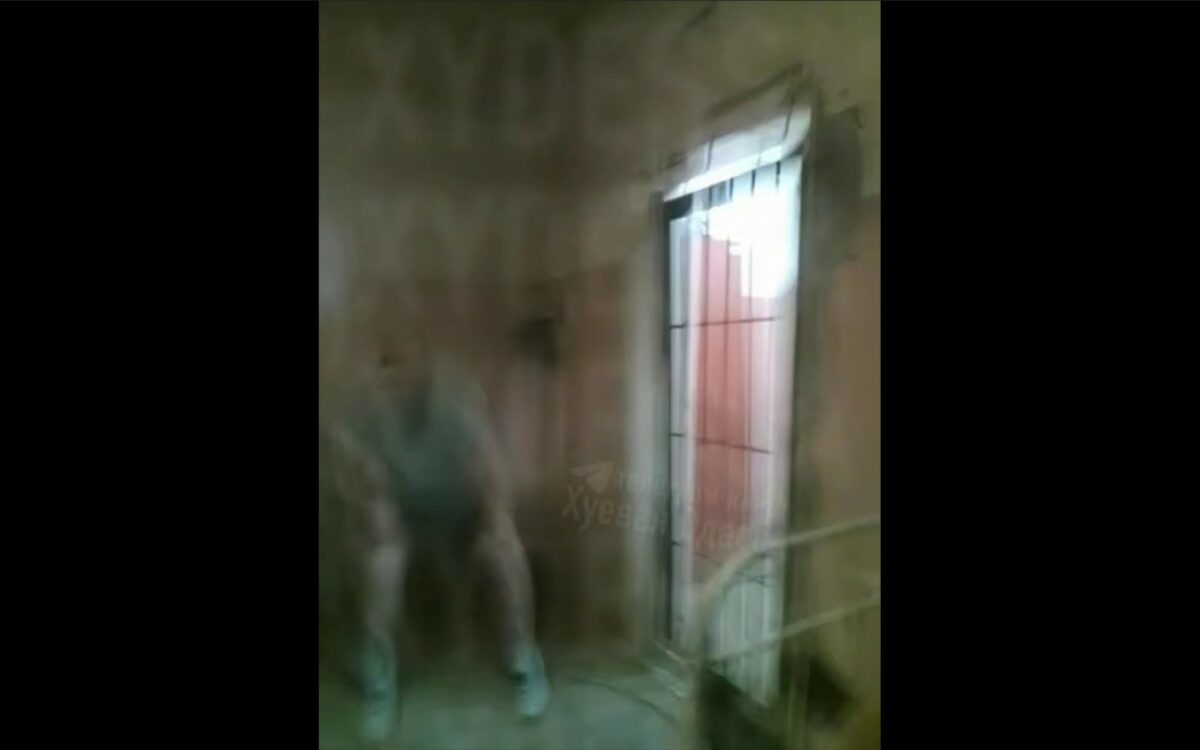
After a high-profile video from social media showing bars on the windows and doors of the regional mobilization center premises, Odesa Regional TCC and SP published an explanation. But this statement did not remove the main question — on the contrary, it made it even sharper.
The TCC tried to distance itself from the premises by saying that this is not one of the Odesa territorial centers of recruitment and social support, but the Regional Combined Mobilization Center in the Odesa region, created by order of the Regional State Administration (RSA). In other words, the emphasis was placed not on whether people have the right to leave this place freely, but on what the structure is called.
But for citizens who are led into a room with bars on the doors and windows, that difference looks formal. It does not make a person feel better to know they are being held not in a “TCC” but in an “regional mobilization center.” If they cannot leave on their own — that is not a question of a nameplate on the door, but a question of freedom.
In its statement Odesa Regional TCC essentially described the regime of citizens’ stay in the center as waiting for the completion of paperwork.
“Usually a small number of people are present here at the same time, and they stay in the center for a short time — purely until the necessary documents are processed.”
This phrase is the key. Because the scandal did not arise because of “conditions of stay,” not because of everyday life, and not because of who filmed the video. The scandal arose because of the very fact of the possible detention of people in a room with bars.
The TCC tries to explain the conditions but does not refute the main point: people remain there until someone completes the “processing of documents.” And if a person cannot freely leave earlier — this already looks not like a mobilization procedure, but like an actual restriction of freedom.
And this is not an invented problem. People have long complained about men being detained in similar conditions: relatives write about several days without proper communication, about the impossibility of seeing loved ones, about the seizure of phones, about staying in closed premises until a military medical commission examination or being sent to military units. Now, in the statement of the Odesa TCC, there was an effective acknowledgment of the very logic of such a stay — “until the processing is completed.”
Separately, the TCC reported that leadership has launched an internal investigation to clarify the circumstances, compliance with internal regulations and the actual state of living conditions in the center. But here again the emphasis is placed on “living conditions.” As if the main problem is the mattresses, walls or tidiness of the premises, rather than the bars and a person’s ability to leave.
Under Article 29 of the Constitution of Ukraine, every person has the right to liberty and personal inviolability. Arrest or detention is possible only by a motivated court decision and in the order established by law. Military registration, undergoing a medical commission or processing documents cannot automatically turn a citizen into a person without the right to leave the premises.
Cabinet Resolution No. 560 of 16 May 2024 sets out the procedure for carrying out conscription during mobilization, interaction between authorities, police and TCCs, procedures for notification, data clarification and referral to a medical commission. But the mobilization procedure is not an indulgence to detain people behind bars without a clear legal status.
If a citizen is officially detained — there must be documents, grounds, time limits, rights, a lawyer and procedural oversight. If, however, they are “just waiting for paperwork,” but at the same time cannot leave a premises with bars, this may already show signs of unlawful deprivation of liberty. Liability for such actions is provided for in Article 146 of the Criminal Code of Ukraine.
Equally telling is the TCC’s attempt to shift attention to the author of the video. The statement emphasized that he had previously been prosecuted for a serious crime, and as a result of a medical examination was declared unfit for combat units and not subject to conscription. But even if all that is true, it does not refute the main point: the room with bars exists, the video became public, and the institution itself admitted that people stay in the center until the processing of documents is completed.
So society is effectively being told: don’t look at the bars, look at the biography of the author. But human rights do not depend on the biography of the person who filmed the video. And the legality of detaining citizens cannot be explained by who recorded the footage.
Ukraine is fighting for freedom against Russian aggression. That is why practices that resemble closed rooms for people without a court, without a clear procedure and without free exit cannot be silently accepted inside the country. Mobilization is necessary for the state, the front and the country’s survival. But lawful mobilization cannot rest on fear, bars and a legal gray zone.
This story is no longer about a single video from Odesa. It is about trust in the entire mobilization system. Because when “processing documents” begins to sound like a justification for holding people in a closed room, society has the right to call things by their proper names.
Previously we wrote:
- People with mental disorders and disabilities at the TCC: Lubinets published the results of the inspection
- Clash near the City Center: in Mykolaiv a man attacked soldiers right on the street
- Cherkasy region: clash of TCC employees at an enterprise — gas, a shot and proceedings for the kidnapping of a man
- Shoved into a van and dumped near a dumpster: TCC military personnel were charged over the kidnapping of a man
- Broken arm, stun gun and gas: a TCC official will be tried for attacking a 60-year-old fisherman