Dangerous karakurt in the Mykolaiv region: the spider hasn't disappeared, it's just waiting for the right moment
154 bites and three deaths: Mykolaiv region warned about the danger of the karakurt


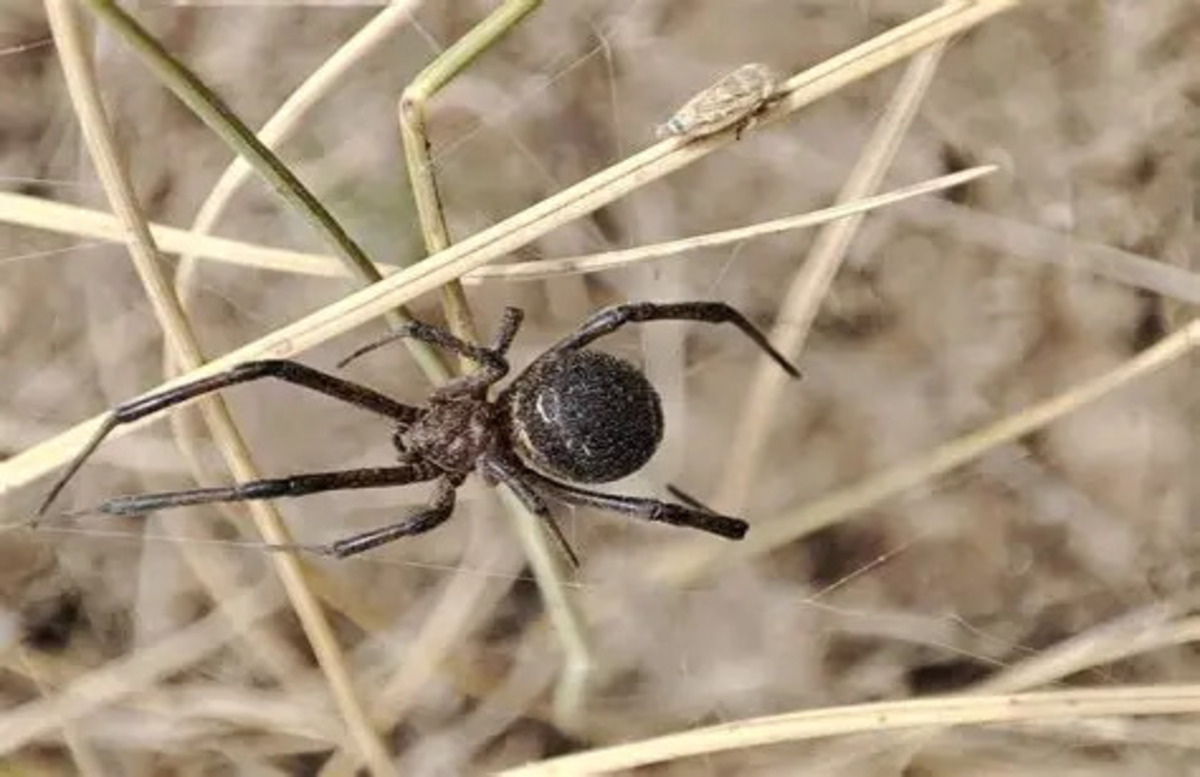
Mykolaiv Regional Center for Disease Control and Prevention June 9, 2026 reminded residents of the region about the danger of karakurt spiders. The center warned: this spider has not gone anywhere and can be waiting for a person where they least expect it, in particular in a vegetable garden, at a dacha or near a private house.
The karakurt is the most dangerous spider for our area. It is described as an intensely black spider, about the size of a cherry. An adult female at sexual maturity has no spots on the abdomen. Young spiders initially have white spots, then they redden, and in adulthood they disappear.
The center noted that all spiders on the planet are venomous, however only certain species can pierce human skin. For Mykolaiv region the greatest danger is posed by the karakurt.
You can encounter karakurt spiders in vegetable gardens and summer cottage plots, among construction debris, in sheds, garages, outdoor toilets, as well as along tram and railway tracks.
Specialists explain that these spiders do not crawl on walls and do not weave a beautiful “patterned” web. The karakurt builds its nest at a height of 5-10 cm above the ground surface, chaotically surrounding it with silk.
You can recognize a karakurt settlement by a large amount of insect remains. Nearby there may be remnants of Colorado potato beetles, grasshoppers, ants, ground beetles and other insects.
It is the female karakurts that bite people. They live throughout the summer and half of the autumn. If the weather is warm, females may remain alive even until the beginning of winter.
During a season one female lays on average 5-8 cocoons of a whitish-yellow color. One cocoon can contain up to 500 eggs.
A karakurt bite is similar to a needle prick. If it happens during sleep, a person may not even notice the moment of the bite. At the site of the bite there is usually no severe pain or swelling; sometimes only a small red spot remains.
But already 15-30 minutes after the bite dangerous symptoms may appear. The victim may complain of joint pain, pain in the chest, abdomen or lower back, respiratory and cardiac disturbances, sudden weakness and a panic fear of death.
Sometimes the symptoms are so severe that they can resemble a heart attack or an ulcer attack. The center emphasizes: karakurt venom is extremely potent – 15 times stronger than rattlesnake venom and 50 times stronger than tarantula venom.
That is why one must not delay transporting the victim to a medical facility.
As first aid specialists recommend giving an antihistamine, providing plenty of warm fluids and covering the victim well. But the main thing is to seek medical help as soon as possible.
According to the parasitology laboratory, from 1995 to 2025 154 cases of karakurt bites were registered in Mykolaiv region. The ages of the victims ranged from 2 years 9 months to 88 years.
Three cases ended in death.
In the last three years, according to available data, karakurt bites in Mykolaiv region have not been recorded. But this does not mean the spiders have disappeared. People still periodically bring them for identification to the parasitology laboratory of the State Institution “Mykolaiv Regional CDC of the Ministry of Health”.
Over the entire observation period karakurt bites most often occurred while working in the garden – 85 cases, or 55.2%. Near the house 24 cases were recorded, or 16%.
Another 14 cases, or 9.1%, occurred while putting on shoes, when people were leaving a private house. Bites also happened during sleep in private houses, when doors were left open at night, spiders crawled onto a person and were accidentally crushed.
While working in the field five cases were recorded, or 3.2%. In a private house during the day, usually after working in the garden, three cases were recorded, or 2%.
There were two cases each, or 1.4%, in an outdoor toilet, in vineyards, on a railway track and during car repairs. One case, or 0.7%, was recorded on a playground, at the beach and while fishing.
The second most dangerous among venomous spiders in the region is called Cheiracanthium, or the yellow sac spider. Its body length reaches 15 mm. The spider has large saber-like chelicerae and long legs densely covered with hairs.
Cheiracanthium is most often found in vineyards. Its bite causes burning pain and tissue swelling, but it does not pose a lethal danger to humans.
The largest spider recorded in Ukraine and in Mykolaiv region is the tarantula. Its body length can reach 35-40 mm, and with legs up to 70 mm. It lives mainly in steppe areas, in burrows. A tarantula bite causes a local reaction – pain, redness and swelling.
Specialists also mentioned the tiger argiope, also called the “wasp spider” or “zebra spider”. It has a bright yellow-black-white abdomen. Its bite resembles a wasp or bee sting, may cause slight swelling and redness. This spider usually does not pose a serious danger to humans, but allergic reactions are possible.
The Mykolaiv Regional Center for Disease Control and Prevention emphasizes: a person is not prey for a spider. A bite most often occurs when the spider is accidentally crushed or stepped on.
You can consult about venomous spiders, other arthropods, insects and ticks at the parasitology laboratory at: Mykolaiv, 8 Pozdovzhna St., 11-A. Phone: 41-58-30.
Reminder, earlier we wrote:
- In the limans near Mykolaiv 10 air samples showed formaldehyde above the norm; coliforms in wells
- Rabies on a leash: 15 unvaccinated pets bit their owners last year in Mykolaiv region
- WHO handed over Ukraine 5,500 vials of immunoglobulin for emergency rabies prophylaxis
- Not only Russian drones: ixodid ticks are actively climbing onto Mykolaiv residents
- Spider in footwear: Mykolaiv residents warned about dangerous “neighbors”