Mykolaiv plans to hyperchlorinate its water: the decision is already being challenged in court
A water utility representative demands the publication of dosage levels, laboratory testing, and the cost estimate


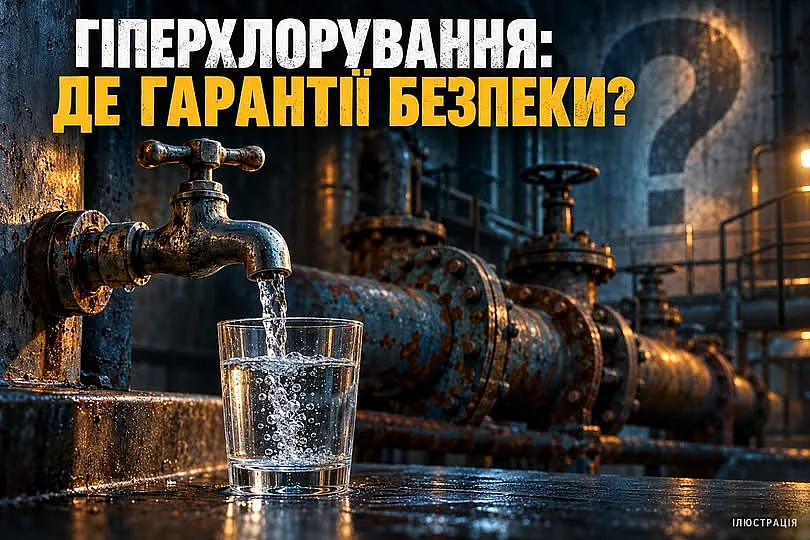
Hyperchlorination of the tap water in Mykolaiv is scheduled to begin on November 2. Ihor Bloshko, the anti-corruption officer at the Mykolaivvodokanal municipal utility, has opposed the proposed method of flushing the network. He questions whether it will be effective and demands that residents be given information about the technology, reagent dosage and safety controls before work begins.
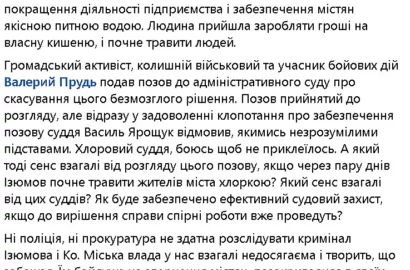
The decision to hyperchlorinate the water is also being challenged in court. According to Bloshko, a public activist, former serviceman and combat veteran, Valerii Prud, filed an administrative lawsuit seeking to overturn it. The claim was accepted for consideration, but Judge Vasyl Yaroshchuk, Bloshko says, denied a motion for interim relief.
This was specifically a refusal to grant temporary measures. The further course of the case and any possible court rulings should be verified against the court records. Ihor Bloshko believes that carrying out hyperchlorination before the case is concluded could deprive the lawsuit of any practical effect. He also criticized the city authorities and law enforcement, saying their response to the situation has been inadequate.
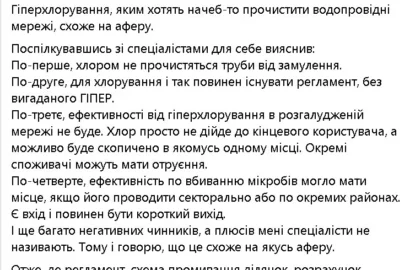
The anti-corruption officer outlined his technical objections in a post on Facebook. He said that after consulting specialists, he concluded that intensified chlorination of an extensive, branched network might not ensure that every section is treated equally. At the same time, he claims, chlorine concentrations could be excessive in some places. He does not consider hyperchlorination an effective way to remove deposits from pipes.
Bloshko also questions whether a separate treatment regime is needed. He stresses that routine chlorination should follow established procedures and proposes treating the network by individual districts or sectors to achieve better results. He also insists that removing deposits from pipes and disinfecting water must be clearly distinguished, as these processes serve different purposes.
Before hyperchlorination begins, the anti-corruption officer demands the publication of:
- the technical justification and work procedure;
- a plan for flushing individual sections of the network;
- reagent dosage calculations;
- monitoring points;
- the criteria for determining when the work is complete;
- a laboratory monitoring plan and procedures for conducting tests;
- the cost estimate.
Ihor Bloshko also demands that those responsible for the safety and results of the treatment be identified.
He directed particularly harsh criticism at Hennadii Iziumov, director of the Mykolaivvodokanal municipal utility, questioning his performance and the justification for the proposed decision:
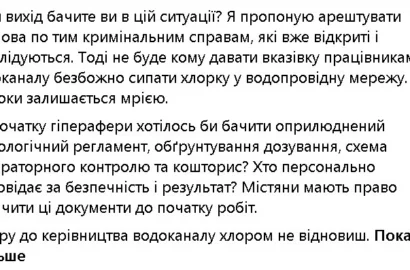
“What solution do you see in this situation? I propose arresting Iziumov in connection with the criminal cases that have already been opened and are under investigation. Then there would be no one to order water utility employees to recklessly dump chlorine into the water supply network. But for now, that remains a dream,” wrote Ihor Bloshko.
As of publication, the management of Mykolaivvodokanal had not commented on this criticism. There is also no independent expert assessment of the safety and effectiveness of the planned work.
We previously reported:
- Mykolaiv resident seeks court order to stop water hyperchlorination
- Tap water could become unsafe to drink: Mykolaiv begins chlorinating its network
- River water for Mykolaiv is being treated around the clock despite shelling
- Chlorine levels in the water to triple: Mykolaiv prepares to flush its network
- Drinking water does not always reach the taps: Reshetilov prepares to clean Mykolaiv’s network