Selling doesn’t mean restarting: Is the Fund speculating on the privatization of Mykolaiv Alumina Plant?
The state is preparing to sell a plant during wartime, and the head of the State Property Fund acknowledges that an investor may buy it at a discount, mothball it, or resell it later at a higher price


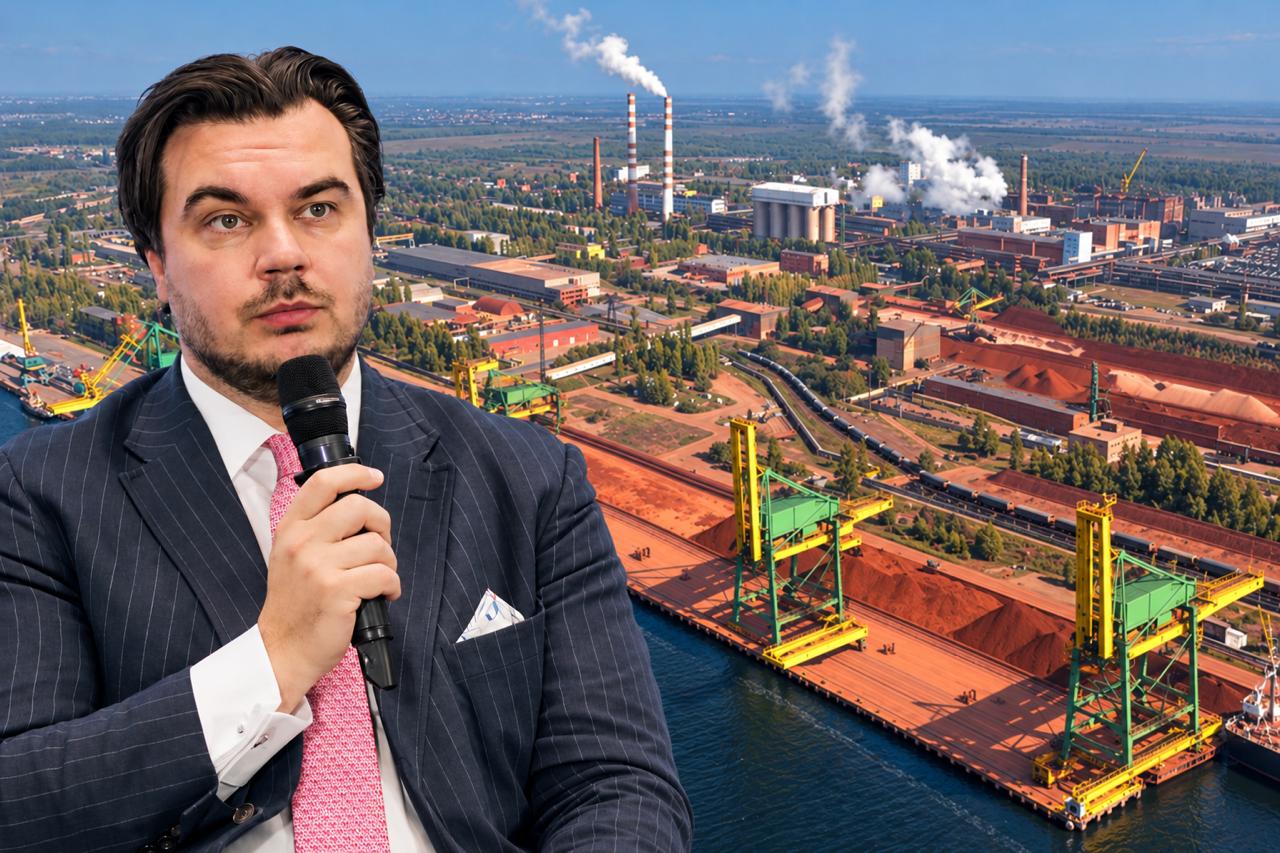
Mykolaiv Alumina Plant is being prepared for a privatization auction. The Head of the State Property Fund of Ukraine, Dmytro Natalukha, expects the enterprise to be put up for auction in the first quarter of 2027 — in winter or spring. The government still has to approve the final date. However, a change of ownership will not necessarily mean production resumes: an investor could buy the enterprise and mothball it until conditions improve. It is also unclear whether the tailings ponds, which require ongoing maintenance, will be included in the sale.
The Head of the State Property Fund of Ukraine, Dmytro Natalukha, told NikVesti.
Dmytro Natalukha visited the enterprise on October 8. It was an inspection visit: he and his colleagues wanted to assess the plant’s condition and the safety of being on its premises firsthand. According to him, although production has stopped, people remain there and continue working, and the enterprise is waiting for an investor and the conditions needed to restart.
“The main purpose of our trip is to show that, despite the full-scale war, it is possible to come there and stay there, and that, in principle, there is no particular threat to life or safety on the premises.”
The head of the Fund assessed the possibility of restarting operations as follows:
“The enterprise is currently shut down, of course, but it can resume operations within just three months of a decision to restart.”
Production at the Mykolaiv Alumina Plant stopped in 2022, after Russia’s full-scale invasion began. The plant has been idle for more than four years. One of the main obstacles to resuming operations has been the disruption of the usual sea logistics route, which was used to deliver raw materials and ship products. Rail transport cannot fully replace this route. The enterprise is also located in a region that is under Russian attack.
The plant’s main business is processing bauxite into alumina, which other enterprises use to produce aluminum. The Mykolaiv Alumina Plant is one of Europe’s largest alumina producers in terms of capacity, capable of producing up to 1.7 million tonnes a year. Natalukha also noted that it was the largest alumina producer in the Soviet Union and one of only three such producers in mainland Europe. The enterprise is currently idle, but the Head of the Fund considers its potential very high.
In 2023, the High Anti-Corruption Court ordered the seizure for the benefit of the state of assets belonging to Russian oligarch Oleg Deripaska. The plant was subsequently transferred to the management of the State Property Fund.
Since then, the privatization timeline has been changed several times: it was initially expected to begin in early 2026, then in July, and later by the end of the year. The plan published by the Fund in June 2026 scheduled the auction for the end of the year, with the indicative starting price for the Mykolaiv Alumina Plant set at UAH 6.3 billion. Related assets, including bauxite and alumina stocks, were valued separately.
Natalukha said that after his appointment in January 2026, he had also expected to prepare the sale by the end of the year. He attributed the current postponement solely to the formation of a single pool of sanctioned assets: it is not just the plant itself that is being prepared for auction.
The pool includes property seized by court order:
- Mykolaiv Alumina Plant;
- Metallurg service center;
- accounting center;
- security company;
- raw materials — bauxite and alumina;
- various vehicles.
Dmytro Natalukha explained why preparing sanctioned assets for sale requires additional time.
“The law requires the Fund to appraise, inventory, and inspect every property item specified in the High Anti-Corruption Court’s decision and include it in the pool. Therefore, the postponement is solely related to the process of forming that pool.”
According to the Head of the Fund, the pool has already been formed. The next step is a meeting of the State Property Fund’s auction commission, after which the documents will be submitted to the Cabinet of Ministers. The government must set the final auction date, starting price, and composition of the privatization package. Natalukha expects the auction date to be known by the end of October 2026.
Despite the wartime risks and transportation problems, Ukrainian and foreign companies are actively expressing interest in the plant, according to the Head of the Fund. He is not yet disclosing any names, so as not to speculate, but considers the prospects for a successful auction quite good. Earlier, he named the United States and India as possible countries of origin for foreign capital prepared to take on such risks.
Dmytro Natalukha said potential buyers regularly contact the Fund with questions about preparing the Mykolaiv Alumina Plant for sale.
“This is one of the few enterprises on our books that attracts regular and persistent interest. It’s not just that someone mentioned it once. Every few weeks, we consistently hear from different players: ‘What about Mykolaiv? Are you preparing it or not? When will it be put up for sale? What starting price are you planning?’”
In the Head of the Fund’s view, selling the enterprise during a full-scale war could attract investors willing to accept high risks for the chance to acquire the asset at a lower price.
“And it seems to me that the very fact that we are selling it under these conditions attracts a particular type of investor. They are willing to take a risk but acquire an asset like this at a discount, since it is being sold during a full-scale invasion.”
He is not limiting potential buyers to a narrow group of companies involved in the full aluminum production cycle. Natalukha sees other possible investors, including:
- Gas producers and traders. The plant is one of the country’s largest gas consumers, which could make it of interest to players in this market as well.
- Companies that manage complex industrial assets. They buy enterprises in specialized jurisdictions, risk their own capital, and invest in optimization, modernization, and basic production adjustments. Once an asset has reached a certain level of production and conditions have improved, they may resell it to large, specialized public companies that are prepared to offer a higher price but are much less willing to take risks.
- Metallurgical plants. They may be interested in processing the red mud accumulated at the plant into iron ore pellets.
Natalukha explained that full-cycle companies are usually publicly traded, with their shares listed on stock exchanges. Their supervisory boards may not allow investments under the current conditions or may take too long to approve them. That is why an investor willing to take on greater risk could become an interim owner.
A Dutch auction may also be used for sanctioned property, in which the price can decrease as well as increase. The principle is to gradually lower the starting price until a buyer agrees to purchase the asset. This format can help find a buyer when no one is interested at a higher price.
After privatization, the plant could also operate outside its core business. As an example, Natalukha cited the transshipment operations once carried out by the Odesa Port Plant to cover its own operating costs. At the same time, he believes alumina production remains the most profitable line of business and the Mykolaiv Alumina Plant’s main asset.
Comparing the profitability of the enterprise’s various activities, Dmytro Natalukha emphasized the much greater value of the output from its core production.
“It could generate some profit, but in terms of the value of the output, one day of alumina production could be equivalent to a month or even several months of transshipment operations. So I think the focus will be on preserving its production profile. That is the plant’s main value.”
However, buying the enterprise does not require an investor to restart it immediately amid current logistical restrictions. In response to a question about raw material supplies and shipping products, the Head of the Fund described another possible scenario:
“Why don’t you think someone might be ready to seize the moment right now, risk their capital, and buy the plant, mothballing it until conditions change?”
A separate issue concerning the future sale is the Mykolaiv Alumina Plant’s two tailings ponds. They contain more than 48 million tonnes of red mud, a byproduct of alumina production. Their proper maintenance is particularly important for the Mykolaiv region: after the plant shut down, difficulties arose in maintaining the dust suppression systems, while equipment damage, a lack of funds, and shelling increased the risk of tailings dust spreading.
There have been instances of dust blowing over the past few years, particularly in strong winds. In 2026, the State Environmental Inspectorate reported that the dust suppression system was operating at only 70% capacity.
In March 2026, in response to an inquiry, the State Property Fund said both tailings ponds were part of the plant’s single property complex and were to be sold together with it. At the same time, Ukraine’s Deputy Minister of Economy, Dariia Marchak, had earlier spoken of the tailings’ appeal to investors as a standalone asset.
However, the final decision on the future of the tailings ponds is once again in question. Despite the Fund’s earlier statement that they would be sold together with the plant, Dmytro Natalukha said the issue is still being discussed with the Ministry of Economy, which is to take part in preparing the government decision on the auction terms. He expects a clear answer by the end of October 2026. At the time of the interview, no decision had been made.
The official gave a positive assessment of the condition of the tailings fields during his visit on October 8, while cautioning that his observation applied specifically to the day of the inspection:
“What we saw today is that the irrigation system is working, the fields are being watered, and there is no dust blowing. I can’t say how it is every day. But today we walked around the site, and we barely even had to clean our shoes.”
The plant and tailings ponds continue to be maintained, although the enterprise earns no income from its core business. Before the full-scale war, about 5,000 people worked at the Mykolaiv Alumina Plant. After production stopped, around 400 employees remained to look after the equipment, safeguard the property, and maintain the tailings ponds. These figures were previously provided by the plant’s head, Oleksii Medvid.
Regional authorities have also raised concerns about insufficient funding to repair equipment and ensure environmental safety. Natalukha says the plant is currently being maintained at its own expense and receives no state financial assistance. According to various estimates, its reserves may last until around summer 2027 — only a few months beyond the planned privatization period.
If privatization does not take place, the enterprise will need state financial support. Dmytro Natalukha confirmed this directly in response to journalists’ questions. At the same time, the Fund plans to work out a specific budget funding scenario closer to the auction date.
“Yes. For now, we are hoping for a successful auction. But I think we’ll work out a scenario in which it does not take place closer to the scheduled date. We would then consider budgetary support. For now, however, we are preparing for the optimistic scenario.”
Local council members are concerned that after privatization, responsibility for the tailings ponds could fall to local or regional authorities, with maintenance costs borne by local budgets. The environmental problem would also remain unresolved if the ponds are not included in the sale or the new owner fails to maintain them properly. Natalukha neither confirmed nor ruled out the risk of this burden being transferred to local communities.
Responding to journalists’ questions about the possible transfer of costs to local budgets, the Head of the Fund acknowledged that he could not yet assess this risk. At the same time, he believes the tailings fields may have commercial value.
“To be honest, I don’t know whether there is such a risk. I need to check exactly what the High Anti-Corruption Court transferred to us and whether these tailings fields are included in the list of property belonging to the property complex. But after today’s visit, I would look at the tailings fields as a potential source of profit.”
In his assessment, the tailings do not appear to be transported away at present because of logistical problems. During the trip, Fund representatives consulted the enterprise’s management about possible ways to use this waste.
Dmytro Natalukha believes the accumulated red mud can be viewed not only as an environmental problem but also as a potential raw material for processing. This could include its use in metallurgy and the recovery of valuable components.
“The tailings can be used and processed, including into iron ore pellets because of their high iron content. With certain technologies, it is also possible to recover other valuable components, including rare earth metals. So it’s a mystery to me why the tailings have simply been accumulated all this time instead of being sold and generating revenue.”
The Head of the Fund believes a market for this kind of processing previously existed in Ukraine. In particular, the Azovstal steel plant could process the tailings into pellets. According to Natalukha, who relayed information from the plant’s head, a delegation from the Mykolaiv Alumina Plant visited Azovstal at the end of 2021 and reached certain agreements, but the war derailed them.
Now, Natalukha believes, metallurgical plants in neighboring countries could be sought out. He sees the sale and export of the tailings as one possible way to gradually reduce the area of the tailings fields and address the environmental problem. For now, the ponds require maintenance regardless of whether the plant resumes production.
We previously reported:
- Nearly 50 million tonnes of red mud near Mykolaiv: what will happen to the Mykolaiv Alumina Plant’s waste, and can it really be processed?
- No lab, no waybill, no results: Kim’s claim about the Mykolaiv Alumina Plant’s tailings was not backed up by documents
- The Mykolaiv Alumina Plant on its own, the tailings fields separately? Mykolaiv region demands a say in the sale terms
- The Mykolaiv Alumina Plant’s tailings fields were “up in the air” for three years: the State Property Fund says it has saved the South from disaster
- The Mykolaiv Alumina Plant is to be sold for nearly the price of a Kyiv shopping mall: the privatization plan values the plant at UAH 6.27 billion
- The Mykolaiv Alumina Plant sale is expected to succeed, but first the investor must be convinced not to fear the war
- Mykolaiv Alumina Plant attracts interest from a company listed on the New York Stock Exchange
- The Mykolaiv Alumina Plant has been finally confiscated from Russian oligarch Deripaska, says the Ministry of Economy