Embroidered towels, ribbons and farewells to home: how in Korabelnyi they saw the young men off to the army
Almost a wedding, except the groom is at the military enlistment office: soldiers from Old Zhovtneve


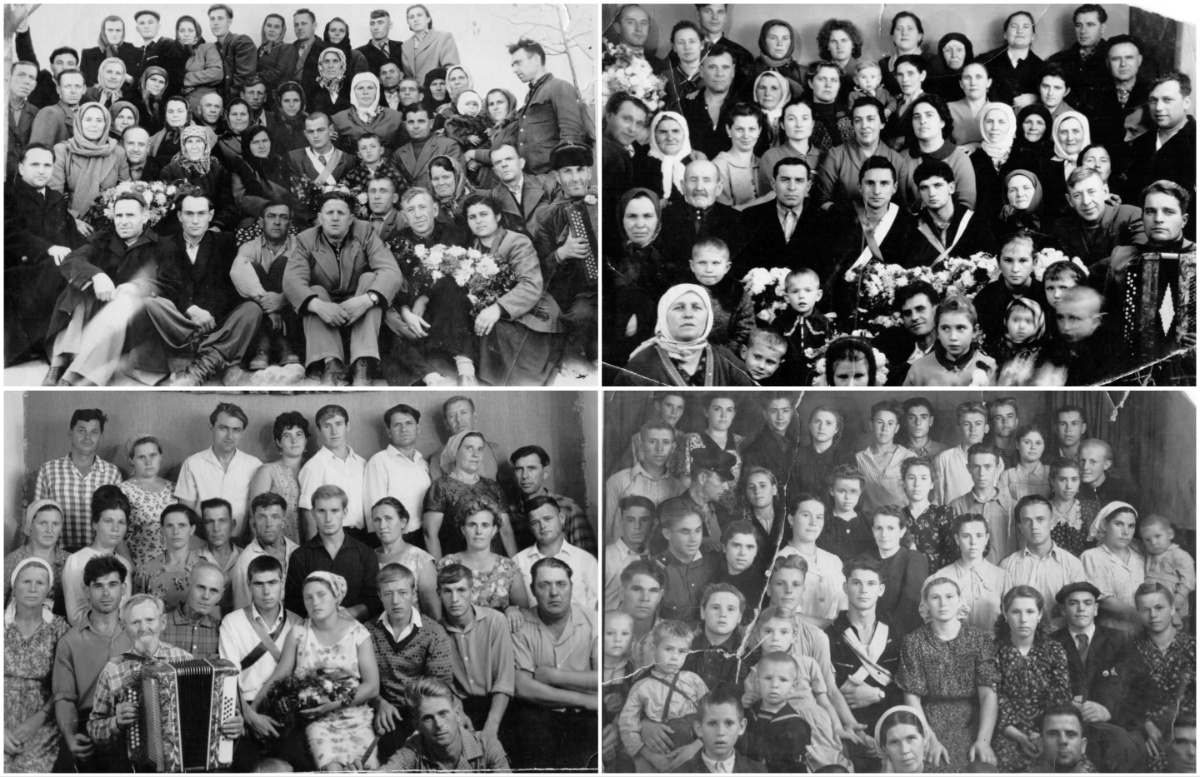
Old photographs from Zhovtneve, now the Korabelnyi District of Mykolaiv, preserve not only people’s faces but an entire layer of local life from the Soviet period. One such custom – soldier send-offs, that is, seeing a young man off to the army.
At the time it was not just a family event. In many families the send-off for a conscript truly resembled a wedding in scale. They prepared in advance, laid tables, invited relatives, neighbors, friends, musicians. For the settlement or the street it became a noticeable event that people remembered for a long time afterward.
The main feature of the soldier send-off was the ritual of binding the conscript. The young man was bound crosswise with towels, headscarves and multicolored ribbons. Sometimes so tightly that he could hardly move.
According to locals, towels or headscarves were mostly used by married women to bind him, while ribbons were used by unmarried girls – during the feast they might leave only two ribbons or two towels on the young man, yet the ritual itself remained in memory for life.
The next day the conscript was solemnly sent off to the assembly or transit point. After that a different life began for him – service, growing up, separation from home, and the return the family awaited.
Old Zhovtneve also had its own local “geography”. Locals knew well the division into informal districts: there were “Berehovnya” – those who lived closer to the shore, “Stepovnya”, “Dekovski” – those who lived near the House of Culture. They say these groups did not always get along, and large send-offs sometimes ended not only with songs but also with clashes with young people from another part of the settlement. Later, already in the 1980s, new informal names appeared. After the construction of the “Okean” plant, part of the area began to be called the “factory”. And after the construction of the MGZ and the “DIS” building, where the French workers who worked on the plant lived, the name “Paris” became established in local usage.
Such names, like the soldier send-offs themselves, were part of the living memory of the district. They showed that Zhovtneve was not a faceless suburb but a place with its own traditions, internal divisions, jokes, conflicts and stories.
Today these photos are perceived differently. In the conditions of the current war, when Ukraine is defending itself from Russian aggression, the theme of seeing someone off to the army has a completely different resonance. What once was a Soviet rite of passage is now read through the experience of real war, loss and the defense of one’s country.
But that is precisely why such archival shots are important. They do not glorify the past but preserve the memory of the people, the streets, the customs and that Zhovtneve which many residents of the Korabelnyi District still remember very differently.
Reminder: earlier we wrote:
- Vitovka’s anthem was born! A ceremonial event for the 625th anniversary of Mykolaiv’s “cradle”
- 620 years ago, on the site of today’s Korabelnyi District of Mykolaiv, Prince Vitovt founded a customs house
- The anti‑Nazi Czech underground operated in the settlement of Zhovtneve during World War II
- The history of the churches of Vitovka‑Bohoyavlenska‑Zhovtneve
- “Vitovka always had the best fish market”… How the decline of the once‑famous fishing industry in Mykolaiv came about