ТЦК in Odesa operated like an organized criminal group: data from databases, kidnappings, police cover-up, victims with a delay
The investigation has recorded more than ten incidents, but the actual number of victims may reach hundreds


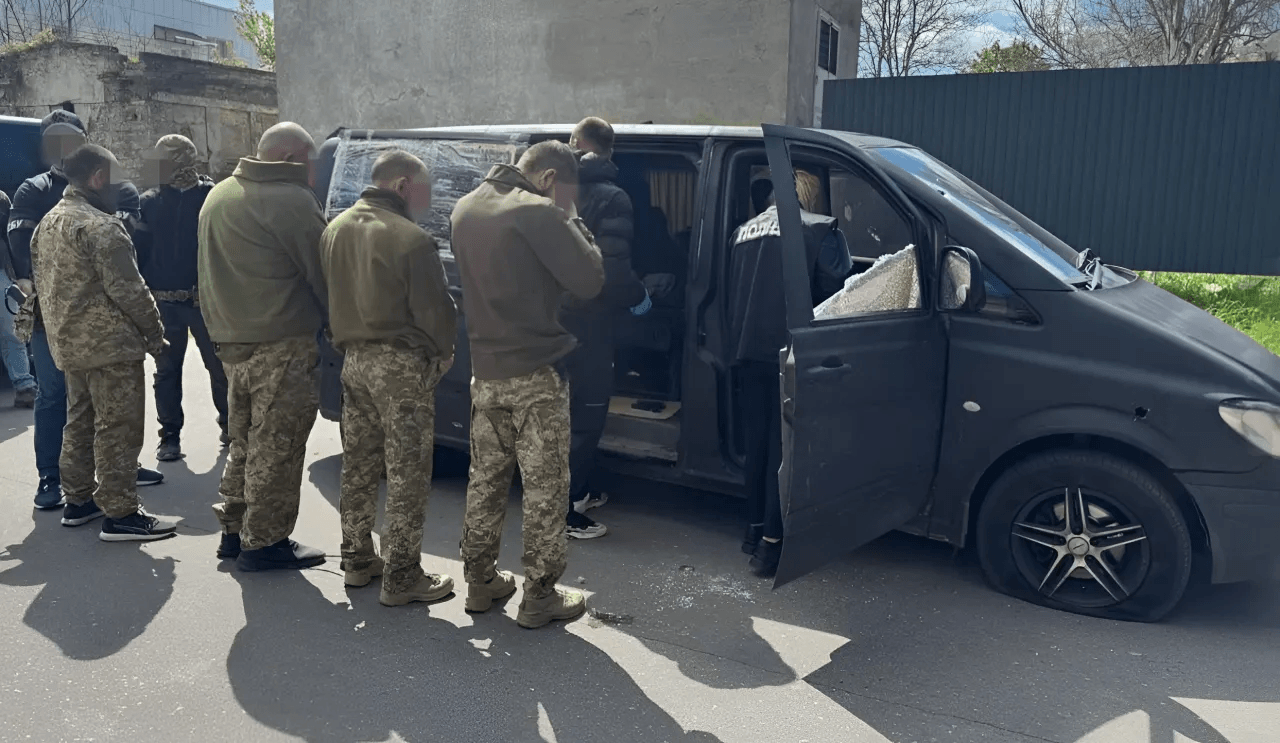
The events in Odesa related to the detention of a group of employees of the Peresyp TCK went far beyond mere abuse of authority. This is about the creation of a full-fledged criminal ecosystem, where state mobilization functions became a cover for robbery and extortion.
«They terrorized everyone indiscriminately»
As it became known, the detained group did not act spontaneously but according to the canons of organized criminal groups (OCGs) of the 1990s. The key difference was access to closed databases and the police’s forceful cover.
The gang was clearly structured, with all roles and functions outlined.
Information was supplied by spotters – two employees of the local police station. Knowing their district well from the inside, they provided data on residents’ financial well-being: who bought an expensive car or started an expensive apartment renovation, who owns a successful business, and so on.
A special place in the scheme was occupied by a TCK employee who led the life of an ordinary resident. Neighbors and acquaintances did not even suspect his workplace. His task was to ingratiate himself with the “targets” and find out about their financial situation.
And, finally, the TCK employees themselves in minibuses who carried out the seizures. The gang members themselves called the process of psychological pressure “under the nightmare.” The victim was tracked near their home or workplace, forced into a minibus, and the will was methodically broken.
«We don’t care about your exemption»
One of the most cynical features of the Odesa scheme was that even people who had a deferment or exemption from mobilization fell into the hands of the “rogues in uniform.” All legal grounds for deferment (exemption, disability, age) meant nothing and were ignored. Moreover, having a “white ticket” made a person an even more attractive victim, since it implied they had funds to obtain it in the past.
«We are tearing up your documents before your eyes and taking you to the assault troops without training. And if you twitch — we’ll beat you and throw you into the lockup. Nothing will happen to us, see – the police are with us!»
The processing in the minibus proceeded roughly according to that scenario.
Those who refused to pay on the spot were not released. They were taken to the TCK and kept there for several days in an information vacuum. This “legalized torture” was sanctioned (or at least covered up) by the head of the military commissariat. Even if the victim’s documents were in perfect order, the person was exhausted by waiting and uncertainty until they “ripened” for a deal.
Diagnosis: systemic degradation
The story of the turncoats from the Peresyp TCK exposes three fundamental problems of today’s mobilization system in Ukraine.
Legalization of arbitrariness through social networks and the media. The thugs in uniform effectively used the real media background. Since social networks are already full of videos of harsh detentions, threats from military commissars to “disappear into the woods” were perceived by victims as absolutely real. Fear of the system became the main tool of robbery.
Fusion of structures. The involvement of precinct police officers is a critical marker. The police transformed from an oversight body into an organ that legalized crime. The presence of cops alongside military commissars removed the victim’s last illusions about the possibility of protecting their rights.
The strategy of “shifting the blame.” The fact that the detained TCK employees are now massively testifying against the precinct officer as the “ringleader” indicates an attempt by the system to cleanse itself at the expense of “adjacent” actors. However, it is obvious that without the knowledge of the head of the TCK, the operation of such a group with multi-day detentions would have been impossible.
The Odesa incident confirms: mobilization in its current form has created the perfect breeding ground for “state racketeering.” When the conscription plan becomes an instrument of intimidation, the line between defender of the homeland and an ordinary robber is erased. At the moment, the investigation has data on more than ten episodes, but given Odesa’s specifics, the real number of victims may be in the hundreds. And this is not the first scandal involving the TCK in Odesa – it is enough to recall Odesa military commissar Yevhen Borysov, whose release required the personal intervention of President Zelensky.
Earlier we wrote:
- The SBU detained TCK employees in Odesa who were extorting money
- In Odesa, an RTCK employee and SP were detained for extortion of a bribe
- In Odesa, TCK employees broke a car door and beat a man
- Didn’t reach the TCK — reached the pre-trial detention center: how “mobilization” in Odesa ended
- SBU against “busification”: in Odesa, TCK employees were detained for threats and extorting $6,000