TCC from the inside: who runs around delivering draft notices, who sits in the headquarters, and who has simply "burned out"
The state is silent, society is angry, the TCK takes the hit — and breaks


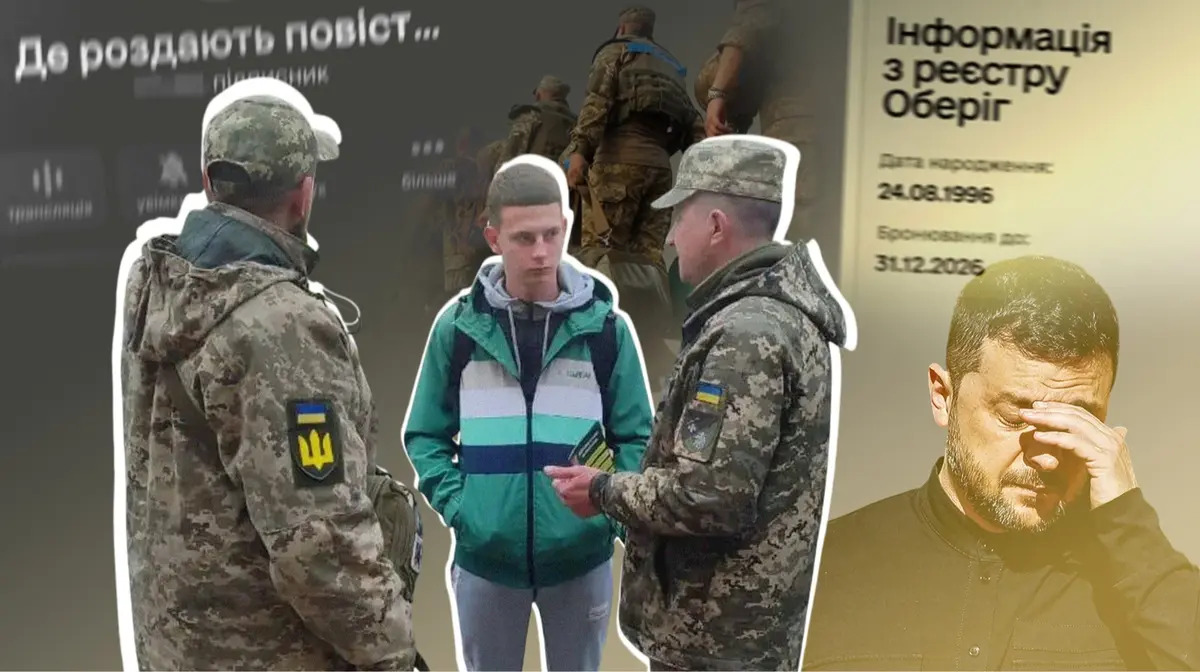
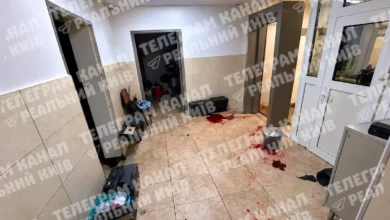
The issue of TCCs and mobilisation in Ukraine has finally moved from the realm of dry orders into an open social crisis. In a major piece by Ukrainska Pravda, published 23 April 2026, it is reported that during the full-scale war there have already been 619 attacks on military TCCs, and 3 of them ended in the deaths of servicemen.
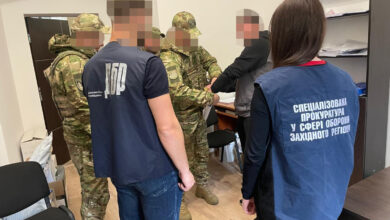
At the same time, the other side of this crisis has also become public. After the recent incidents in Odesa, where TCC employees are suspected of extorting money from civilians directly in a service car, trust in the mobilisation procedure has fallen even further. For the Mykolaiv region this topic is also long familiar: Korabelov.info has repeatedly written about attacks on TCC representatives and scandals around the system itself.
According to Ukrainska Pravda (UP), each TCC and SP employs not only servicemen but also civilian staff, and the servicemen themselves can be conditionally divided into 3 groups: leadership, headquarters, and a guard company. It is the headquarters that works with documents, recruiting, mobilisation and the “Oberih” system, while the guard company often performs the most dangerous “field” work — from escorting those mobilised to notification teams on streets and checkpoints. In a small district TCC, the publication notes, there may be 50-60 people in total, in a city one — already over a hundred.
The interviewees name the notification teams as the hardest link inside the system. According to them, this work is physically exhausting, morally toxic and genuinely dangerous. Despite a government resolution, a large part of the burden of handing out draft notices still falls on the military, while local authorities often avoid direct participation in this process. One of the main consequences is a failure in pace: by the estimates of UP interlocutors, some TCCs now fulfil monthly plans only at 40-60%.
“I don’t know anyone who wants to,” said one of the TCC servicemen, describing attitudes toward work in the notification teams.
A separate layer of the problem is mass reservations, deferments and attempts to avoid service. At the beginning of 2026 the number of citizens with reserved status in Ukraine reached approximately 1.3 million, and this, the publication estimates, is already more than serve in the Ukrainian army. Against this background some servicemen speak openly of demotivation: they see that the system not only fails to give them sufficient tools but often pushes them into humiliating and conflict-ridden work without public trust.
Even harsher are the testimonies about internal abuses. According to one of the subjects of the piece, within certain TCCs they could “not put required people on the wanted list”, “remove” statuses through acquaintances, and sometimes even organise schemes to facilitate the escape of mobilised people during escort. It is precisely such episodes, even if not identical in scale to the Odesa stories, that undermine trust in the whole system no less than attacks on people in uniform.
The main conclusion that follows from this text is simple and unpleasant: mobilisation in its current form rests on overloaded servicemen, weak coordination, public hostility and the absence of an honest political conversation. And for the Mykolaiv region, which also lives within this tension, this is no longer an abstract nationwide discussion but part of daily reality.
Reminder: previously we wrote:
- Not just Odesa: Mykolaiv region has become one of the regions with an alarming situation around TCCs
- SBU detained TCC employees in Odesa who extorted money
- Attack on a TCC building: two detained, another sought
- Across the country 620 attacks on TCCs: in Mykolaiv region — 29, in 2025 there were a record 341, in 2026 already 118
- Knife attack during notification: a TCC serviceman was attacked