Was the heating turned off because of debts? Heat providers blame "Naftogaz" and complain about the "freezing" of tariffs for households
Account seizures, gas debts and work stoppages: what's already threatening Mykolaiv


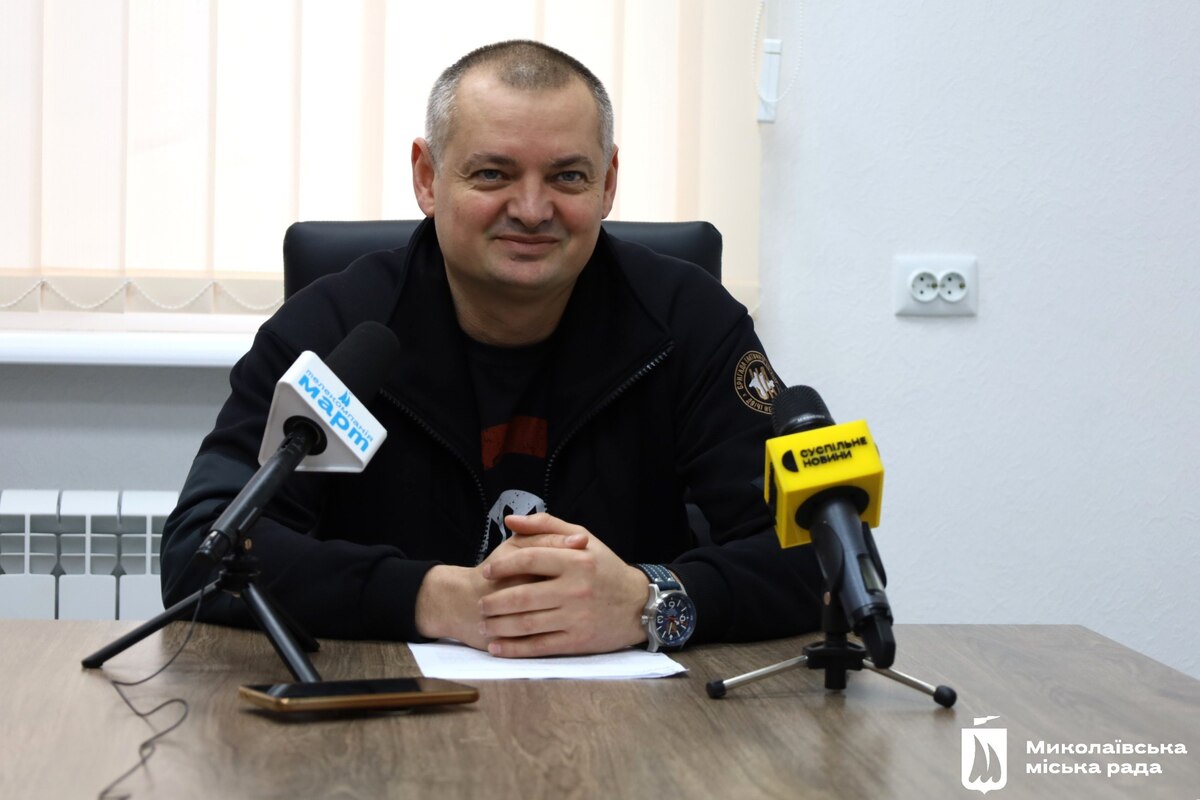
During his press conference March 25 2026, dedicated to the end of the 2025-2026 heating season, the director of OKP “Mykolaivoblteploenergo” Mykola Logvinov outlined a problem that, in his assessment, could seriously affect Mykolaiv’s preparation for the next winter.
Although the company completed the current season stably, the further situation looks much more alarming due to relations with the gas supplier “Naftogaz Trading”.
According to the head of the company, district heating utilities across Ukraine received a demand to stop gas consumption from March 28 due to debts for natural gas. For Mykolaiv, such a situation means not only complications in preparing networks and boiler houses for the new heating season, but also a threat to electricity generation by the municipal enterprise itself.
At the center of the conflict is the so-called tariff difference. As Mykola Logvinov explained, since February 24, 2022 the change in the heat tariff was legally frozen. At the same time, the state undertook the obligation to compensate enterprises for the difference between the economically justified tariff and the one consumers actually pay. As of January 1, 2026 this amount, according to the company, reached 1 billion 279 million hryvnias, while the company’s debt for gas amounted to about 800 million hryvnias. That is, as the head of the company asserts, the state owes the heat suppliers more than the enterprise itself owes for fuel.
The director also drew attention to the consequences of possible account arrests. In his assessment, in that case the company would lose the ability to purchase materials, fuel and equipment necessary for the repair campaign. In addition, restrictions on gas supply could hit the electricity generation that the company now carries out in significant volumes.
By the results of the 2025 – 2026 heating season, as Mykola Logvinov reported, his company produced 18 million kilowatt-hours of electricity with internal consumption at 10 million kilowatt-hours. Thus, generation volumes exceeded internal needs by approximately 65%, and part of the electricity was supplied to the general grid.
Another important direction is the future strengthening of the city’s energy autonomy. By the end of the current year Mykolaiv is to receive 15 cogeneration units with a total capacity of 27.5 megawatts. The project administrator has been designated as UNOPS, and financing is provided by the World Bank. At the same time, the installation and design of such equipment requires significant funds, and account freezes could seriously delay these works.
The head of the company emphasized that the problem needs to be discussed now, immediately after the end of the season, and not in the autumn when there will be almost no time to react. In his opinion, this situation is not local but nationwide in nature, since it accumulated over years and has drawn into crisis the heat supply enterprises, and “Naftogaz”, and the central authorities.
As possible ways out he named two basic options. The first — to provide in the state budget full coverage of the tariff difference and channel these funds to the enterprises. The second — to prohibit by law the freezing of accounts of those heat utilities whose amount of unreimbursed tariff difference exceeds their debt for gas.
According to the director of OKP, the current tariff now covers only about 50% of the economically justified level. Moreover, as of February 24, 2022 the tariff was already loss-making. Back then the city partially compensated this difference, and now such responsibility is formally placed on the state which, according to the head of the company, due to the war and financial shortages does not fulfill these obligations in full.
He also drew attention to the cost of modernization. Equipment provided by international donors still has to be installed by the city at its own expense, which entails large costs. According to the provided data, one megawatt of a cogeneration unit including purchase and installation costs approximately 1 million euros. With funding available, the implementation of such projects takes from 6 to 9 months, but they cannot be called cheap.
Thus, despite a relatively stably completed season, in Mykolaiv they are already openly talking about a threat for the next winter. And the main problem here is not the frosts, but the money, the gas and the state’s ability to timely resolve the tariff knot that is increasingly tightening around the heat suppliers’ necks.
Recall, earlier we wrote:
- Will Korabelnyi stop freezing? Mykolaiv plans to install over 200 additional individual heating units
- Residents and condo associations to blame: why some buildings remained without heat in winter
- “I consider this heating season the best in recent years,” – Senkevych
- Mykolaiv residents’ debt for heat approached 384 million hryvnias