Ukrainian Armed Forces' successes in the south have complicated Russia's plans — ISW
The advance on the Oleksandrivka direction is forcing the Russian command to balance holding the lines, regrouping forces, and the risk of losing the initiative


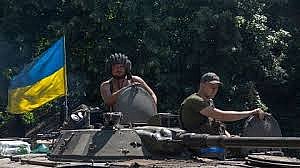
The successes of the Armed Forces of Ukraine on the Oleksandrivka direction in the south have forced the Russian command to balance between mutually exclusive operational-tactical objectives, as stated in the Institute for the Study of War (ISW) assessment of 19 March 2026.
ISW notes that the competition of tasks across several sections of the front has already disrupted Russia’s preparations for the spring–summer 2026 campaign. You can read more about this in the analysts’ fresh report published on the organization’s website at the link.
Ukrainian military observer Kostiantyn Mashovets points out that the forces available to the Russian troops are insufficient to, in the framework of a single offensive, simultaneously take Orikhiv and advance toward Zaporizhzhia.
In his opinion, the Kremlin will likely have to pull reserves from the Kherson direction, since simultaneously the Russian Federation is attempting to attack the lines of the Fortified Belt, pressure Dobropillia and Kupiansk, and form a “buffer zone” in the Kharkiv and Sumy regions.
Such simultaneous pressure creates several dilemmas for the adversary: an advance on Dobropillia forces the redeployment of resources from other focal points, weakening them; even an intensification of mobilization does not solve the personnel deficit, because there is no time to properly prepare recruits for the summer phase of combat; moreover, there is currently no evidence of significant force transfers to the west and south of Orikhiv, without which it is impossible to mount a large-scale operation against Zaporizhzhia.
ISW analysts add that the situation on the northern sector also does not confirm the Russian Federation’s readiness for a major offensive: a representative of a Ukrainian brigade from the Kramatorsk area reported low attack intensity and an absence of concentrations of heavy equipment, indicating an inability to prepare a strike against Ukraine’s fortress belt.
Overall, ISW notes, the dispersion of Russian efforts — from assaults in the south to the creation of “buffer zones” in the east — combined with personnel and logistical constraints complicates the adoption of a single operational concept for the spring–summer 2026 period.
Previously we wrote:
- Ukrainian Armed Forces thwarted the Russian strategic offensive planned for March — Zelensky
- Ukrainian Armed Forces launched an offensive in southern Ukraine
- Defense forces regained hundreds of kilometers and eight settlements in the south
- Ukraine liberated 201 square kilometers in five days and achieved its largest advance in 2.5 years
- Alarming intensification of the Russian offensive in southern Ukraine