At Okhmatdyt Children's Hospital, a 12-year-old boy had his genital organ reconstructed from cheek tissue
Due to a congenital defect and unsuccessful previous surgeries, the patient developed a deeply concealed genital organ, so the doctors performed a complex reconstructive plastic procedure


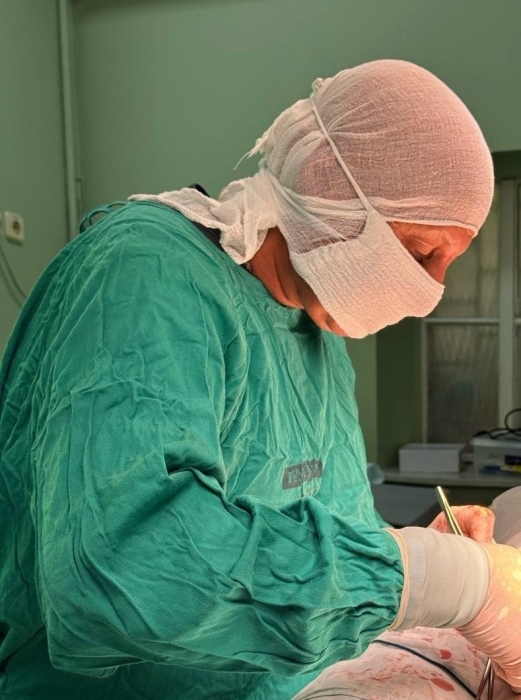
At OKHMATDYT they performed a complex reconstructive-plastic intervention for a 12-year-old boy with a congenital defect and complications after previous surgeries; thanks to using mucosa from the inner surface of the cheeks, doctors formed a new urethra. The medical institution reported the operation on its Facebook page.
The boy Taras, 12 years old, was born with the condition and had already undergone three surgical procedures: two operations abroad and one in Ukraine, but this did not solve the problem and his condition even worsened.
A urologist described the course of the disease and its consequences for the child.
“With the onset of puberty the child experienced extremely painful and pathological erections, accompanied by severe urination disorders. It was a very difficult physical and psychological condition for the boy”
A council of urologists decided on staged reconstruction. Since local tissues had already been used during previous operations, they applied a tactic atypical for pediatric urology — autotransplantation of the mucous membrane from the inner surface of the cheeks. Because of the significant defect, material from one cheek was not enough, so flaps were taken from both sides, sewn into a single tube and a new urethra was formed.
The need for this specific choice was explained by the urologist, emphasizing the properties of the donor tissue.
“The cheek mucosa is most similar in structure to the mucous membrane of the urethra and has a high capacity for regeneration. It was a complex and atypical operation for pediatric practice, but there was no other way out in this situation”
The operation lasted about 6 hours and was performed by a coordinated multidisciplinary team. Despite the high risks of infectious complications, the postoperative period passed successfully: the wounds healed by primary intention, and the patency of the newly created urethra was confirmed endoscopically.
Currently the boy is undergoing recovery, and his mother is carefully caring for the transplant. In 6–8 months a second stage is planned — joining the new urethra to the native urethra, which should ensure full restoration of normal urination.
Doctors note that expectations for the completion of treatment are optimistic.
“After the correction is completed the child will be able to live a full life. He will be a healthy boy — both physiologically and with the prospect of starting a family”
Previously we wrote:
- The death of one person saved four: unique transplants were performed overnight in Ukraine
- Unique three-stage operation: kidney from the father, liver from the mother
- “Corridor of Honor” and new life for patients: Mykolaiv performed the first multi-organ donor organ harvest
- In Mykolaiv, doctors performed a unique laparoscopic operation on a 6-year-old girl and saved her life
- The death of a 4-year-old girl became a rescue: in Kyiv three children were saved thanks to donation