Diving underwater with underwater scooters: the Dniester River has become a new escape route across the border
Men are increasingly risking their lives on the Dniester to cross the border illegally


Border guards are recording an increase in the number of people attempting to illegally cross Ukraine’s state border via the Dniester River. This was said in an interview with “Ukrinform”, published on April 29, 2026, by the spokesperson of the State Border Guard Service of Ukraine, Colonel Andriy Demchenko.
According to him, it is recently the Dniester that has begun to appear more often in attempts to illegally cross the border. If earlier one of the most well-known dangerous sections was the Tisza River, now, as the SBGS notes, interest is also growing in routes across the Dniester.
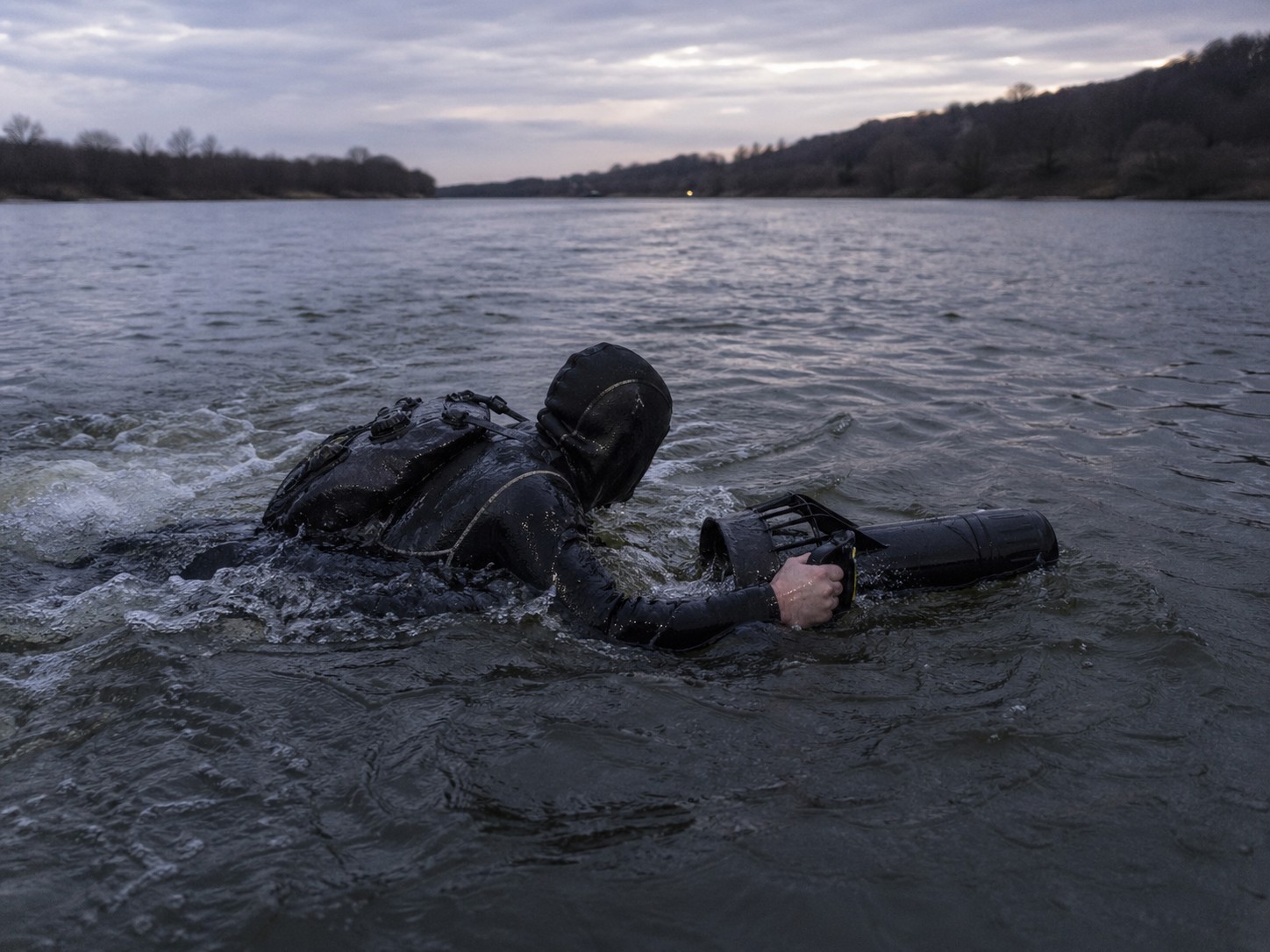
Andriy Demchenko explained in the interview that offenders are trying to use not only wetsuits but also special devices to move faster in the water and be less noticeable to border guards.
“I want to note that recently the number of people wanting to illegally cross the border via the Dniester River has increased. Often during such attempts not only wetsuits are used, but also aqua scooters.”
The SBGS spokesperson clarified that aqua scooters effectively tow a person in the water and help them swim faster. In such a scenario the person holds on to the device, submerges under the water, and tries to cross the river in a way that makes them harder to detect.
When asked about the Tisza River in western Ukraine, Andriy Demchenko said that offenders continue to use that route as well. But, he added, it is the Dniester that has recently become more “popular.”
In the full interview with “Ukrinform” the spokesperson also provided overall statistics: since February 2022, 67,000 people attempting to illegally cross the state border have been detained. Of these, 36,000 were detained on the “green” section of the border, 27,000 at border control posts, and another 4,000 at checkpoints when attempting to use forged documents or falsify reasons for departure.
At the same time, the SBGS claims that the overall number of attempted illegal border crossings is declining compared with 2024–2025. In the first 3 months of 2026, according to Andriy Demchenko, border guards detained 2,900 offenders, which is 38% fewer than in the same period of 2025.
Separately, the SBGS spokesperson told of a bizarre but dangerous incident on the border with Moldova: a man who planned to cross the border illegally ran into wolves, climbed a tree and called the border guards’ hotline himself to be rescued. Afterwards he was held accountable for attempting to cross the border illegally.
Against the backdrop of the full-scale war, such stories show not only the problem of illegal departures but also the dangerous market of “services” for those trying to evade the law. Escapes across rivers, forged documents, sham marriages and smuggling for thousands of dollars remain a painful issue for a society where some defend the country while others look for ways to disappear from the state’s radar.