New technologies: in the United States they aim to raise giant chicks from artificial eggs
Scientists want to resurrect the giant moa: the first chicks have already hatched from an artificial platform


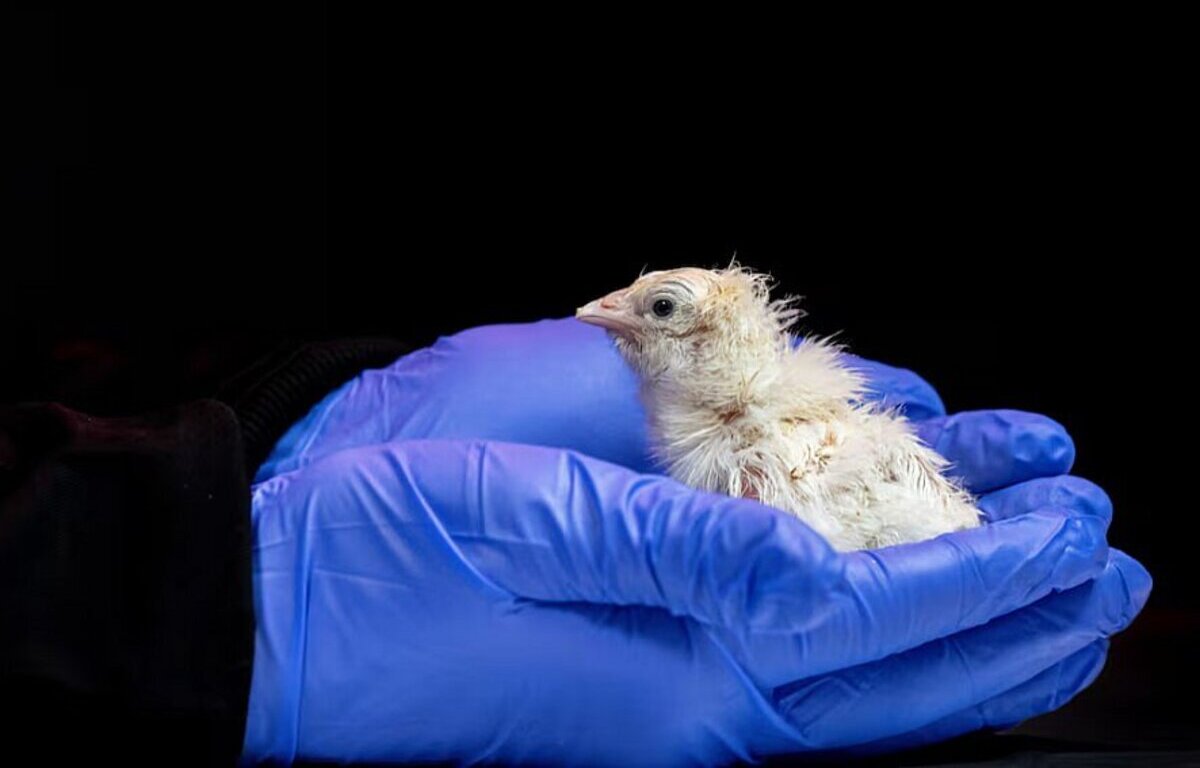
The American company Colossal Biosciences, which works on restoring extinct species, reported the successful hatching of 26 healthy chicks from its developed artificial egg platform. This was reported on May 22, 2026 by the publication Reuters.
This is a technology that could become one of the key tools in attempts to bring extinct species back. One of the company’s main directions is the revival of the giant moa from the South Island of New Zealand. This is a large flightless bird that disappeared approximately 500 years ago.
According to Reuters, the artificial platform consists of a rigid outer structure and a bioengineered silicone-based membrane. It is meant to mimic one of the main functions of a natural eggshell – gas exchange, so that the embryo can get oxygen while the system controls the movement of gases and moisture. Colossal Biosciences CEO and co-founder Ben Lamm told Reuters that the company already has its first practical results.
“Using our system, we hatched 26 chicks and are now actively observing these birds as they grow,” – Colossal CEO and co-founder Ben Lamm told Reuters.
The chicks hatched at Colossal’s headquarters in Colossal in Dallas. According to Ben Lamm, the goal of the technology is to reproduce the conditions of a natural egg as accurately as possible in order to obtain healthy animals with normal development, fertility, and lifespan. This is especially important for species like the moa. The eggs of the giant moa from the South Island were much larger than the eggs of any modern bird, so traditional surrogate methods are almost unsuitable for such a species.
The company explains that in the case of the dire wolf revival project, embryos were created from edited gray wolf cells and then implanted into surrogate domestic dogs. But with birds the situation is different: there is currently no living species that could lay a giant moa egg roughly the size of a soccer ball. The closest living relative to the moa is considered to be the emu – a large flightless bird from Australia that can reach about 1.8 meters in height. The giant moa itself, according to the report, could grow to approximately 3.6 meters. Its disappearance is primarily attributed to human hunting.
Ben Lamm explained why the company needed an artificial egg platform for the future moa creation project.
“To hatch a giant South Island Moa, you need a way to carry the embryo. There is no living surrogate mother large enough to lay a South Island Moa egg, as they are about eight times larger than an emu egg,” – Lamm said.
The process, as described by the company, begins with a fertilized bird embryo at an early stage of development. The embryo, together with the yolk, is then transferred to Colossal’s artificial platform Colossal, which is designed to provide conditions similar to a natural shell and an incubation environment. The system controls gas exchange, humidity, temperature, and supports the embryo’s development. If needed, it can provide additional support, including calcium during skeletal formation. In a natural egg, that resource usually comes from the shell.
Another feature of this technology is the ability to observe the embryo’s development in real time. Because the embryo develops on top of the yolk, researchers can monitor its formation throughout embryogenesis – the process when a fertilized egg transforms into an embryo.
For the 26 chicks the company reported, the total development time from embryo transfer to hatching was about 21 days. According to Ben Lamm, this corresponds to normal development for the species. Colossal Biosciences believes that such an artificial platform could be useful not only for attempts to bring back extinct species, but also for conserving birds that are currently threatened with extinction.
At the same time, actual revival of the moa is still far off. Among the key obstacles, the company names the need to reconstruct an accurate moa genome from ancient DNA, determine the genetic basis of the bird’s main traits, and transfer the corresponding characteristics into a closely related modern species, including the emu. According to Ben Lamm, the project is currently at the genome sequencing stage. The team is working on creating high-quality genomes for the giant moa from the South Island and another eight extinct moa species. Researchers have already identified several strong sources of ancient DNA, including samples of the giant moa itself.
Previously, we wrote:
- The disaster area could become a reserve: the unique value of a former reservoir
- A rare red-listed sandpiper returned from Africa to the Odesa region
- One injection — and the tumor disappears: scientists have found an unexpected weapon against cancer
- Locust invasion in the south: Kherson and Odesa are already suffering, Mykolaiv is next
- Closure due to danger: bird flu at the Mykolaiv zoo