Nobody left to work: Kim announced a severe staffing shortage in the Mykolaiv region
Healthcare workers, teachers, and rescuers on the brink: the region is losing people due to exhaustion from the war


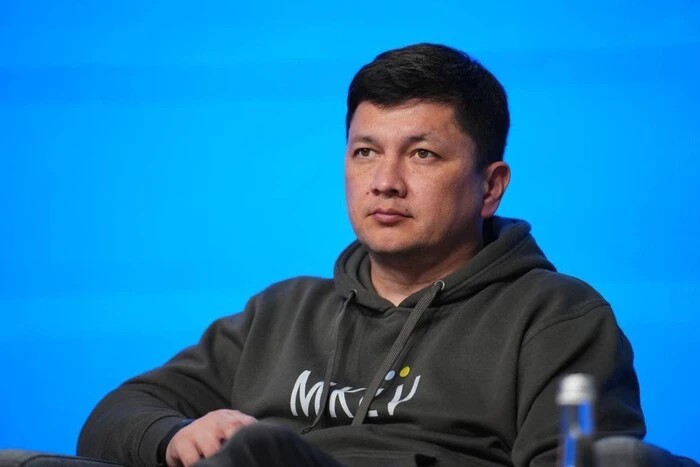
In the Mykolaiv region, a staffing crisis is intensifying in almost all key sectors. The shortage of people is felt most strongly in healthcare, education, social services, rescue units and in jobs that require technical specialists. This was reported by the head of the Mykolaiv Regional Military Administration Vitaliy Kim on the air of “United News”.
According to him, the personnel deficit in the region reaches approximately 30-40%. The problem is not limited only to a lack of new workers: many teams still have older people who continue to work out of responsibility and reluctance to abandon their work in wartime.
Vitaliy Kim explained that the region faces situations where equipment or the volume of work exists, but there are critically not enough people to carry out these tasks. He separately drew attention to education and healthcare, where the shortage of staff, in his assessment, remains at no less than 30-40%.
The head of the region named not only the war itself but also prolonged psychological and physical exhaustion as the cause of the staffing hunger. Constant shelling, working under pressure, responsibility for children, patients and those injured after attacks gradually drain the strength of those who have been holding the frontline region for years.
The situation in the social sphere remains particularly difficult. According to Vitaliy Kim, the authorities have discussed this problem with international partners and with psychologists working in schools and kindergartens. People are not just performing daily duties, they do so under the risk of repeated shelling and in conditions of constant anxiety.
The head of the Mykolaiv Regional Military Administration believes that the problem cannot be solved by only local measures. In his view, frontline territories need a separate state support program that will take into account different living and working conditions compared with safer regions.
“Financial instruments, provision of housing under contracts, incentive payments, raising salaries for current employees, and better – compensation for the past four years to make it fair. This should be a state program to support frontline zones. We have slightly different conditions, and conditions that work everywhere else do not work here. What people say: “Give us rest and pay us money”. These are basic things we must take into account,” – stressed Vitaliy Kim.
Separately, the head of the region called for special guarantees for professions whose representatives work daily in high-risk zones. This refers, in particular, to rescuers the State Emergency Service (DSNS), medical workers and other staff who are first to go to the sites of Russian shelling, evacuate people and provide assistance to victims. In Kim’s view, for such categories a separate status should be considered, similar to the status UBD, as well as special benefits for those who work in frontline districts where danger is not occasional but has become part of daily work.
The region is also considering options to attract specialists through housing programs. Among possible instruments – compensation, purchase of housing or provision of service housing on the condition of a contract for p’ять років.
Effectively, the authorities acknowledge: patriotism and people’s sense of responsibility can no longer remain the sole support of the frontline Mykolaiv region. If the state does not offer real financial and social mechanisms, the personnel shortage in hospitals, schools, social services and rescue units may only deepen.
Previously we wrote:
- Mykolaiv lacks more than UAH 50 million for salaries in culture and education: staff and library branches at risk
- Mykolaiv region lags behind Ukraine in average pay and is sinking in debt
- Doctors avoid villages of Mykolaiv region: only one medic received UAH 200,000, 6 out of 200 interns arrived
- Mykolaiv region may become subsidy-dependent in 2026, Kim
- A staffing famine is suffocating Mykolaiv region: pensioners keep healthcare afloat, young people do not stay