Shelter Not for Everyone? Government Determines When Outsiders Can Enter a School Shelter
Not everyone will be allowed into school shelters during an air raid alert: Cabinet of Ministers changes rules

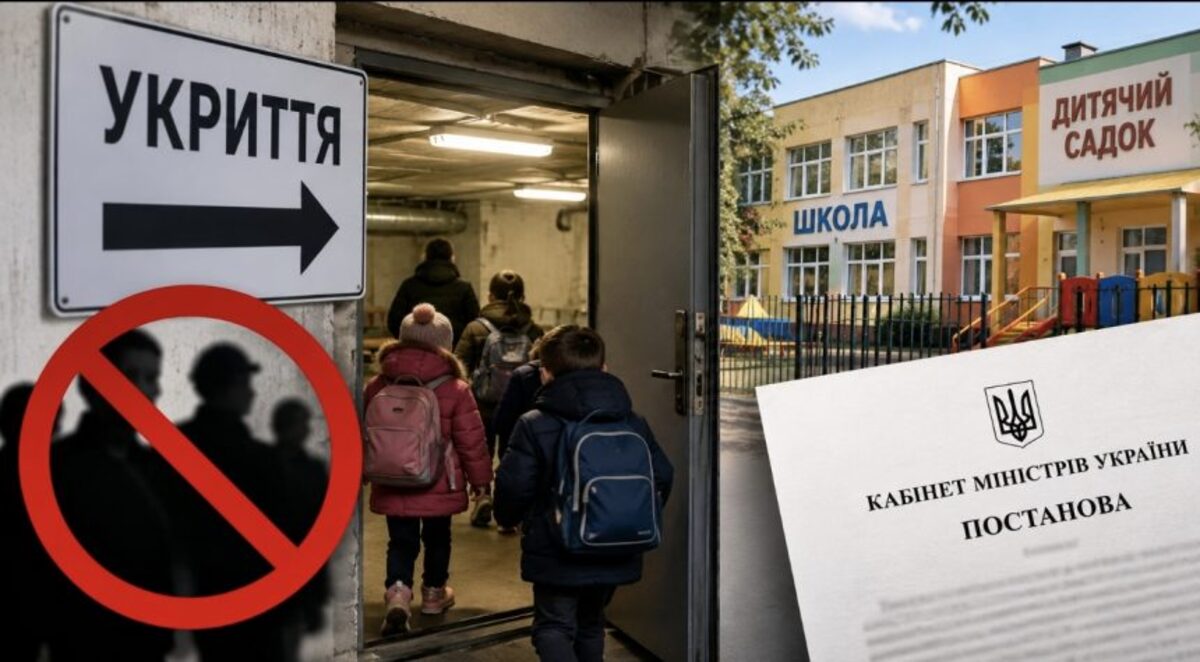
Ukraine has changed the rules for using shelters in educational institutions: during in-person classes, they will primarily be designated to protect children and staff. Members of the public will not be able to use these premises freely. However, in certain cases, local authorities may allow students, teachers, and other members of the public to use a school shelter at the same time. To do so, separate areas, access procedures, and safety measures must be provided. The changes were introduced by Cabinet of Ministers of Ukraine Resolution No. 1288 dated October 15, 2026, “On Amendments to Certain Acts of the Cabinet of Ministers of Ukraine on the Use of Civil Protection Shelters.” The document was published on October 21, 2026, after which the new rules came into effect.
In preschools, shelters will be used exclusively to protect participants in the educational process—children and preschool staff. During in-person classes, shelters in schools will also be designated for students and teachers.
At the same time, the resolution provides for an exception for civil protection shelters managed by general secondary education institutions. By decision of local executive authorities or local self-government bodies, participants in the educational process and other categories of the population may use such shelters at the same time.
The procedure for shared use of a shelter must be established by the entity responsible for it—the founder or head of the relevant educational institution. Before making such a decision, it is necessary to assess whether the area, layout, and safety conditions allow different groups of people to use the shelter without putting children at risk.
In particular, the premises must be divided into zones, with designated areas for students and other members of the public, and, where possible, separate rooms should be set aside for them. Procedures must also be established for security staff, technical staff, or other institution personnel to escort members of the public at night, on weekends, and on public holidays.
Access for members of the public to other premises and grounds of the institution—apart from the shelter itself and the route to it—must be restricted. Signs, route maps, and rules of conduct must be posted on the grounds, taking into account the needs of people with disabilities and people with reduced mobility.
In addition, information about shelters open to other members of the public and the rules for using them must be published. This information must be posted on the official websites of the institutions’ founders or the institutions themselves. Decisions about public access will take into account the shelter’s available space and the times when it can be used by others.
If a decision is made to allow students and other members of the public to use a shelter at the same time, the institution’s management must provide additional safety measures. Teachers and a psychologist must be present for as long as children are in the shelter, as must a police officer or security staff member, if available. Separate areas must be designated for students and other people and, wherever possible, separate rooms arranged for them. Routes taken by children and other members of the public to and from the shelter should intersect as little as possible.
Participants in the educational process must also have access to separate restrooms. A separate room or partitioned area must be provided for children with special educational needs, where they can decompress and receive the necessary psychological, educational, and developmental support services.
Thus, the new rules do not mean that members of the public are prohibited from using every school shelter under all circumstances. They establish the priority of protecting children and staff during in-person classes, while allowing shared use only by separate decision and subject to safety requirements.
We previously reported:
- Shelters are in place; now the air is being checked: Mykolaiv turns its attention to ventilation in schools and preschools
- Lessons behind curtains and the “sauna effect”: Mykolaiv schoolchildren feel ill in shelters
- Yellow alert brings lessons to a halt: when schools are allowed to hold classes in shelters
- “The children are all on top of each other”: Senkevych orders school shelters inspected after parents’ complaints
- Just four round-the-clock shelters for the entire Korabelnyi district, — Diia