The administration of U.S. President Donald Trump, together with its European partners, is working on a new initiative to end the Russian-Ukrainian war. It envisages not only a cessation of hostilities, but also far-reaching economic agreements, Ukraine’s reconstruction, and security guarantees. However, one of the most difficult issues remains the possible continuation of Russian control over occupied Ukrainian territories, particularly in the Donbas.
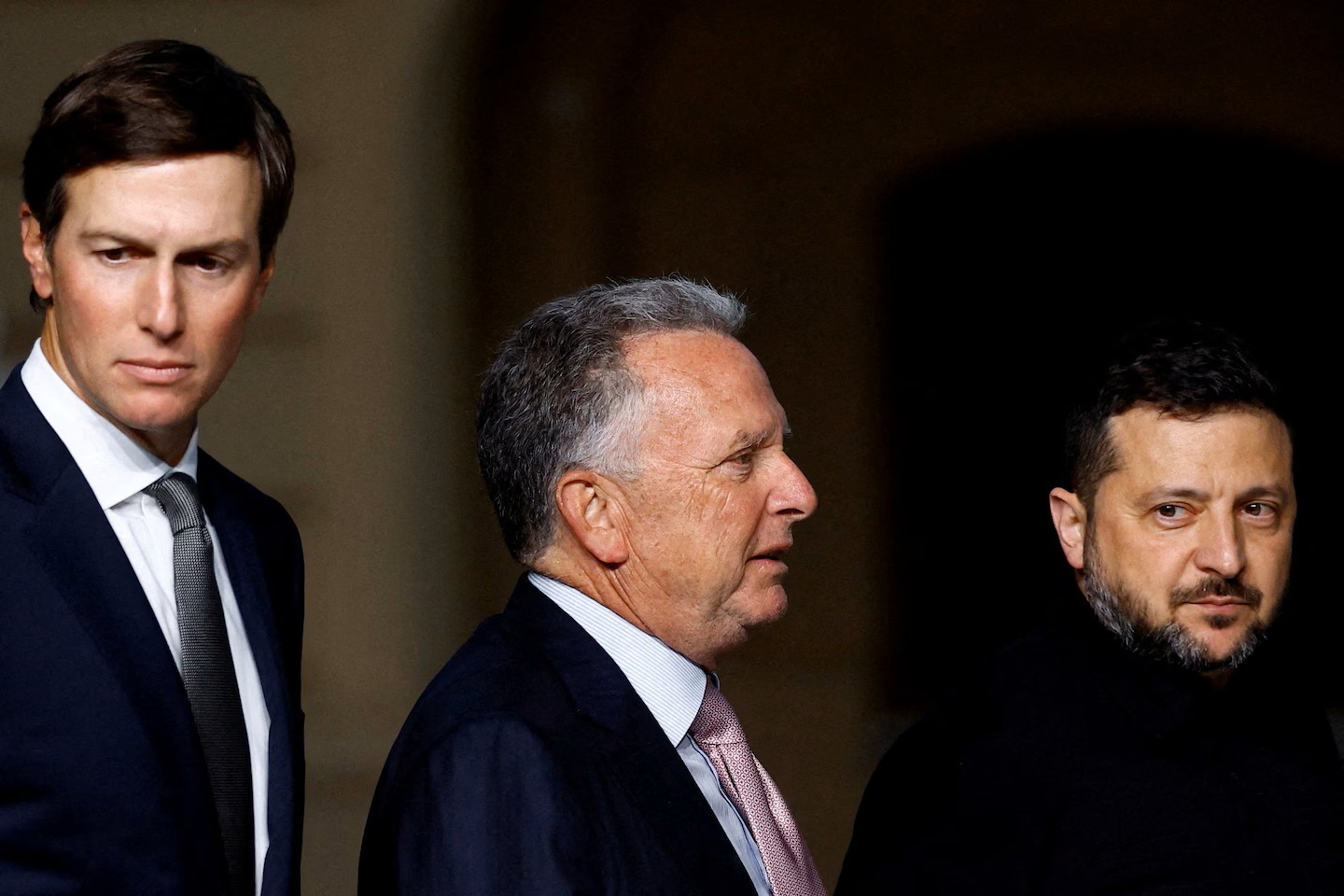
This was reported on October 12, 2026, by columnist David Ignatius in an opinion piece for The Washington Post. According to him, the U.S. president’s son-in-law, Jared Kushner, and special envoy Steve Witkoff are working to find a new diplomatic solution. Their approach is to broaden the negotiations: to discuss not only territory and a ceasefire, but also the parties’ future economic and security interests.
What the new peace initiative envisages
According to The Washington Post, U.S. and European negotiators are trying to put together a package of agreements covering several interconnected areas:
- Cessation of hostilities. Reaching an agreement to stop the war and pursue a political settlement.
- Security guarantees for Ukraine. Creating an international protection mechanism that would come close in substance to NATO guarantees.
- Postwar reconstruction. Securing funding and investment to rebuild Ukraine’s economy.
- Economic cooperation. Expanding economic ties, particularly in the energy sector, as a possible incentive to reach an agreement.
- Territorial settlement. Finding a solution for territories occupied by Russia, which remain one of the main points of contention.
The most difficult element of a potential agreement is the question of Ukrainian land. Possible compromises include the de facto continuation of Russian control over territories already occupied, including parts of the Donbas.
At the same time, this is a possible negotiating scenario, not an agreed transfer of territory by Ukraine. No final agreement has been publicly confirmed, and there is no evidence that Volodymyr Zelenskyy is prepared to accept such terms.
Trump’s diesel deal with Putin complicated negotiations
Alongside preparations for the peace initiative, Donald Trump reached an agreement with Vladimir Putin to supply Russian diesel fuel to U.S. and global markets. To facilitate this, Washington agreed to temporarily ease some sanctions restrictions.
The move sparked discontent in Ukraine and among its European partners, as additional revenue from energy exports could support the Russian economy during the war.
On October 12, 2026, the Reuters news agency reported that U.S. negotiators had explained the purpose of the diesel deal to the Ukrainian side: to soften Moscow’s position and encourage Vladimir Putin to return to negotiations.
During a meeting in Miami, the U.S. and Ukrainian delegations also discussed funding for Ukraine’s reconstruction and future investment projects.
However, this diplomacy is contradictory: the U.S. is trying to persuade Russia to end its aggression while simultaneously opening up additional fuel export opportunities for it.
Ukraine is being urged to stop strikes on Russian oil refineries
Ukrainian attacks on Russian oil-refining infrastructure have become another point of contention.
Donald Trump urged Volodymyr Zelenskyy to stop strikes on Russian oil refineries. The U.S. president links these attacks to diesel fuel shortages and rising prices.
For Ukraine, however, strikes on oil refineries are a way to weaken the aggressor’s economic potential and its ability to sustain military operations.
The Ukrainian side has said it is prepared to consider a mutual cessation of attacks on energy facilities, but only if Russia also stops striking Ukraine’s energy infrastructure.
So far, no agreement on such a truce has been confirmed. Despite Trump’s statements, Russian forces continued attacking Ukrainian energy facilities. In particular, on October 11, 2026, Russia struck Kharkiv CHPP-5, even after the U.S. president had announced an “energy truce.”
Will Putin agree to end the war?
Despite Washington’s diplomatic efforts, the main unknown is whether the Russian leadership is willing to genuinely end the war.
Russia continues to demand territorial concessions, particularly regarding the Donbas, and diplomatic contacts have yet to bring an end to the hostilities.
Ukraine’s European partners continue to take part in efforts to find a diplomatic solution, despite disagreements with Trump over the easing of sanctions against Russia. At the same time, they stress the need for meaningful security guarantees and continued support for Ukraine.
Thus, the new U.S. initiative is still being developed. Its success will depend not only on the economic benefits on offer, but also on whether Russia agrees to end its aggression and whether Ukraine receives guarantees capable of preventing another war.
We previously reported:
- Putin is ready to stop strikes on Ukraine only on election day
- Russia struck a thermal power plant in Kharkiv after Trump’s statement on an energy truce
- Trump again announced an energy truce between Ukraine and Russia
- Trump called for the election of a new Ukrainian president who could reach an agreement
- Gifts for Putin: Zelenskyy reacts to the lifting of sanctions on Russian diesel