Hospitals in Mykolaiv region are critically short of hundreds of medical workers, and young people are not staying to work
There are hospitals, but they're still looking for doctors: of 200 interns, only 44 chose the Mykolaiv region


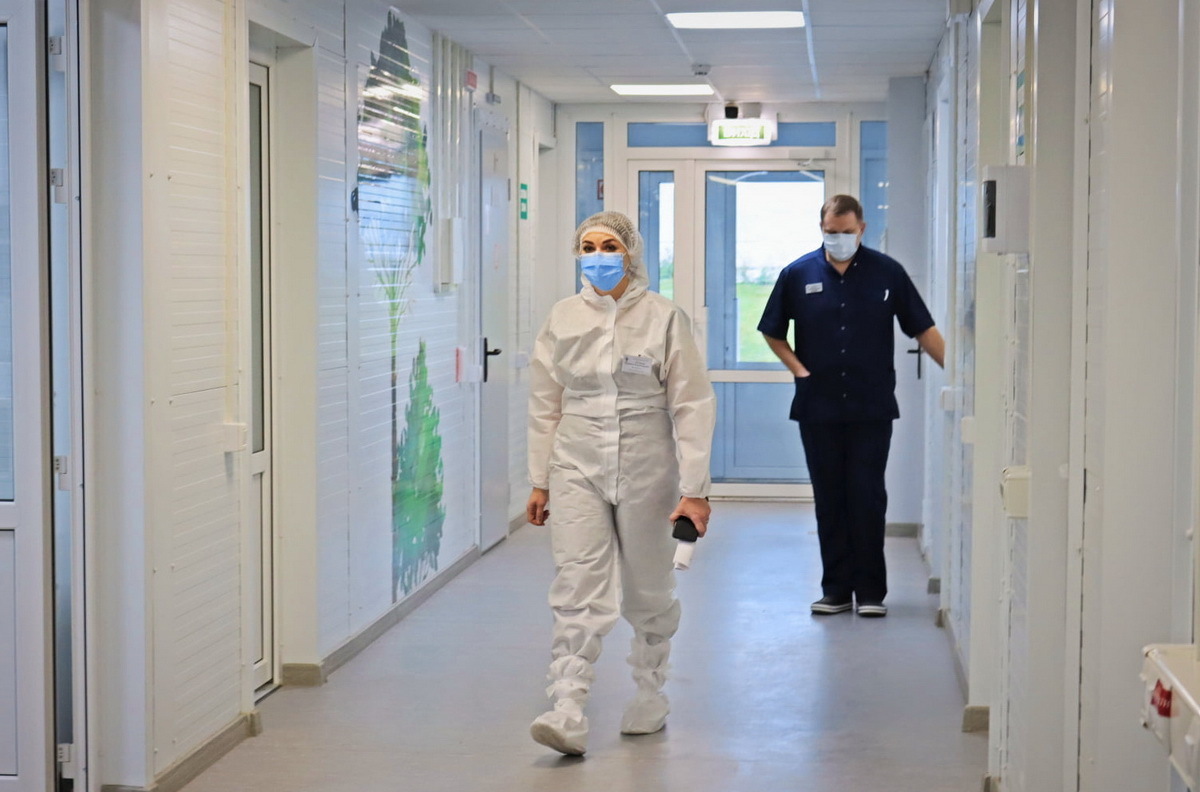
Hospitals in the Mykolaiv region are facing an escalating staffing problem: medical institutions lack doctors, and a significant portion of young specialists do not choose to work in the region after completing their internships. Against the backdrop of forming a new capable network of medical facilities, a regional council deputy warns: assigning statuses and departments to hospitals is not enough if there will simply be no one to treat patients.
The situation was described by the head of the infectious disease department of the hospital in Pervomaisk, a deputy of the Mykolaiv Regional Council from the European Solidarity faction, Olena Masalitina, during an online discussion of the capable network project at a meeting of the council’s relevant commission.
According to Olena Masalitina, the staffing shortage has already become the main problem for many hospitals. She emphasized that reorganizing the medical network alone will not yield results if there are not enough specialists in the specified areas of work.
“Our main problem now is staffing. The personnel potential in hospitals is weak right now; wherever you look, it’s critical. You hear how, at the state level, they talk about inviting specialists from the Philippines. Listen, let’s think about how we will interest our own specialists,” said Olena Masalitina.
One of the main problems the deputy named was the situation with young medical professionals. Some interns receive training in hospitals, but after completing it they do not stay to work there.
To attract specialists, in Olena Masalitina‘s view, communities and the region must offer medical workers real social incentives. One of the main ones she considers to be full-fledged housing, not temporary accommodation in adapted hospital premises.
“What can we offer a young specialist to interest them? Housing. Housing, not accommodation on the premises of some department, just in a little room that isn’t used. That’s not housing. Housing is exactly what should be provided to specialists. It doesn’t matter whether they are young specialists or not. Specialists who come and do their work well,” the deputy noted.
Another possible incentive she named was additional payments. At the same time, local budgets’ capacities are limited, and even a few million hryvnias of aid to an individual medical institution, in her opinion, cannot fundamentally fix the salary situation.
Commenting on the 5 million hryvnias of aid mentioned during the meeting, Olena Masalitina stated that after allocating these funds to salaries they will not produce a significant result.
“What Tetiana Demchenko says — they gave 5 million UAH — that’s nothing at all. So the local council — what, 5 million? That isn’t funds. It sounds like a lot, but if we distribute it for salaries, and salaries themselves don’t change, it’s not enough,” explained Olena Masalitina.
The deputy also drew attention to workers’ actual incomes in hospitals. According to her, it is necessary to consider not only the accrued salary but the amount the medical worker ultimately receives. Some doctors are forced to work multiple shifts, but even with such a workload the income level remains low.
A separate problem concerns nurses and junior medical staff. When planning the new network, Olena Masalitina believes it is necessary to take into account not only the number of staffed positions but also the real workload on representatives of different specialties.
Speaking about the work of surgeons and anesthesiologists, the deputy emphasized that the workload of specialists in different fields differs significantly, so it is not possible to assess their work in the same way.
“A surgeon who stands and works on their feet day and night, and anesthesiologists — they deserve deep respect. And who will we equate them with? With family medicine? Well, probably their workloads are different,” she said.
Olena Masalitina also drew attention to the territorial accessibility of medical care. The hospital where she works in Pervomaisk effectively serves patients from several districts of the region. Therefore, during further reorganization it is important to avoid a situation where people have to travel long distances to receive the necessary care.
At the same time, the need to create supra-cluster, cluster and general hospitals does not cause objections from the deputy. She names the provision of necessary specialists to institutions as the main condition for the effectiveness of such a system.
“Clusterization raises no questions for me at all. It must exist. It really must. There should be supra-cluster institutions, cluster institutions, general ones and those that can be maintained by a city council or settlement councils. But without specialists, no one has any strength,” Masalitina summed up.
Shortage of 480 doctors
The scale of the staffing deficit is confirmed by previously published data from the Mykolaiv OVA. Medical institutions in the region are short of 480 doctors. The greatest need is for family doctors, anesthesiologists, internists and pediatricians.
As of the beginning of 2026, medical institutions in the region had 3,918 authorized physician positions, while 2,658 medical workers were actually employed. The overall staffing level with doctors was only 67.8%. The largest shortages were family doctors — 76, anesthesiologists — 36, internists — 35, pediatricians — 23, neurologists — 20, and surgeons — 17.
The situation remains especially difficult in rural communities. Among multiprofile hospitals, one of the lowest staffing levels is at Vradiivka Central District Hospital — 36.9%, Bratska Hospital — 37.7%, Novo Odesa Multidisciplinary Hospital — 40%. Less than half of physician positions are also filled in medical institutions in Bereznehuvate, Ochakiv, Snihurivka and Arbuzynka. Low figures are also recorded in primary health care centers in Buzke, Bratske, Kobleve, Arbuzynka, Nova Odesa and Kryve Ozero.
Of 200 internship places, interns chose only 44
The problem cannot be quickly compensated even by graduates of medical institutions. For the employment of interns in the Mykolaiv region in 2026, 200 places were prepared, but only 44 graduates chose the region.
The regional health administration previously explained that young specialists more often choose safer regions, places with better prospects for professional development, higher salaries and social guarantees. The security situation in the frontline Mykolaiv region remains one of the factors influencing graduates’ decisions.
Thus, alongside the reorganization and clusterization of hospitals, the region faces another no less important problem — who will actually work in the created system and whether communities will be able to offer medical workers the conditions that will make them want to stay in the Mykolaiv region.
Earlier we wrote:
- Mykolaiv hospitals must create supervisory boards for contracts with the NHSU
- In Mykolaiv a hospital director reported on services without specialists and equipment
- Indicators can no longer be hidden: Mykolaiv region hospitals will be checked by digital data
- A large stage of hospital reorganization was completed in Mykolaiv: more than 1,500 employees transferred to the new structure
- A hospital director in Mykolaiv was notified of suspicion over almost UAH 10.7 million in damages