Siberia is no longer a rear area: a strike on Russia's largest refinery could be "the last straw"
Russia's largest oil refinery has stopped: a strike on Omsk could finish off the fuel supply system


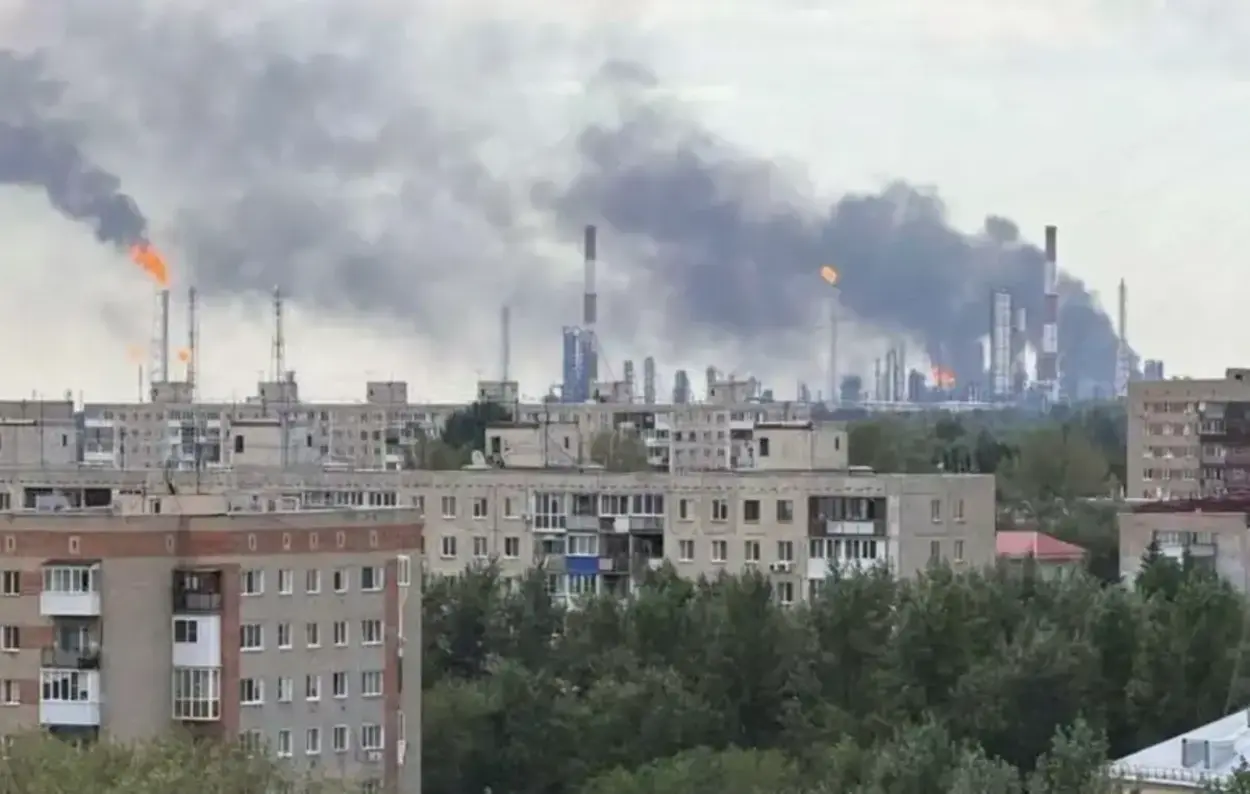
Ukrainian drones struck the Omsk oil refinery in Siberia for the first time — the largest facility of its kind in Russia. The strike, carried out on July 6, 2026, showed that key energy assets of the aggressor state can no longer feel safe even thousands of kilometers from Ukraine.
As reports on July 9, 2026, The Wall Street Journal, the drones traveled nearly 2,400 kilometers from territory held by Ukraine. There was effectively little serious protection of the facility by air defense systems, because Russian authorities considered the site too remote for a Ukrainian attack.
According to the Ukrainian company Fire Point, the upgraded FP-1 drones linked to the operation are capable of covering about 3,400 kilometers. This means oil and gas facilities in Western Siberia, military enterprises, airfields and other strategic infrastructure in Russia have fallen within range.
After the attack, the Omsk refinery halted crude processing. The CDU-10 primary distillation unit, which supplied roughly 38% of output, was damaged, and CDU-11, responsible for another 37% of capacity, was shut down due to network damage. The plant also stopped selling gasoline and diesel on the St. Petersburg commodity exchange. In 2024 the Omsk plant processed about 22 million tonnes of crude oil, producing approximately 5 million tonnes of gasoline and 8 million tonnes of diesel fuel. Its shutdown has already caused queues at gas stations in the city, and some private networks temporarily stopped selling gasoline to the public.
Ukrainian strikes on Russian refining have a cumulative effect. In May 2026 virtually all major refineries in central Russia were forced to fully or partially halt production. In June gasoline output fell by about 25% compared with the average for June 2025. Because of fuel shortages, rising prices and queues, Russia has already banned exports of gasoline and aviation fuel, and from July 8 to 31, 2026 — diesel as well. Russian authorities are even considering returning to production of lower-environmental-standard fuel and starting imports of petroleum products.
Oxford Institute for Energy Studies expert James Henderson believes that hitting Russia’s largest refinery has significantly worsened the state of the country’s energy sector.
“The strike on Omsk could be the last straw. The farther the Ukrainians strike, the more serious the situation for Russia’s energy sector,” — James Henderson
Retired marshal of the Royal Air Force of the United Kingdom Edward Stringer noted that Russia has lost strategic depth: the more territory the Kremlin must cover with air defenses, the fewer systems remain to protect the front and other important sites.
Refining remains one of the most vulnerable sectors of Russia’s wartime economy. Shortages of gasoline and diesel directly hit army supply, agriculture, freight transport and the delivery of goods.
The WSJ suggests that systemic pressure on Russian energy could raise the economic and logistical cost of continuing the war and affect the Kremlin’s calculations. At the same time, a single strike, even on Russia’s largest refinery, by itself does not guarantee that Vladimir Putin will agree to end the aggression against Ukraine.
Previously we wrote:
- Almost half of Russia’s refining halted: Ukrainian drones inflicted $13.5 billion in losses on the industry
- 700 kilometers didn’t save them: Zelensky reported strikes on two refineries in Russia
- Moscow in smoke: drones struck refineries in Kapotnya, airports suspended operations
- Zelensky announces escalation of strikes deep into Russia — Ukrainian drones already reach Saint Petersburg
- Russia enters a fuel crisis: gasoline rationed, refineries can’t recover after strikes