Moscow in smoke: drones struck the oil refinery in Kapotnya, airports suspended operations
This is not the first strike against this enterprise in recent days


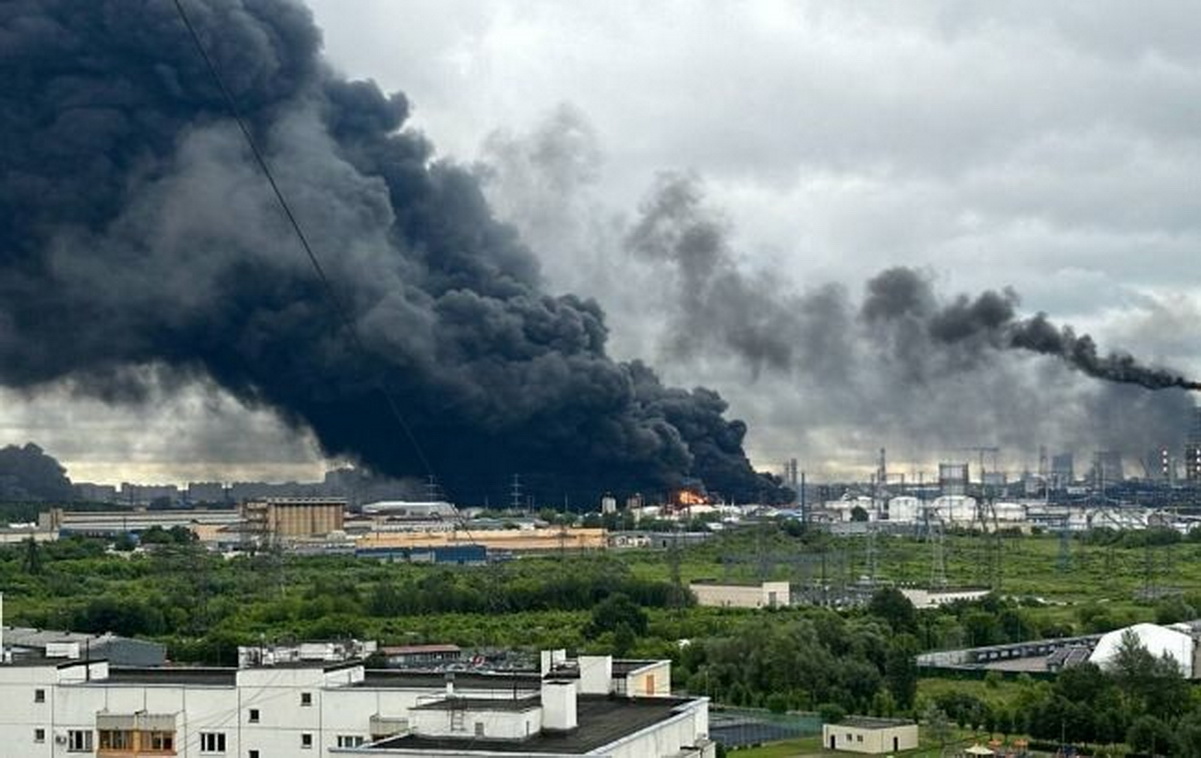
Moscow and the Moscow Region on Thursday, 18 June 2026 were hit by one of the most massive drone attacks of the year. According to international media and Russian authorities, the Moscow Oil Refinery in the Kapotnya district was again struck.
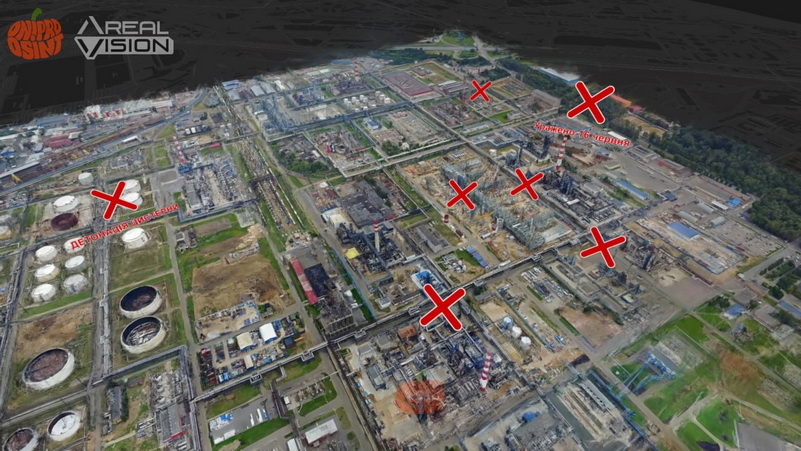
This is not the first strike on this facility in recent days. Earlier, on 16 June, the Ukrainian side confirmed damage to the Moscow refinery, located roughly 500 km from the Ukrainian border.
After the new attack over the capital region, columns of smoke rose again. Dozens of videos appeared online showing fires, the work of Russian air defenses and drones flying over Moscow and the suburbs.
According to international agencies, due to the threat in the sky, key Moscow airports were temporarily suspended: Vnukovo, Domodedovo, Sheremetyevo and Zhukovsky. In Russia this restriction regime is called the “Kover” plan.
Russian public pages also reported evacuations of passengers at Sheremetyevo, including claims that people were even removed from aircraft. Officially Russian authorities explained the restrictions as necessary to “ensure flight safety”.
Moscow Mayor Sergei Sobyanin spoke of massive air-defense activity and allegedly dozens of downed drones approaching the Russian capital. The Russian Defense Ministry, in turn, reported an alleged interception of 555 Ukrainian drones in various regions. These claims by the Russian side have not been independently verified.
At the same time, eyewitness videos and media reports indicate that some drones did reach their targets. The most attention was drawn to the fire in the area of the Moscow refinery in Kapotnya.
The plant belongs to “Gazpromneft” and is one of the key oil-processing facilities of the Russian capital region. According to open data, it supplies up to 40% of Moscow’s gasoline needs and about 50% of its diesel fuel.
The facility is located approximately 15 km from the Kremlin, which makes a strike on it particularly painful for Russian propaganda. The capital region has traditionally been considered one of the most protected by Russian air defenses.
According to OSINT channels, several ignition points may have started on the refinery territory in Kapotnya after the attack. Videos circulated online showing intense flames and thick smoke.
There were separate reports of fires and damage in Lyubertsy, in an industrial zone, near a fitness center building, and also of a blaze on the roof of the “Bila Dacha” shopping center. Russian authorities traditionally attributed most of the destruction to “falling debris”.
Residents of Moscow and the Moscow suburbs meanwhile posted videos of the aftermath on social networks and did not hide their panic.
One eyewitness emotionally commented on what he saw in a video, describing the scale of the fires in the Russian capital.
“All of Moscow is f***ing on fire! Everything’s burning. I’m getting out.”
President of Ukraine Volodymyr Zelensky earlier emphasized that strikes on Russian facilities that enable the war against Ukraine are a just response to Russian terror against Ukrainian cities and communities.
“A completely just response to the Russian strikes on our cities and communities.”
According to Zelensky, Ukrainian long-range strike capabilities demonstrate that Russia cannot hit Kyiv, Mykolaiv, Kharkiv, Odesa, Sumy and other Ukrainian cities with impunity while leaving its own critical infrastructure completely safe.
Against the backdrop of the attack, the Russian stock market also reacted with a decline. Russian media reported that the Moscow Exchange indices fell in the morning, and certain companies linked to Russia’s war economy lost value.
It is particularly telling that the new attack occurred against the background of fuel problems in Russia. After regular strikes on refineries in various Russian regions, there have already been restrictions on gasoline sales, queues at gas stations and disruptions in fuel supplies.
For the Kremlin this is an unpleasant signal: the war Russia brought to Ukraine is increasingly returning to its own territory — not only to border regions, but also to the very capital of the aggressor state.
And while Russian propaganda tries to speak about the “successful work of air defenses”, the smoke over Moscow, grounded airports and fires at a strategic refinery show a different reality: Russian infrastructure that feeds the war is no longer out of reach.
Earlier we wrote:
- Russia enters a fuel crisis: gasoline is restricted, refineries struggle to recover after strikes
- Ukrainian Navy drones struck the sanctioned tanker Marquise 210 km from Tuapse
- UAF strikes and sanctions block Russia’s oil exports: production fell by 300–400k barrels
- In Russia again — a night of fire: four oil facilities burn simultaneously after UAF strikes
- Russian Baltic ports halted oil shipments due to attacks by Ukrainian drones