Missile manufacturers and Rusal enterprises have been hit with Ukrainian sanctions
The restrictions also covered suppliers of electronics for Russian FPV drones


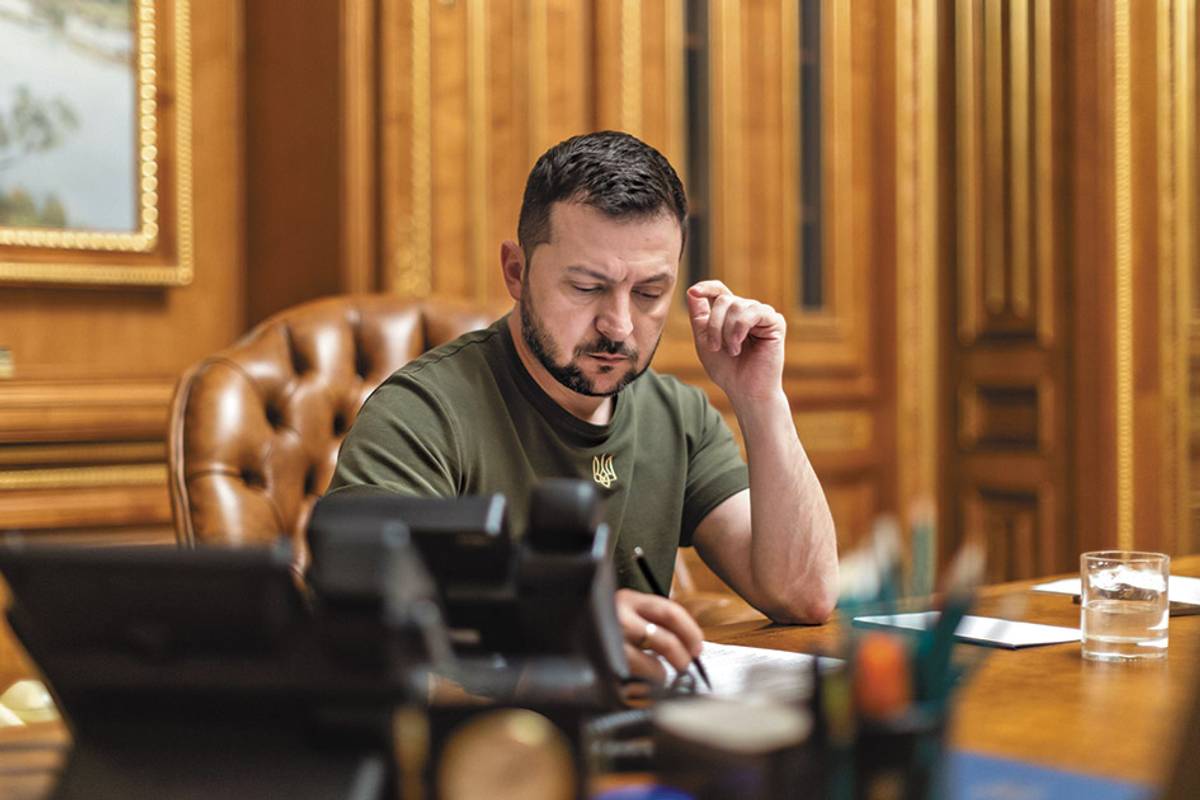
President of Ukraine Volodymyr Zelenskyy has enacted sanctions against manufacturers of Russian ballistic missiles, suppliers to the military industry, and companies belonging to the Rusal group. The restrictions apply, in particular, to companies whose products are used to manufacture weapons and military equipment. Information about the decision was published on the Office of the President website.
The first list includes 51 individuals and 44 legal entities involved in the production of Iskander, Kalibr, Kh-101 and Kinzhal missiles. These include suppliers of raw materials, equipment and tools used to manufacture long-range weapons.
This sanctions list also includes:
- G. S. Petrov Institute of Plastics;
- Kometa Corporation for Special-Purpose Space Systems;
- VitaReaktiv;
- Promenergo;
- Kirov Biochemical Plant;
- D. I. Mendeleev All-Russian Research Institute for Metrology.
Another package of restrictions targets 32 Russian citizens and 35 Russian companies. They supply the Russian Federation’s military-industrial complex with industrial equipment, tools, electronics and raw materials.
Companies on this list include:
- Gagaring — specializes in communications and control systems for FPV drones;
- Virgin-EC — supplies the Russian military with foreign-made electronic components;
- Pressmash machine-tool association — supplies metalworking machines to manufacturers of Kh-101 and Kh-59 missiles and Orion drones.
Sanctions have also been imposed on companies belonging to the Rusal industrial group that are involved in the production of military aircraft, armored vehicles, missile weapons and drones.
According to the Office of the President, from April 2024 to March 2025, United Company Rusal Trading House and the Rusal Taishet Aluminum Plant imported nearly 150 million rubles worth of alumina into Russia. This raw material was used to manufacture the listed types of military equipment and weapons.
In Mykolaiv Oblast, the Mykolaiv Alumina Plant (MHP) is associated with the Rusal group. The state confiscated the plant from Russian oligarch Oleg Deripaska and transferred it to the management of the State Property Fund.
The plant has been out of operation since 2022, but funds are needed to maintain its equipment, production facilities and two red mud ponds. According to the State Environmental Inspectorate, they contain 49.4 million tonnes of red mud.
On April 26, 2026, strong winds spread red mud from the plant’s storage ponds across nearby settlements near Mykolaiv. The regional military administration later said the situation had been contained.
After the storm, on April 29, 2026, environmentalist Lyudmyla Hryhorieva warned about the danger posed by dust from the red mud ponds. She explained that inhaling it could aggravate chronic respiratory diseases.
In May 2026, the State Environmental Inspectorate reported that the plant’s dust suppression system was operating at just 70%. Damaged equipment and difficulties maintaining it had led to repeated dust incidents at the tailings fields.
Vitaliy Kim also spoke about sending samples of the tailings to South Korea to determine whether they could be used for road repairs. However, he did not specify whether the samples were specifically red mud from the MHP.
After visiting the plant, Deputy Minister of Economy of Ukraine Daria Marchak described its tailings fields as a separate asset that could interest potential investors. She noted that the accumulated waste requires special attention to environmental safety, but could also have commercial value during the future privatization of the plant.
An auction to sell the Mykolaiv Alumina Plant is planned for the first quarter of 2027. The original deadline — the end of 2026 — was postponed because preparations are underway to privatize the entire portfolio of confiscated assets. According to Dmytro Natalukha, both Ukrainian and foreign investors have expressed interest in the plant.
The State Property Fund has yet to decide whether the red mud ponds will be included in the sale along with the plant. The final terms of privatization must be approved by the Cabinet of Ministers of Ukraine.
We previously reported:
- The EU adopts nearly 1,600 sanctions to make it harder for Russia to produce weapons
- Selling doesn’t mean restarting: Is the State Property Fund speculating on MHP privatization?
- The state seized 2 billion worth of raw materials from Deripaska
- Ukraine is removing Deripaska’s Russian assets from the Mykolaiv plant
- Former MHP owner and Russian oligarch Deripaska charged; his managers detained