Russians announce a ceasefire near Oleshky: Mykolaiv serviceman warns of a possible trap
Two dates for the ceasefire in Oleshky: what doesn’t add up in statements by Russia and the White House


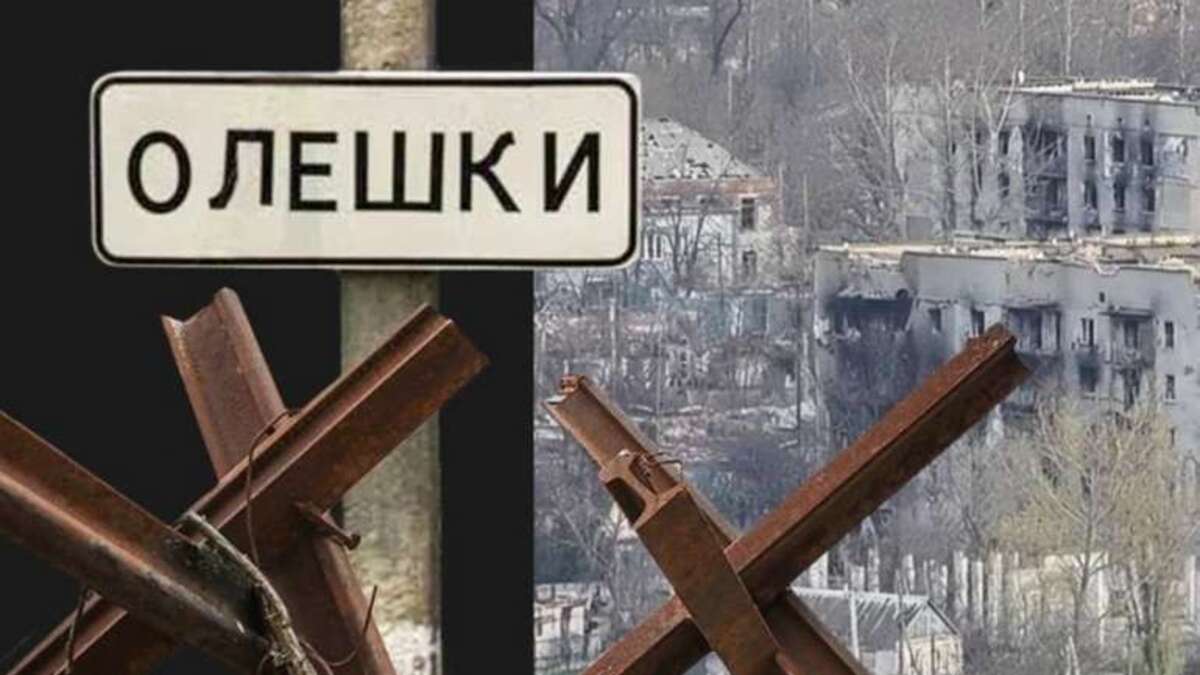
The Russian army has announced its intention to introduce a ceasefire on the Kherson front starting October 27, 2026. The occupiers say this is to prepare for a so-called humanitarian operation near the temporarily occupied city of Oleshky, where they plan to send a convoy carrying humanitarian supplies. Meanwhile, Mykolaiv serviceman Illia Zelinskyi warns that the enemy may use the pause in hostilities to strengthen its positions in the city.
Ukrainian media, including Glavkom, reported on the Russian General Staff’s announcement on October 23, 2026, citing a statement by Russian Armed Forces Chief of the General Staff Valery Gerasimov. According to him, the ceasefire is to begin at 4:00 a.m. Moscow time on October 27. The Russian side says this is necessary to ensure the safety of civilians and deliver essential supplies to the area around Oleshky.
According to Valery Gerasimov, Russian troops are to conduct engineering reconnaissance and ensure the safe passage of a humanitarian convoy to the city.
“The Russian Armed Forces will organize engineering reconnaissance and ensure the movement of a humanitarian convoy to Oleshky to deliver essential supplies,” Gerasimov said.
However, the Russian side’s announcement of a ceasefire does not, in itself, guarantee that hostilities will actually stop. There is also no basis at this time to assume that all the stated conditions of the humanitarian operation will be met.
In a Telegram post, Mykolaiv serviceman Illia Zelinskyi suggested that Russian units could use the announced ceasefire to return to their positions and strengthen their presence in Oleshky. In his assessment, Ukrainian forces regularly strike the enemy’s logistics, so a pause could benefit the Russian army.
“The enemy’s pilots have been pushed out of their positions. Now they need to move into the city, their logistics are regularly being hit, and the enemy will definitely take advantage of this ‘ceasefire,’” he wrote.
It should be noted that this is a serviceman’s assessment, not confirmed information about the Russian command’s plans.
The situation is further complicated by the difference in dates. On October 23, the White House announced an agreement on a local ceasefire in Oleshky to deliver humanitarian aid and evacuate civilians. According to the US administration, it is to begin on October 29. Meanwhile, Valery Gerasimov named October 27 as the date for a ceasefire on the Kherson front in connection with a humanitarian operation.
Ukraine’s human rights ombudsman Dmytro Lubinets said that the planned humanitarian mission is to include three main stages: establishing a ceasefire, delivering humanitarian aid, and enabling civilians to leave Oleshky safely. He also warned that carrying out the operation would be extremely difficult.
Against the backdrop of these statements, the safety of civilians and the Russian side’s actual intentions remain key concerns. On October 22, 2026, Ukraine’s Defense Intelligence (HUR) separately warned of a Russian information operation related to occupied Oleshky. According to HUR, its aim is to conceal Russian war crimes and discredit Ukraine’s Defense Forces. This warning concerned an information campaign and was not direct confirmation of the military plan mentioned by Illia Zelinskyi.
Thus, the Russian General Staff announced a ceasefire starting October 27, while the White House had earlier announced that a local truce would begin on October 29. Whether this pause will provide a genuine opportunity to deliver aid and evacuate people will depend on the parties’ actions on the ground and their compliance with the agreements.
We wrote earlier:
- A route for evacuation may open in besieged Oleshky: what is known about the ceasefire
- A hunger strike for Oleshky: Pina Picierno calls for a humanitarian truce
- Zoom instead of truth: Russia organizes an “international teleconference” with fake witnesses
- Diplomat compares the situation in Oleshky to the Holodomor: Russians are taking away food
- Hunger drives people from their homes, and roads are mined: Oleshky residents escape without an evacuation
- The EU calls for humanitarian aid to be allowed into occupied Oleshky