Darkness to Force Capitulation: Russia Plans to Intensify Strikes on Energy Infrastructure
In the worst-case scenario, outages could last up to 20 hours a day


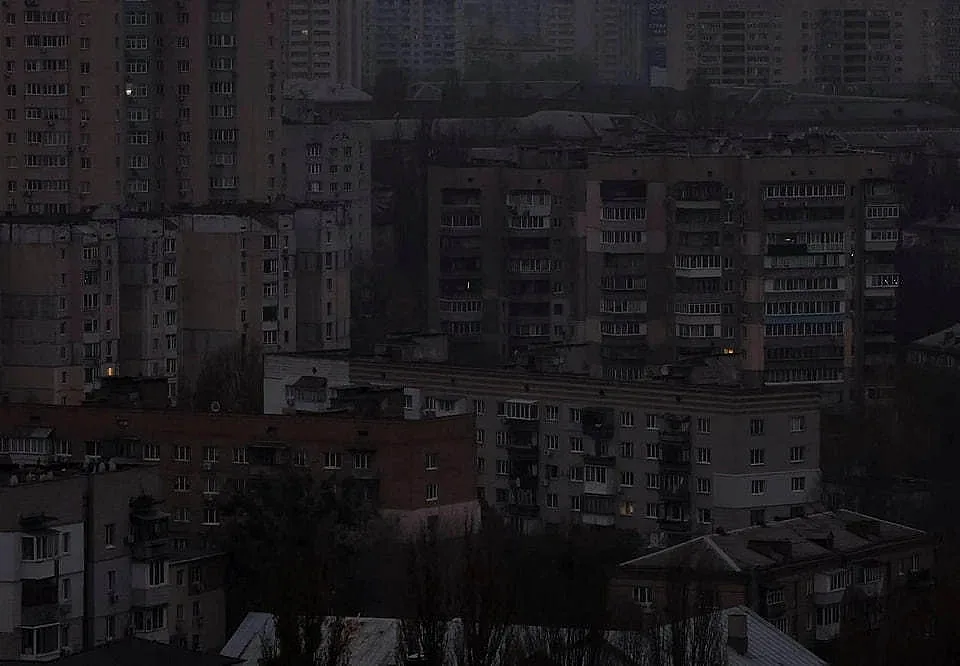
Over the past week, Russian forces have systematically attacked power plants in Kyiv, Kharkiv and other major cities in Ukraine with missiles and drones. The attacks have caused prolonged power outages and disruptions to water supplies. These strikes are seen as signs that Moscow is carrying out a broader plan to intensify attacks on civilian infrastructure.
According to information that has been made public, the Kremlin‘s aim is to use the energy crisis to pressure Ukrainian society and the country’s leadership. The goal is to make major cities unlivable and force the government to capitulate. The strategy has been described as an attempt to punish the population and subject millions of Ukrainians to severe hardship.
Kyiv has a particular place in this plan, with up to 90% of its power supply reportedly set to be knocked out. The capital could suffer the most extensive consequences: during the cold season, damage on this scale could cause serious problems with heating, water supply and the operation of urban infrastructure.
According to an expert forecast, in the worst-case scenario, electricity could be unavailable for up to 20 hours a day until damaged equipment is repaired. This is an estimate of the most unfavorable scenario, not an approved outage schedule or an inevitable outcome of the attacks.
The account of preparations for the strikes claims that Russia has already identified the most vulnerable points in Ukraine’s energy system. It has also calculated how many missiles and drones would be needed to cause large-scale damage to cities’ energy infrastructure.
Potential targets include distribution substations connected to several nuclear power plants. Striking them could significantly disrupt the delivery of generated electricity to consumers.
Attacks on the energy system continued even after U.S. President Donald Trump announced an “energy truce” between Moscow and Kyiv. Russian strikes, including those on sites in the capital, continued to be methodical and destructive.
The escalation of attacks on energy infrastructure has also been linked to the situation on the front line. According to this assessment, Vladimir Putin is trying to achieve through strikes on infrastructure in the rear what the Russian army has been unable to accomplish by military means.
We previously reported:
- 39 ballistic missiles and over 120 drones: Russia openly disregarded Trump’s “truce”
- Russia struck a thermal power plant in Kharkiv after Trump’s announcement of an energy truce
- Trump again announced an energy truce between Ukraine and Russia
- Russia is preparing up to 1,000 missiles, drones and aerial bombs for strikes on Ukraine’s energy infrastructure
- HUR: Energy terror as policy: the Kremlin is preparing a new phase of pressure on Ukraine