AI drones against Russian airports: a large-scale plan still awaiting Zelenskyy’s approval
The first combat trials took place in the occupied part of Donetsk Oblast


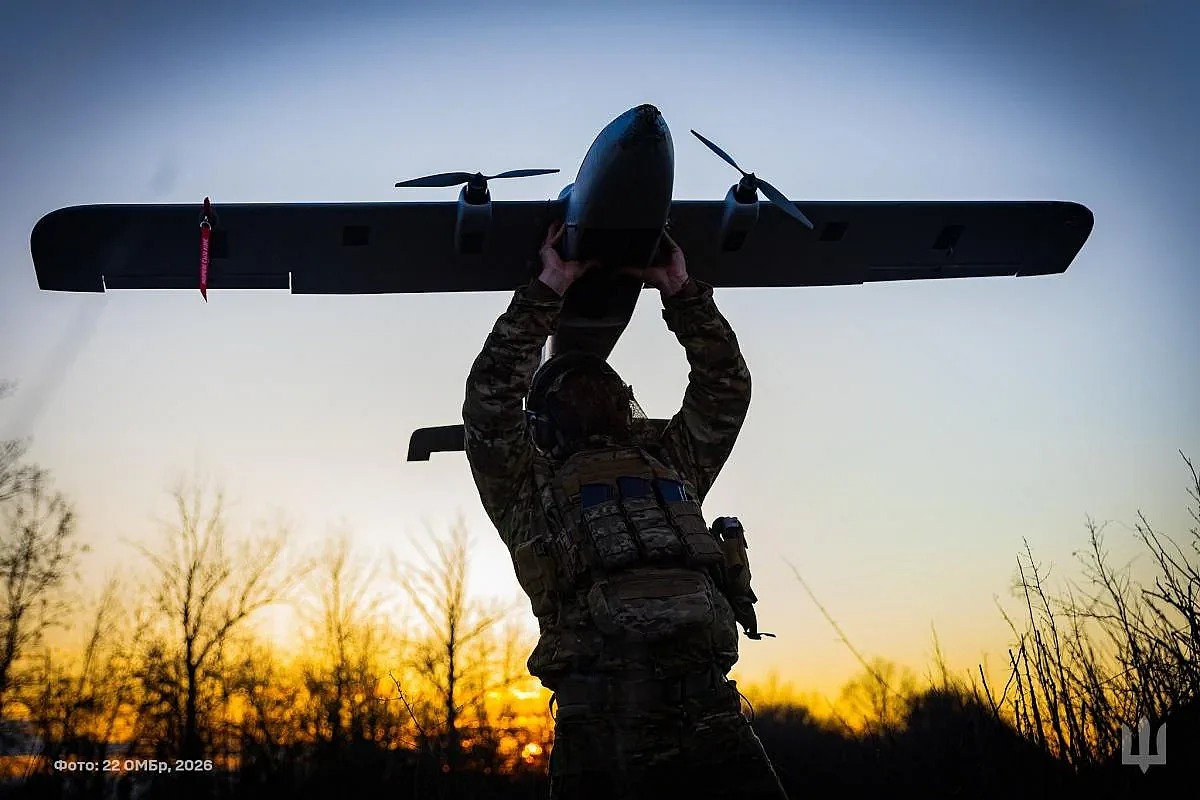
Ukraine is working on a new tactic for the mass deployment of long-range drones equipped with artificial intelligence. Under the secret M&Ms operation, strikes on Russia’s airports, including those in Moscow, are being considered. However, President Volodymyr Zelenskyy has not yet approved the most ambitious version of the plan — no final decision has been made to proceed with such attacks.
The first version of the plan was presented to the president in early 2026. It called for launching up to a thousand drones a day toward Moscow’s airports, which could effectively paralyze civilian air traffic. At the time, Zelenskyy judged the proposed tactic too risky.
At the same time, the president authorized Ukraine’s Defense Minister, Mykhailo Fedorov, to continue developing specialized drones for the operation. A key requirement was to minimize the risk to passengers on civilian aircraft.
According to the developers, the new drones are designed to bypass Russian air defenses and strike targets within the airports of Moscow and other cities. Artificial intelligence is expected to help them match terrain maps, identify targets, and choose the moment to attack.
The first tests of these systems under combat conditions were reportedly carried out in mid-September: several drones were used against targets in the temporarily occupied territory of Donetsk Oblast. Mass use of such drones against Russian airports has not yet begun.
The developers say production of the new drones is underway and the capabilities of Ukrainian forces are gradually growing. According to one of the developers, production volumes are expected to increase substantially in the near future.
Meanwhile, Ukrainian forces have already stepped up their air campaign against Russia. Since October 8, at least four Russian data centers have come under attack. Last week, the threat of drones forced Russian authorities to cancel 345 flights at Moscow airports simultaneously. Two Ukrainian specialists involved in developing the campaign describe the current actions as only the beginning.
So far, Ukraine’s long-range drones have mainly posed a threat in Russian airspace, prompting airports to temporarily suspend operations. Civilian airports have not been directly attacked. The appearance of drones near Moscow forces authorities to suspend flights, close runways, and cancel services.
During a recent incident in Sochi, debris from a downed Ukrainian drone reportedly fell onto the airport grounds. The result was a fire in an administrative building.
One of Zelenskyy’s advisers explains the current approach as a way to create serious difficulties for Russian aviation without directly striking passenger aircraft.
“That would be piracy. The president does not want to allow that,” said a source involved in preparing the operation.
On September 1, Zelenskyy warned international airlines about the dangers of flying in Russian airspace. At that point, Ukraine did not have enough specialized drones to paralyze Moscow’s airports for an extended period.
After the warning, airlines responded in different ways:
- Air Tanzania — the only foreign airline to briefly suspend flights to Moscow;
- Emirates — continued operating flights;
- Flydubai — also continued operating flights.
U.S. President Donald Trump has not publicly commented on the latest attacks on Russian airports and data centers. Earlier, he called on Ukraine to stop striking Russian oil refineries, but later allowed for the possibility of attacks on other targets.
“There are a lot of other targets there,” said Donald Trump.
Ukraine’s air campaign is expanding amid intensified Russian strikes on Ukrainian cities. In this context, Zelenskyy faces a difficult choice: accept the terms for ending the war being advanced by Washington and Moscow, or seek new ways to continue resisting, including without guaranteed U.S. support.
We previously reported: