Putin may "back down": Two Kremlin scenarios after nearly five years of war
The Kremlin expected to frighten Europe, but the war has dragged on for almost 1,700 days, and the promised victory keeps being postponed

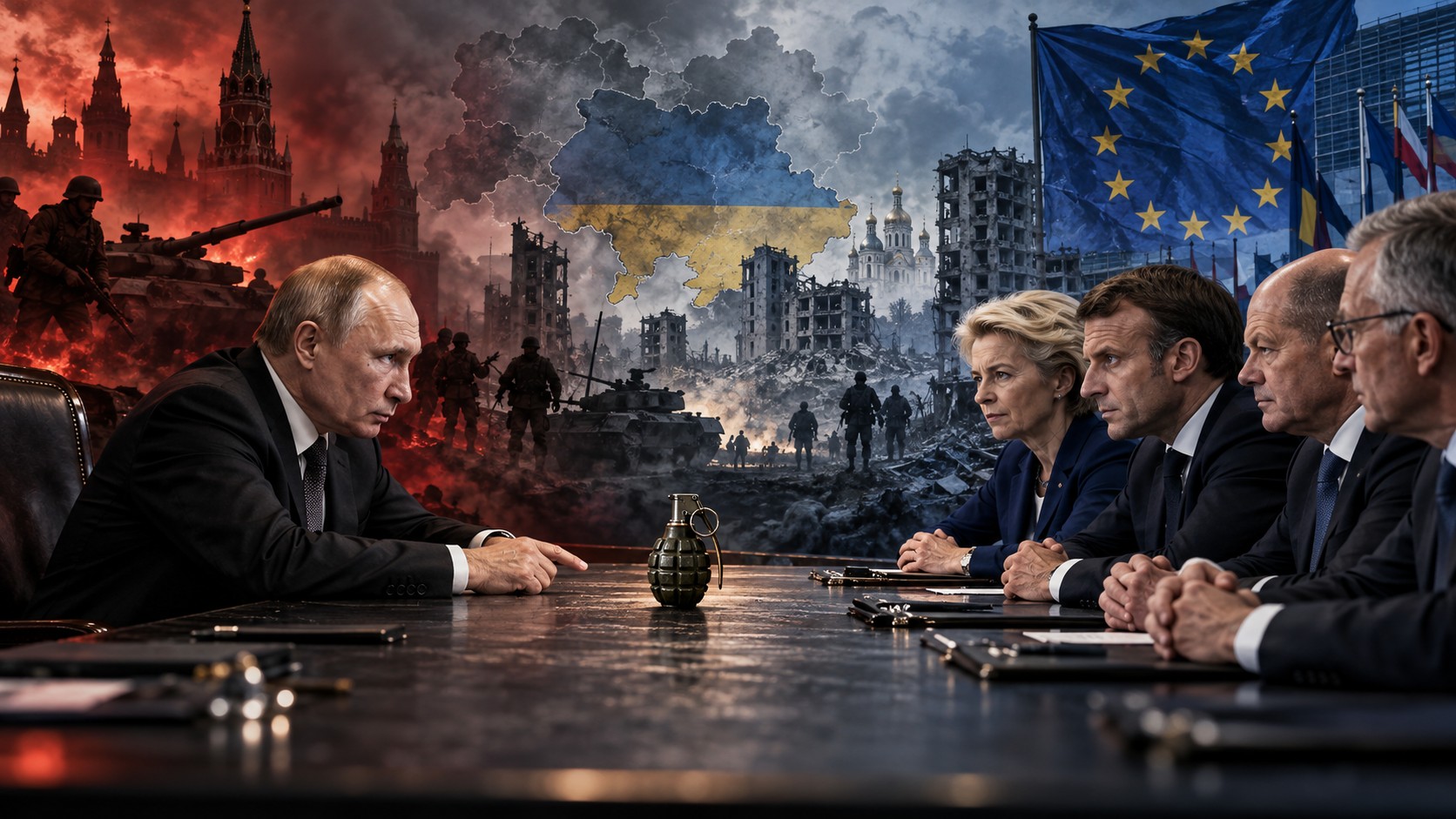
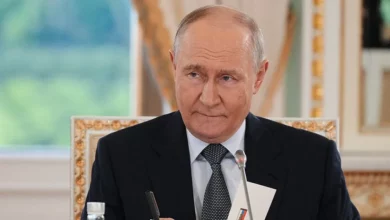
Russian President Vladimir Putin effectively set up a showdown with Europe, put forward his demands regarding Ukraine, and when the West did not back down — he put a nuclear “grenade” on the table. The calculation was that Europeans would be frightened and “back off”. But that did not happen. Now, after almost five years of full-scale war, the question of who will ultimately be forced to retreat from their initial demands is already confronting the Kremlin itself.
It is through this metaphor that described the situation Vladimir Pastukhov — a political scientist and lawyer, native of Kyiv, who worked as a professor of political science in Moscow and is now an honorary professor at University College London. In a long three-part piece published on 25 September 2026, he dissected the Kremlin’s situation in the language that, in his view, Vladimir Putin himself is accustomed to thinking in: “showdowns”, force, reputation and the question of who will be the first to “back down”.
The results of recent elections in Russia are, for Pastukhov, merely background. In his view, the Russian authorities can control internal competitors administratively, whereas that approach did not work with Ukraine and the war.
Vladimir Pastukhov put it as simply as possible:
“Winning these elections was not a great difficulty for Putin, not to mention that they cannot really be called elections. After all, he had no real opponent here, and the contest was fought exclusively against his own yesterday self (the 2026 elections against the 2021 elections). But with the war it turned out to be a bit more complicated: Ukraine is not ‘Yabloko’ — you can’t just cross it out of the lists like that.”
Putin “set up a showdown” with Europe
According to Pastukhov, discussions about international law and the rules of the world order were traditionally secondary for Putin. The language of force was much clearer to him: who can impose their terms on another.
That is why the analyst suggests looking at the confrontation between Russia and Europe not in the language of diplomatic statements, but as a kind of “street brawl”.
In this metaphor, it was Putin who first showed up for the “showdown”. Before the full-scale invasion, Russia effectively demanded that the West revise the security architecture in Europe and limit further NATO expansion.
Pastukhov himself describes the Russian president’s behavior much more crudely and figuratively:
“He himself was the first to ‘call a showdown’ with the Europeans. On it he ‘entered’ Europe as he once entered some ‘Petersburg oil terminal’ — by striking Ukraine on the table, and in a tone that allowed no objections, saying: ‘From here to here — it’s mine’.”
“You think it’s yours? Take it”
According to Pastukhov, Europe did not accept the Kremlin’s demands in response, but it also did not enter the war directly. Instead, European countries continued to help Ukraine, which itself fights against Russian aggression.
The analyst translates this position into the same “street” language:
“Volodya, you think that’s yours? — Take it! And a few words to make it completely clear: ‘As long as Ukraine is ready to fight, we will help it, because it is our first European redoubt, and therefore before presenting us with ultimatums, deal with it first, and then we’ll talk depending on the result’.”
Thus, by Pastukhov’s logic, the Kremlin was effectively told: if Russia claims the right to determine Ukraine’s future by force, it must first prove that it can achieve this by military means.
And it is here, the author argues, that Putin’s main problems began.
The nuclear “grenade” on the table
Pastukhov believes the Kremlin initially counted on Europe’s fear of a direct confrontation with a nuclear Russia.
When it became clear that mere displays of military force were insufficient, the Russian leadership began regularly to remind others of the country’s nuclear arsenal.
In Pastukhov’s metaphor this looks like another episode of the same “showdown”: Putin took out an old nuclear grenade, pulled the pin and put it on the table.
The analyst described the scene this way:
“So he brought his grandfather’s nuclear grenade to the showdown, pulled the pin and put it on the table. Just in case, through an interpreter (Medvedev) he explained what it was — in case they hadn’t guessed. Since the Surkov era he had been sure that Europe is a chump who would immediately back down at the mere mention of a grenade.”
But, in Pastukhov’s assessment, the Kremlin’s main calculation did not pan out: Europe did not stop supporting Ukraine.
In response to the nuclear blackmail, as the analyst colorfully writes, the Europeans demonstrated their own nuclear deterrent:
“Europe took out its own identical grenade in response and said: ‘We’ll fly together’. At that point the conversation reached an impasse.”
Almost 1700 days instead of a quick result
Further, in Pastukhov’s view, the “street story” ran into a much more complicated problem: Russia failed to achieve the result it expected when it began the full-scale invasion.
The author notes that the war has been going on for almost 1700 days, and the Kremlin still does not control even all the territories it has declared part of Russia.
He finds the situation in the Donbas particularly telling. According to Pastukhov, what Moscow today is trying to present as a potentially sufficient result of the war is significantly different from the scale of the Kremlin’s initial claims.
It is here that he moves from irony to the harshest assessment of the Russian president’s situation.
Vladimir Pastukhov considers the key problem for the Kremlin to be the mismatch between the initial promises and the result of an almost five-year war:
“The problem turned out not to be that Putin behaved like a gangster (one could always respond rhetorically to that — who doesn’t drink?). The problem is that he turned out to be an inept gangster who did not keep the guy’s word. Because the guy promised something else. He promised to win, not to be bathing in blood for five years straight.”
From NATO — to a piece of the Donbas
According to Pastukhov, the most dangerous thing for the Kremlin lies in the gradual change of the very concept of Russian “victory”.
What was supposed to be considered a victory at the start of the full-scale war and what could be called a victory now are already completely different things.
The author deliberately pushes this comparison to the grotesque.
Vladimir Pastukhov thus describes the shift in Russian goals:
“And if it comes to that, victory at first meant something different than it does now: the flags of hated NATO thrown at the foot of the undaunted Mausoleum, not the ruins of an under-conquered Donbas thrown at the foot of the Russian budget.”
This thesis also resonates with the current situation around negotiations. In early September 2026 Korabelov.info wrote that, according to ISW, the Kremlin continued to demand the withdrawal of Ukrainian troops from four regions and Ukraine’s renunciation of NATO.
“Master of horizontal victories”
A separate term that Pastukhov uses regarding Putin is “master of horizontal victories”.
The essence of the metaphor is simple: victory exists somewhere ahead, but the closer one tries to get to it, the further it moves away — just like the horizon line.
Not only the date of the future victory moves. What the Kremlin proposes to call victory constantly changes as well.
Pastukhov explained his point like this:
“In less than five years Putin has established himself as a ‘master of horizontal victories’, that is, he has demonstrated a unique ability to maintain among the population confidence in a victory that shifts like the horizon line as one approaches it.”
He says that Russians in February 2022 would have been greatly surprised if they had been told then that almost five years later the Kremlin would try to make the complete capture of Donetsk and Luhansk regions the main result of the war.
“Akela missed”
But the main threat for Putin, according to Pastukhov, is not even in protests.
Russia’s repressive system allows the Kremlin to largely control open political activity. The problem may arise elsewhere — in the gradual disillusionment of those who support the system but expect it to deliver results.
Another image appears in the text — “Akela missed”.
According to Pastukhov, the longer the war goes on without a convincing result, the more often the question may arise within the Russian system about its leader’s ability to deliver on his promises.
And this does not necessarily mean an open revolt. The author considers passive sabotage far more dangerous: unwillingness to join the army, problems with contract recruitment, desertion, moving money out, businesses evading state pressure, and shifting economic activity into the shadows.
Pastukhov emphasizes separately that this part of his text is precisely a prognostic assessment:
“In my view (a purely evaluative judgment), this point of ‘phase transition’, after which political rejection begins, is about to be reached.”
Who will “back down” now
This is where the three parts of Pastukhov’s text converge on the main question: what will Putin do if Russia continues to be unable to obtain on the battlefield a result that the Kremlin can sell to its society as a convincing victory?
The analyst believes that the Russian leadership can still hope to change the situation in winter. But if this does not happen, the political risks for the Kremlin, in his assessment, will begin to rise rapidly.
And then, according to the author, two fundamentally different paths will remain for Putin.
The first — to go all in and sharply raise the level of military escalation in relations with Europe.
The second — to try to reach an agreement with US President Donald Trump on a major political deal.
Pastukhov himself describes this choice as follows:
“He has, ‘here and now’, a choice between two strategies: to go all in (that is, to go for direct military escalation in Europe with unpredictable consequences, without waiting for winter) or to go for a ‘big deal’ with Trump — an option that Europeans find completely incredible, but which, in principle, given all the circumstances listed above, I would not rule out.”
Thus, in Pastukhov’s metaphor the big “boys’ showdown” that the Kremlin itself began with ultimatums to Ukraine and Europe has, after almost five years, come back to Putin himself.
He expected Europe would “back down” after displays of force and nuclear threats. Europe did not retreat, Ukraine continued to fight, and Russia still did not obtain a result commensurate with the scale of the Kremlin’s initial claims.
And now the question “who will back down?”, according to Pastukhov, concerns not only the West anymore.
Earlier we wrote:
- From Kupiansk to Zaporizhzhia: the Ukrainian Armed Forces advanced on several fronts at once — ISW
- Putin has not abandoned plans to capture Odesa, Kharkiv and Dnipro — Zelensky
- Patriot missiles may begin to be produced in Ukraine: what Zelensky and Trump discussed
- The Ukrainian Armed Forces cleared another five settlements in Donetsk region
- Ukraine is ready for an energy truce but awaits lists of facilities from Russia