Almost drinkable, but don't drink: the water situation in Mykolaiv was explained again
A new water purification system has been launched in Mykolaiv, but drinking water from the tap is still not recommended


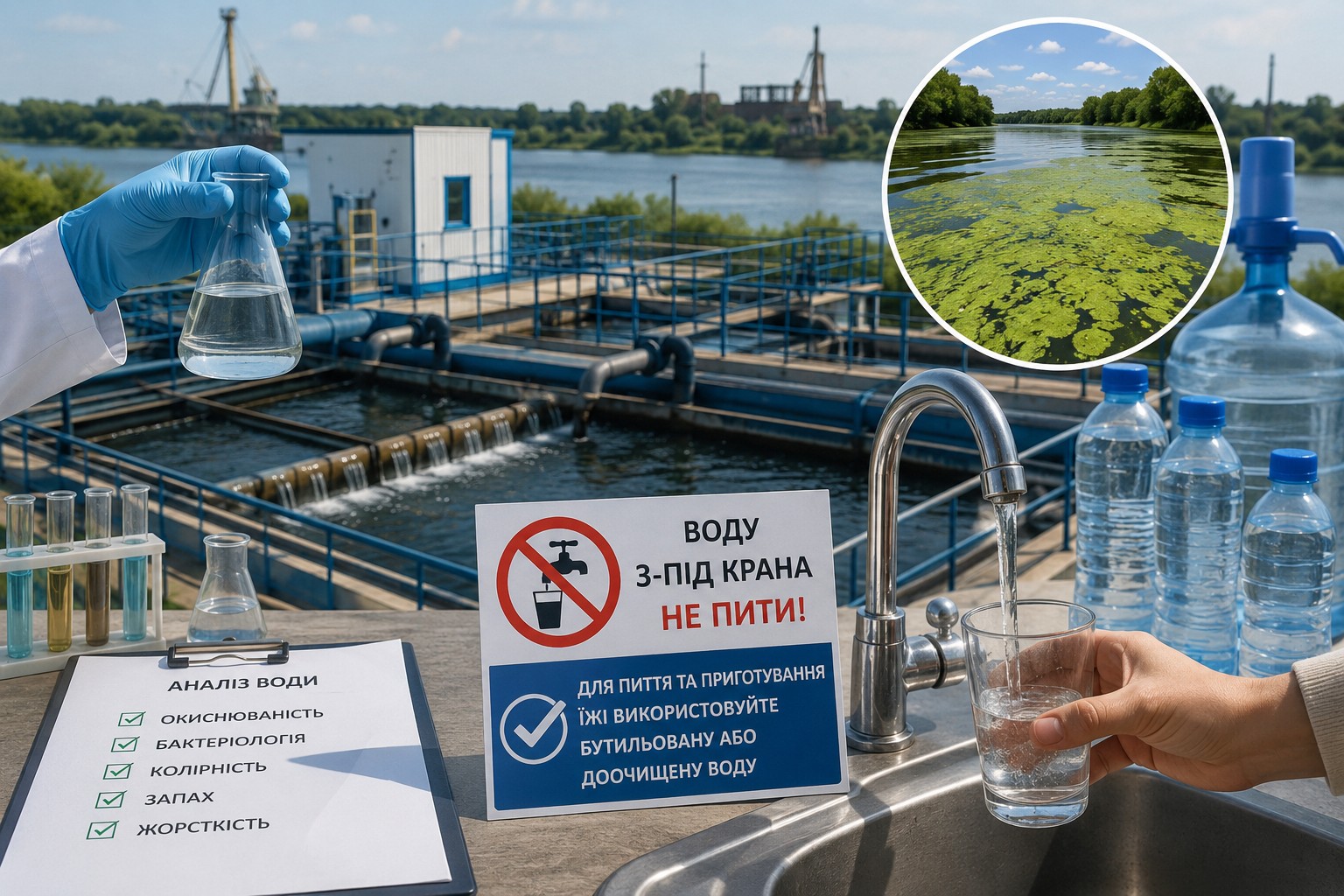
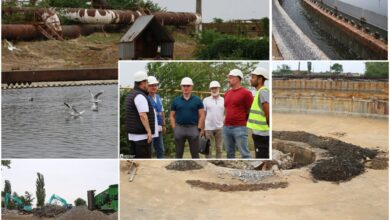
In Mykolaiv, new preliminary water treatment facilities built with leftover funds under the experimental government project “Design, Build” have been launched in test mode. The facilities are currently on the balance sheet and under the management of the Regional Office of Water Resources in Mykolaiv Oblast. In the future they are planned to be transferred to the municipal enterprise “Mykolaivvodokanal”, since the structures are located on its territory and must operate with it as a single technological complex.
This was told in the broadcast of “Radioden” by the head of the Regional Office of Water Resources of Mykolaiv region, Natalia Zhadan.
According to her, everything that was planned within the project for the new water main and treatment facilities has now been completed by 100%. The new preliminary treatment station is already operating at full capacity. Specialists take water daily from the Southern Bug River, perform laboratory analyses and adjust the amount of reagents to bring it as close as possible to drinking standards.
The head of the Regional Office of Water Resources of Mykolaiv region, Natalia Zhadan, stated that after the full treatment cycle the current water quality already differs significantly from what the city received before.
“The quality of the water Mykolaiv had before this, and even, I repeat, the former Dnipro water, was significantly worse than the one that is now going through our entire full treatment cycle.”
According to Natalia Zhadan, on some days laboratories have already recorded water that met drinking indicators. However, a stable result is not yet in place. The only parameter that periodically shows slight deviations from the norm is oxidizability. For example, laboratories recorded values of 5.28–5.51 against a norm of 5.
The official also emphasized that the new water is gradually displacing the salty water that still remains in the city networks. It was this old problem that for years damaged pipes, plumbing and household appliances of Mykolaiv residents.
The main task of specialists now is not just to achieve quality water on certain days, but to make this result stable. According to Natalia Zhadan, for Mykolaiv treating water from the Southern Bug is practically a new technological process, since the city was not previously supplied with water from this source. Previously Dnipro and Ingulec water were used.
The situation is complicated by seasonality. Surface river waters strongly depend on the time of year: in summer the river blooms, bacteria develop more actively, and the temperature and chemical composition of the water change. Because of this, specialists conduct expanded quarterly analyses and closely monitor bacteriological indicators.
Based on these studies, a clear treatment regimen for each season must be developed. That is, the city needs not a one-off “good sample”, but a clear system that will work in summer, during floods, and in the cold season.
A roadmap has been developed to control the process. It involves 4 laboratories, the State Service for Food Safety and Consumer Protection, “Mykolaivvodokanal” and the laboratory of the International Organization for Migration.
Despite the launch of the new facilities, positive dynamics and statements about a significant improvement in water quality, a final conclusion on its suitability for drinking can only be made after stable laboratory indicators are achieved.
Therefore residents of Mykolaiv are currently advised to remain cautious: use tap water only for technical needs. For drinking and cooking, as before, bottled or additionally treated water should be used.
Earlier the Government had already reported the completion of one of the stages of restoring water supply for Mykolaiv. It concerned a preliminary water treatment station with a capacity of 120 thousand cubic meters per day.
The water problem for Mykolaiv has been ongoing for over 4 years. After Russian forces damaged the water main that provided the city with quality water, the almost half-million regional center was left without normal centralized water supply.
All this time residents received water from a backup source. Its quality raised many questions, including because of salt content. The salty water damaged about 1,200 kilometers of the city’s water supply network.
For a long time national and local authorities were looking for options to return drinking water to Mykolaiv. The final decision was made in 2024: the new water main was to be laid from Nova Odesa, with funding allocated from the state budget.
Initially the Regional Recovery Service selected contractors to work under the principle “design-build”. These were 3 companies: “Ukrtransmist”, “Rostdorstroy” and “Avtostrada”. Each was responsible for one of the 3 sections of work. Later both the client and the construction contractor were changed. The client became the Service for Recovery and Infrastructure Development in Dnipropetrovsk Oblast, and the contractor — the Avtostrada group of companies.
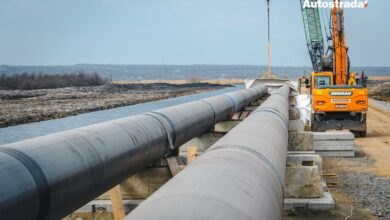
The new water main for Mykolaiv was put into operation on 7 October 2025 — it was connected to the water utility networks. But, as the current situation shows, the launch of the water main does not automatically mean drinking water will appear in every apartment. Stable treatment, quality control and networks that do not spoil the water on the way to the consumer are needed.
Previously we wrote:
- Mykolaiv has drinking water again: construction of the new water supply system completed
- In the Korabelnyi district they are replacing water networks with Danish funds: one site is already 87% ready
- Mykolaiv water is still not drinkable despite the launch of treatment facilities: does not meet the oxidizability standard
- Drinking water in Mykolaiv already in May: Senkevych again promises treatment facilities
- Mykolaiv prepares to launch new filtration: city council transfers treatment facilities to the balance of “Mykolaivvodokanal”