The disaster area could become a nature reserve: scientists speak about the unique value of the former reservoir
After Russia's terrorist attack, nature is restoring life: rare species have been found on the bottom of the Kakhovka Reservoir


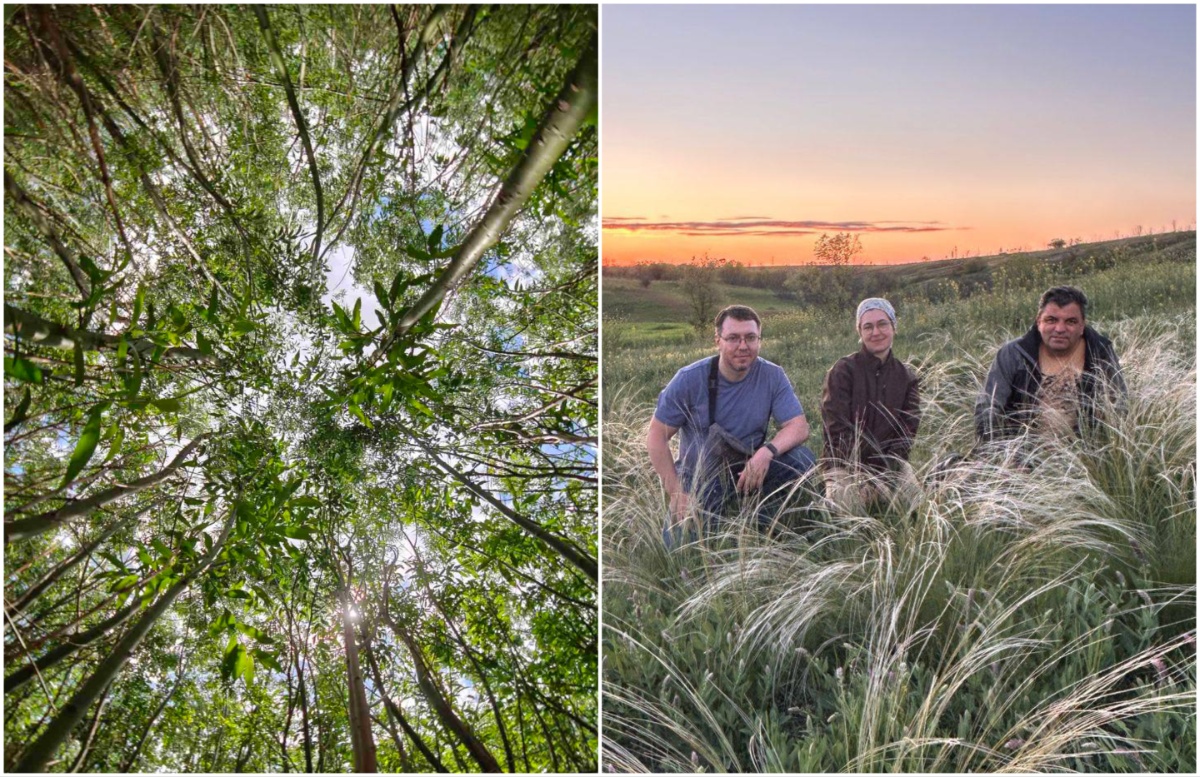
On the territory of the former Kakhovka Reservoir, scientists have discovered rare and Red-Book plants, as well as dozens of bird species protected by international conservation agreements. This was reported on the air of “Vhoru” reported by Doctor of Biological Sciences, professor and head of the Department of Botany Kherson State University Ivan Moisiienko.
According to him, at the bottom of the former reservoir at least six species of plants with conservation status have already been found. Among them is the rye sedge, which is listed in the Red Book of Ukraine. In addition to plants, researchers are recording an active return of birds. These are dozens of species that have protected status under international conservation agreements. This indicates that the area is gradually turning into a complex natural system, rather than simply remaining the dried bed of the former reservoir.
During an expedition in May 2026, scientists noted a sharp increase in biodiversity. If after the destruction of the Kakhovka HPP about 11 plant species were recorded there, by the autumn of 2023 there were already 69, and now the number exceeds 350 species. Researchers also report that the ecosystem continues to rapidly become more complex. Fungi and lichens are appearing in the area, and the numbers of animals and plants are increasing. The spread of species whose seeds are dispersed by animals has become particularly noticeable.
This may mean that natural links between plants, birds, animals, fungi and other organisms are being restored at the site of the former reservoir. In other words, nature is not simply “overgrowing” after the catastrophe, but forming a new ecosystem. Scientists emphasize that this territory has high conservation value. For this reason, it could potentially be considered as a future biosphere reserve.
At the same time, it is important not to forget how these changes began. June 6, 2023, Russian occupiers blew up the Kakhovka HPP, causing one of the largest man-made ecological disasters in southern Ukraine. The consequences of this crime were felt in Kherson, Mykolaiv, Dnipropetrovsk and Zaporizhzhia regions.
Now, in the place of the destroyed water area, scientists see another process — the return of wild nature. But this does not absolve Russia of responsibility for the catastrophe; it only underscores how important it is to protect this territory from new interference, chaotic development, or repeated destruction.
Previously we wrote:
- Nature can’t cope: Ukraine faces decades of ecological apocalypse due to the war
- E. coli in Mykolaiv rivers: nearly 5 times the permitted level
- Some exploded: after the Kakhovka HPP was blown up, nine mines washed up on the shores of Odesa and Mykolaiv regions
- Consequences of the Russian terrorist attack on the Kakhovka HPP: one person died in the Mykolaiv region
- More than a third of the water from the Kakhovka Reservoir has been lost, – Ukrhydroenergo