"The episode exacerbated the problem": an ecologist warned about the danger of dust from MGZ tailings ponds
Not just "dust": what's actually coming from the alumina plant


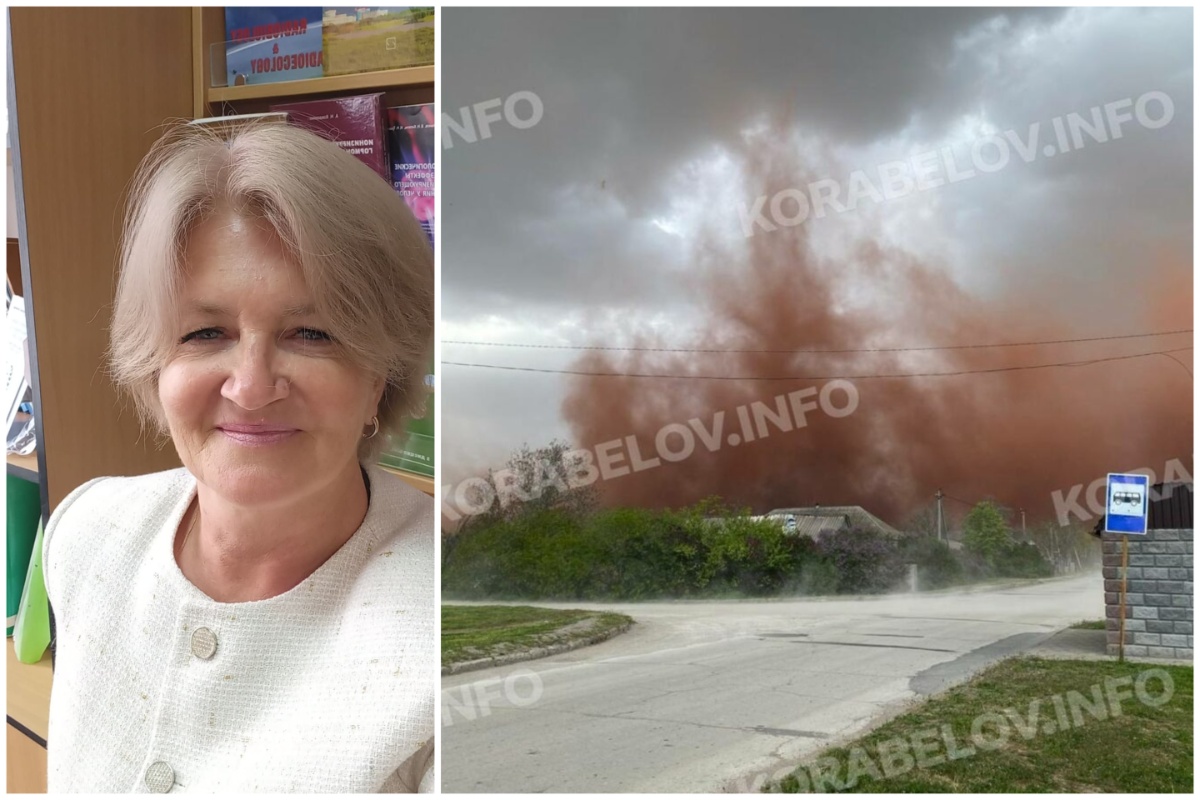
Dusting of the tailings storage facilities of the Mykolaiv Alumina Plant after the storm on 26 April 2026 cannot be considered an accidental one-off event. It only once again highlighted the scale of a problem that has not been resolved systemically for years. This was told by the head of the Department of Ecology of the Educational and Scientific Medical Institute of Petro Mohyla Black Sea National University, Doctor of Biological Sciences Lyudmyla Hryhorieva in an interview with the Nikvesti outlet, 29 April 2026.
According to the ecologist, inhalation of dust from the tailings storage facilities can provoke exacerbations of chronic respiratory diseases. For people with vulnerable health, the consequences can be much more serious. The stronger the wind and the drier the surface, the farther the dust is carried. That is why for the Mykolaiv region, where winds are not uncommon, this problem remains persistent.
The scientist explained that even a moderate wind, not only a storm, can create a dangerous concentration of dust near populated areas.
“We calculated that at a distance of 5 km from the tailings storage — essentially Lupareve — already at a wind speed of 6.5 m/s, the MPC (maximum permissible concentration) of dust in the atmospheric air was exceeded. That is, when the MPC in the air, in this case of dust, is exceeded, there will indeed be certain diseases related to the bronchopulmonary system,” – the ecologist said.
A separate threat is connected not only with the air. The tailings storage facilities, where, according to the provided data, more than 48 million tonnes of sludge are stored, are located next to the Southern Bug and the Dnipro-Buh estuary. Therefore there are risks of water contamination through the entry of toxic substances into groundwater and then into the estuary.
Lyudmyla Hryhorieva emphasized that toxic substances from the tailings storage can harm not only people but also the natural environment.
“All this carries risks — all these toxic pollutants that are in the tailings storage go through groundwater and then into the estuary. The estuary, of course, is harmed, but it also harms our biota. Our estuary’s biodiversity has already decreased many times over. Everything that is toxic needs to be removed, because it will be toxic for both terrestrial and aquatic biota,” – the scientist explained.
At the same time, the ecologist noted that there are technologies that can help restore the surface of tailings storage facilities and make it suitable for plant growth. This refers to remediation — the process of restoring a contaminated or altered environment.
According to Lyudmyla Hryhorieva, specialists have already studied the possibility of reclaiming the vegetated surface of the tailings storage facilities.
“We have a technology to turn this grassed environment into one in which plants can grow. Remediation is the restoration of the surface. In this case, it is a grassed surface. We have technologies on how to reclaim them to transform the grassed surface into an ecological, clean environment. We have selected grasses and shrubs. The technology also includes how to make a layer for plants so that they can grow for a long time,” – the ecologist explained.
Previously we wrote:
- Mykolaiv Alumina Plant being prepared for sale: the plant in Mykolaiv was valued at $86 million
- Red sludge from the plant again “attacked” nearby villages from the air
- Kim announced the transfer of special vehicles to the plant to combat dust from the sludge
- An ecological bomb near Mykolaiv — no money, but the plant director declared nearly 14 million in salary
- While the plant’s sludge fields are without water and without money, Vitaliy Kim talks about the future of the plant