The bracelet and sphere from the Villena Treasure show signs of meteoritic iron
The findings from the study of ancient artifacts are still considered preliminary

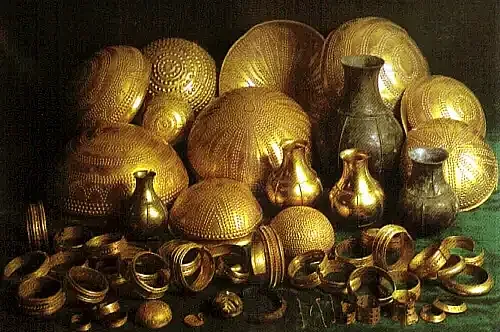
Research on iron artifacts from the Villena Treasure in Spain has pointed to their meteoritic origin. The objects date to 1400–1200 BCE. According to Future, scientists consider the findings preliminary for now.
The story began in 1963, when the treasure was discovered during excavations near the Spanish town of Villena, led by archaeologist José María Soler. The collection contains 66 objects, mostly made of gold. It is considered one of the most important prehistoric treasures in Europe.
Among the finds, two iron objects stand out, and the origin of their metal has intrigued researchers:
- a massive bracelet;
- a hollow sphere, possibly an ornament for the hilt of a sword or a ceremonial scepter.
Six decades after the treasure was discovered, scientists used mass spectrometry to examine small metal samples. They found an iron-nickel alloy with a high concentration of nickel—a characteristic feature of meteoritic iron.
We previously reported: