FPV already over Korabelnyi? A new threat is being discussed in Mykolaiv, but there’s an important caveat
Panic over FPV drone in Korabelnyi: no confirmation of an enemy drone

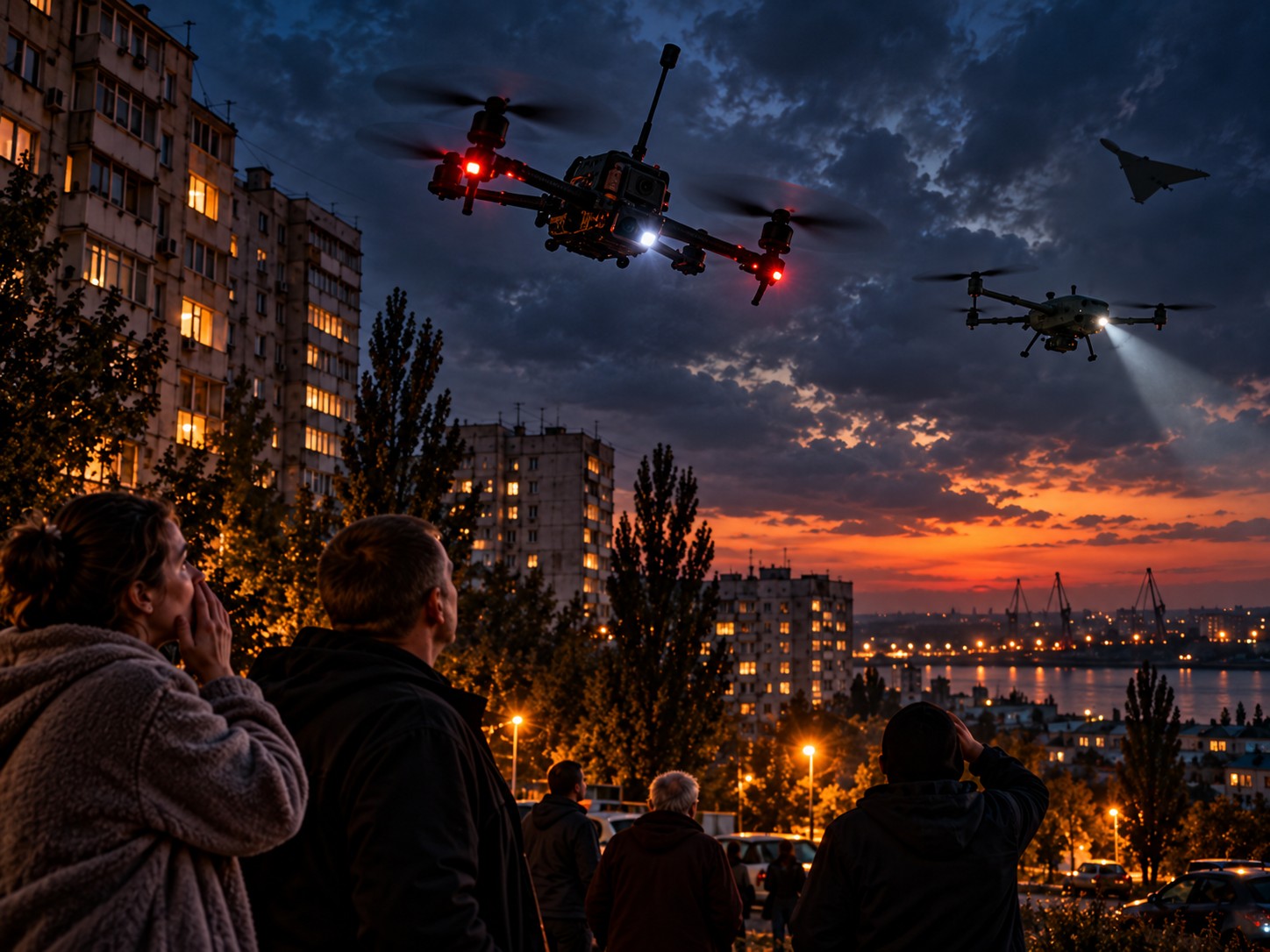
On the evening of October 7, 2026, reports appeared on monitoring channels about alleged FPV drones in the area of Mykolaiv’s Korabelnyi District. The information quickly raised concerns among residents, who began asking whether Russian FPV drones could really reach the city’s residential neighborhoods and how they could be detected.
However, as of the evening of October 7, there was no official confirmation that the drone over Korabelnyi District was an enemy FPV drone. It is therefore too early to identify the drones that were spotted or heard as Russian.
One monitoring channel explained to its readers that its units and sources primarily track Shahed drones, reconnaissance UAVs, and missiles. FPV drones may be monitored by other units, so reports about them do not necessarily appear on the usual monitoring channels. After this, subscribers began actively discussing what might have been flying over the district. Inserted Markdown
One of the theories put forward was that the enemy was using fiber-optic FPV drones. Other users speculated that a relay or carrier drone might have been involved. However, there is currently no evidence that the specific drone over Mykolaiv was a fiber-optic FPV.
There is another important possibility: some of the drones residents see or hear in the sky over the city may belong to the Ukrainian Defense Forces. Ukrainian forces actively use interceptor UAVs to counter Russian Shaheds, Gerberas, and reconnaissance drones. The Ministry of Defense has officially reported, among other things, on the JEDI Shahed Hunter quadcopter systems, designed specifically to intercept such aerial targets. Cabinet of Ministers of Ukraine
The Armed Forces of Ukraine have said that these drones have become an integral part of short-range air defense and operate across several layers of protection. In May 2026 alone, Ukrainian interceptor drones destroyed more than 3,500 enemy UAVs of various types. Armed Forces of Ukraine
The National Guard has also described how these crews operate: after radar detects an enemy target, operators launch an interceptor drone, locate the Shahed, and attack it. In other words, the mere appearance of a small, fast drone in the sky does not mean it is a Russian FPV—it could also be a Ukrainian UAV carrying out an air-defense mission. National Guard of Ukraine
Thus, at least three possible explanations can currently be offered for what residents may have seen or heard over Korabelnyi: an enemy FPV, a Ukrainian interceptor drone, or another type of UAV that witnesses mistook for an FPV. It is not known for certain which, if any, of these was the case on the evening of October 7.
At the same time, the threat posed by Russian FPV drones to Mykolaiv District is very real. According to official regional military administration figures, the previous day Russian forces attacked the Kutsurub and Halytsynove communities with FPV drones. In Dmytrivka, a 29-year-old man and a 32-year-old woman were injured, a car was damaged, and a private house was damaged in Lymany.
However, this does not amount to confirmation that Russian FPV drones flew directly over Mykolaiv’s Korabelnyi District. Until such information is officially confirmed, reports from monitoring channels and eyewitnesses should be treated as timely but unverified.
Residents should also not attempt to identify a drone themselves, photograph it from close range, or post real-time information about the locations of Ukrainian forces or air-defense systems.
Previously, we wrote:
- Two people injured in FPV drone attack in Mykolaiv region
- “Bandеrol” missiles injure a man in Mykolaiv; warehouses and cars damaged
- Three settlements left without power after strikes on Mykolaiv region
- Drones damage six outbuildings and a house in Mykolaiv region
- Two communities under attack: Russian guided aerial bombs and drones damage property in Mykolaiv region