Following the example of Oleshky: Ukraine wants to evacuate people from 15 occupied towns and villages
The list covers Kherson and Zaporizhzhia regions, but may still change


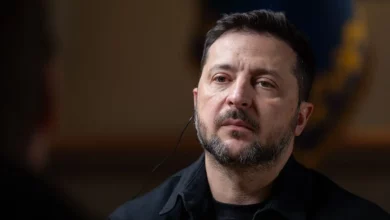
Ukraine is proposing to organize the evacuation of civilians from 15 occupied settlements in Kherson region and Zaporizhzhia region. President Volodymyr Zelenskyy told journalists on November 21 about preparations for new humanitarian missions modeled on the one in Oleshky, reports pravda.com.ua.
“Once again, we are grateful to the U.S. first lady for Oleshky, for the evacuation, for lifting the blockade and evacuating our people, citizens of Ukraine. We discussed this with Commander-in-Chief of the Armed Forces of Ukraine, Mykhailo Drapatyi, and confirmed the list again today. We spoke in detail about these humanitarian missions, the number of people we can evacuate, and the plans we have in place,” Volodymyr Zelenskyy said.
In Kherson region, the list includes nine settlements:
- Radensk;
- Kostohryzove;
- Hola Prystan;
- Stara Zбурivka;
- Nova Zburivka;
- Hladkivka;
- Velyki Kopani;
- Kardashynka;
- Velyka Kardashynka.
In Zaporizhzhia region, the list covers six settlements:
- Mayachka;
- Zlatopil;
- Dnipro-Rudne;
- Kam’ianske;
- Verkhня Krynytsia;
- Vasylivka.
The updated list has already been sent to Dmytro Lubinets, the Human Rights Commissioner of the Verkhovna Rada of Ukraine, and to representatives of the U.S. The president explained that the list is not final: it may be adjusted after the number of people still under occupation and their living conditions are clarified.
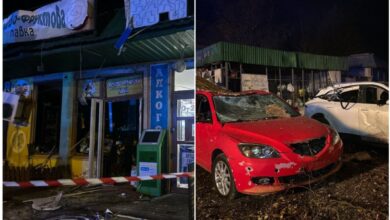
The previous mission involved temporarily occupied Oleshky on the left bank of Kherson region. The city had been facing difficult humanitarian conditions for a long time. Fighting, the Russian blockade, and damaged infrastructure deprived residents of adequate access to food, drinking water, and medicine. Ukrainian forces had to deliver aid, including by drone.
On October 23, it became known that Ukraine and Russia, with the mediation of U.S. First Lady Melania Trump, had reached an agreement on a humanitarian mission in the city. The agreement covered aid deliveries, clearing routes of mines, and evacuating civilians. A ceasefire was introduced from October 27 to facilitate the mission, and was to remain in effect until the evening of November 1.
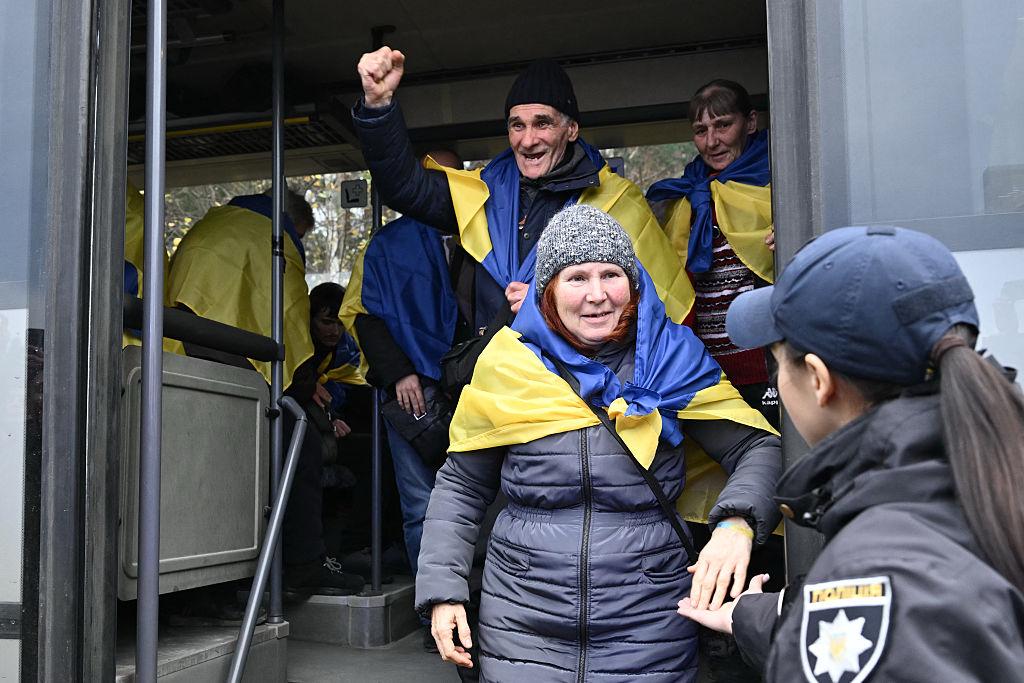
Evacuation transport was arranged for 750 people — 25 buses. Ambulances were provided for residents with limited mobility. People could choose their destination: territory under Ukraine’s control or Russia.
On October 30, a Ukrainian delegation led by Dmytro Lubinets arrived in occupied Oleshky. That same day, the ombudsman announced the completion of the main phase of the evacuation. Those who remained in the city received food, water, and medicine, while the hospital was supplied with equipment.
The route for evacuees who chose territory under Ukraine’s control ran through Russia and Belarus. On October 31, they crossed the Ukrainian border in Chernihiv region.
According to Melania Trump, the humanitarian mission enabled the evacuation of nearly 800 people in total. This figure includes evacuees who left in different directions, not just those who returned to territory under Ukraine’s control.
Some people needed medical care after returning. Some evacuees agreed to testify about crimes committed by Russian troops. The oldest person evacuated was 94 years old, and the youngest was just over a year old.
However, not everyone was able to use the humanitarian corridor. Olешky City Military Administration head Tetiana Hasanenko explained the reasons:
- due to the lack of communications, some residents did not receive information about the evacuation;
- some were afraid of Russian filtration;
- others were unable to get to the assembly point on their own.
Reports also emerged after the operation that Russian forces had taken advantage of the humanitarian pause. A statement by the General Staff of the Armed Forces of Ukraine on November 2 said that Russians had strengthened their positions during the ceasefire. After the mission ended, Volodymyr Zelenskyy also said that Russian troops had used the truce to move additional forces and equipment to the occupied left bank of Kherson region.
On November 7, Dmytro Lubinets spoke about new requests from Oleshky: after the humanitarian mission, residents continued asking the Ukrainian side to help them leave.
We also reported earlier:
- Arakhamia admits: the ceasefire in Oleshky began without a monitoring mechanism
- Food is running out, and people are not allowed to leave: residents trapped on occupied Kinburn
- Ceasefire declared near occupied Oleshky for humanitarian mission
- 21 Ukrainians returned from occupation: three families from Kherson region stayed together
- Humanitarian catastrophe: water is running out in Oleshky, and people are dying every day