"The city is not the owner — let business take it": Falko wants to continue the big sell-off of Mykolaiv
Community property is being sold off for good: Dmytro Falko assures that privatization has "only advantages"


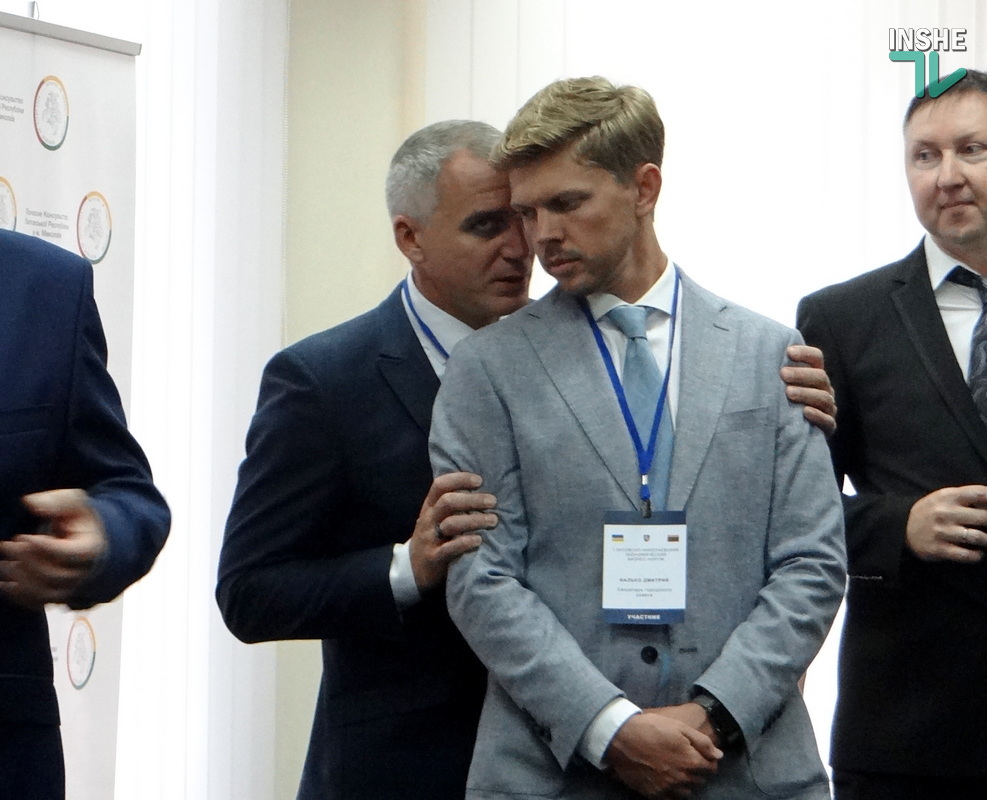
The Secretary of the Mykolaiv City Council, Dmytro Falko, believes that the process of small privatization of municipal property in Mykolaiv should continue, despite the fact that during the city council session on August 6 councilors did not support the relevant items. He voiced his position on the air of the program “Dialogue” on TRK “MART”.
According to the city council secretary, during the last review the councilors effectively stopped the advancement of new objects for privatization. At the same time, as Dmytro Falko claims, explanations as to why some councilors do not vote for such decisions are not voiced publicly — neither in the session hall nor during the work of the relevant commissions.
Speaking about the first results of small privatization in Mykolaiv, Dmytro Falko said that for certain objects the city received sums that significantly exceeded expectations, and the funds from the sale of municipal property should be used to support the Defense Forces. Earlier the city indeed recorded a substantial increase in property values during auctions: on average the price of some objects rose by 3–5 times, and one of the lots was sold for approximately $3,000 per square meter.
“— At the beginning our small privatization started very well. Revenues from some objects exceeded expectations by tens, even hundreds of times. And at the same time it is fixed by a city council decision that these privatization funds will be used to support the defense forces,” — said the city council secretary of Mykolaiv, Dmytro Falko.
The official drew attention to the fact that some councilors refrain from supporting privatization but do not publicly explain their motivation. In his opinion, with open auctions and directing the received funds to defense, the city gains more advantages from selling unneeded property than from its further maintenance.
“— Accordingly, as they say, only pluses, there are no minuses, but at the same time some councilors abstain from voting. What is their motivation? No one in the session hall, at the commissions, or anywhere else voices their position on why they view this issue this way,” — added Dmytro Falko.
The city council secretary also spoke in favor of selling those objects that the city cannot manage effectively. In his view, a private owner can invest in neglected premises, restore them and create facilities that citizens will use, while the community will receive funds from privatization.
“— I believe that we need to vote. I believe that if somewhere today we have objects that may be in demand by the population, by businesses… We have good examples when premises that were privatized later became better, today they are an ornament: it is pleasant to come and look. So, if the city today cannot be an effective manager, then the property should be privatized. With the money received, support our defenders, and also allow private business today to do something good, something that will be a center of attraction for people. And that will also allow them to earn,” — said Dmytro Falko.
To the argument that municipal property can be not sold now but waited on for a possible increase in its value, Dmytro Falko replied that it is unknown when exactly that will happen, and in the future the city will still have other financial needs.
“— It is unknown when that price will rise, first of all. And secondly, then we too will have other needs. So, roughly speaking, in proportion nothing will change. Everything will be the same,” — noted the city council secretary of Mykolaiv, Dmytro Falko.
Large-scale privatization of municipal real estate in Mykolaiv began back in 2025. On May 29, 2025 the city council on its second attempt approved a list of 114 objects of small privatization with an approximate total starting price of over 50 million hryvnias. Previously councilors had already failed this vote.
The list included former boiler houses, pumping stations, administrative and non-residential buildings, basements, premises under lease, as well as objects in the Korabelnyi district of Mykolaiv. The initial draft envisaged the privatization of 114 objects with an approximate total starting price of over 51 million hryvnias.
In July 2025 the city council approved the sale of another 15 municipal premises. Their total starting price was about 8 million hryvnias. This list included non-residential premises and buildings in various districts of the city.
The first results of the auctions showed a significant difference between starting and final prices. As of the end of July 2025, auctions had been held for 15 objects out of the approved 114. By that time, 19,941,361 hryvnias had already been received into the city’s accounts, and another 4,735,000 hryvnias went to the state budget.
As of January 2026, 58 contracts for the sale of municipal property in Mykolaiv had already been signed for 104.2 million hryvnias. Approximately 85–86 million hryvnias actually entered the budgets, of which 71.4 million hryvnias went to the city budget and 14.7 million hryvnias to the state budget.
In February 2026, the city authorities prepared another 52 objects for privatization — former boiler houses, pumping stations, administrative buildings and non-residential premises. Among them were objects in the Korabelnyi district: a pumping station on Samoylovych Street and premises on Okeanivska Street.
However, the advancement of new objects for privatization was repeatedly halted due to a lack of councilor votes. In particular, on February 26, 2026 councilors failed to support changes to the list of small privatization, and the city council secretary declared a break in the session due to the lack of votes on a number of items.
At the same time, the practice of selling community property has already raised questions. Korabelov.info reported in detail about the privatization of the former “Rovesnyk” cinema in the Korabelnyi district: the highest auction bid was 4,062,378 hryvnias, but after that participant refused to formalize the deal the building was purchased by another participant for 1,315,000 hryvnias without VAT — almost 2.75 million hryvnias cheaper.
So, against the backdrop of Dmytro Falko’s call to more actively sell community property, there remains not only the question of how much the city can earn at auctions, but also how transparently objects will be selected for sale, who will become their owners, and whether each such sale is truly more beneficial for the community than keeping the property in municipal ownership.
Earlier we wrote:
- Community property goes under the hammer during the war: Mykolaiv among the leaders in privatization rates
- Protesters “fought” for the cinema in Korabelnyi: how “Rovesnyk” was sold almost 2.75 million cheaper
- Boiler houses and basements seek a new owner: Mykolaiv prepares municipal property for sale
- Mykolaiv replenished the budget: almost 86 million from the sale of municipal property
- $3,000 per meter! Mykolaiv prices catch up with Kyiv