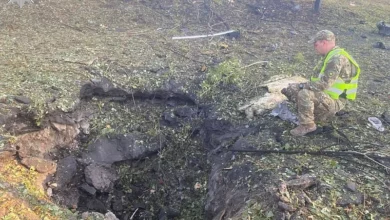
It had stood for almost 300 years, then turned to ashes in a matter of minutes: Russia destroyed a unique Cossack church
The traveling church crossed the Dnipro and three centuries, but was destroyed by a Russian drone


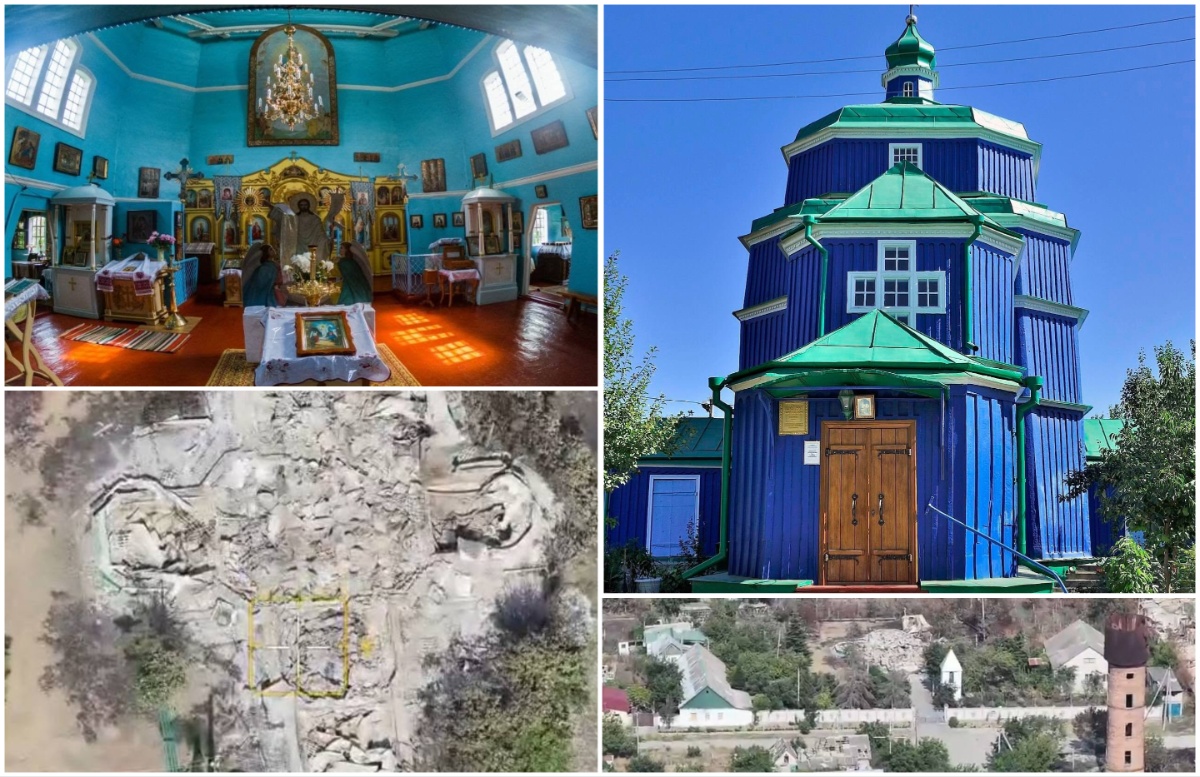
In Beryslav, Kherson region, the Svyato-Vvedenska Church was destroyed as a result of a Russian attack – a unique architectural monument of national significance that for almost three centuries had been part of the city’s history. The loss was reported on 3 August 2026 by the head of the Beryslav city military administration, Oleksandr Alchiiev.
“It is not just a church that has been destroyed – a part of Beryslav’s history has been destroyed,” – said Oleksandr Alchiiev.
According to him, Russian forces attacked the church with a drone on 1 August 2026. After the strike, a fire broke out that completely destroyed the wooden structure.
The Svyato-Vvedenska Church was built of oak in 1725 in the Zaporizhian fortress of Perevolochna. Originally it was named Voskresenska and served as a military church for the Cossacks. In 1784 the Cossacks dismantled the church, loaded its parts onto rafts and transported them down the Dnipro to Beryslav. At the new location the building was reassembled and consecrated. This happened in the year the modern city was founded, so the church effectively began a new history along with Beryslav.
The church was built without the use of metal nails. Craftsmen joined the oak logs in the traditional way using wooden elements. The church was considered the only preserved wooden Cossack-era church in Ukraine and was one of the most valuable examples of Ukrainian sacred architecture of the 18th century.
The Svyato-Vvedenska church survived changes of power, wars and Soviet persecutions. During the Soviet period it was closed, used as a storage facility and was even planned to be dismantled for firewood. Despite this, the building survived and remained one of the main symbols of Beryslav.
“The Svyato-Vvedenska Church was a tangible testament to the Ukrainian Cossack tradition in Kherson region,” – noted Oleksandr Alchiiev.
According to the head of the MCA, the loss of the monument cannot be measured merely by the value of the timber or the structure. Along with the church, the city lost part of the material memory of the people who lived on this land long before modern borders appeared. The fate of icons and other church relics that were inside the church at the time of the attack remains unknown. There is no information about whether anything was saved from the fire.
“Russia may destroy the monument, but it cannot destroy the memory of it,” – emphasized Oleksandr Alchiiev.
Previously we wrote:
- Mass strike on Kyiv: Lavra and Dovzhenko Film Studio damaged
- From the Valuev Circular to rockets on books: Budanov declared cultural genocide
- Consequences of the attack on Mykolaiv: three cultural heritage sites damaged
- Mykolaiv – among the leaders in the number of cultural sites destroyed by Russia
- Ancient Mykolaiv in 3D: documenting destruction in the war zone