22 victories and three shortcomings: Fedorov reported and left the Ministry of Defense
Billion-dollar contracts and an unfinished reform: what results did Fedorov leave at the Ministry of Defense?



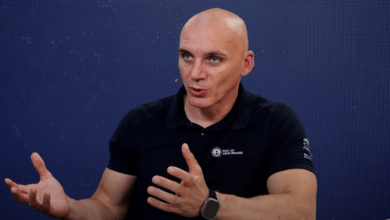
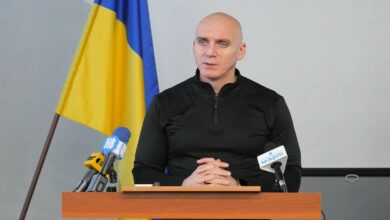
Minister of Defense of Ukraine Mykhailo Fedorov announced in the evening of July 15, 2026 that he is leaving his post and published a summary of his team’s work. Among the main results he cited blocking Russian access to Starlink, a massive increase in drone procurements, new contracts for missiles for Patriot, Gripen aircraft, the development of Ukrainian ballistics, and the reform of the military procurement system.
Mykhailo Fedorov wrote about his decision in social networks after information about personnel changes in the new composition of the Cabinet of Ministers.
“It was a great honor to serve the Ukrainian people as Minister of Defense.”
As head of the defense ministry, Mykhailo Fedorov had served since January 2026. As early as July 11, 2026, the President of Ukraine Volodymyr Zelenskyy authorized him as the acting defense minister to sign an agreement on Ukraine’s participation in the European Defence Fund.
Disconnecting Russians from Starlink and record drone purchases
The first achievement of his team that Mykhailo Fedorov named was cutting off Russian forces from Starlink. In his assessment, this significantly reduced the occupiers’ ability to effectively employ unmanned aerial systems.
The minister also said he inherited the defense ministry effectively without an available budget. According to him, the team took a risk and used funds that had been earmarked at the end of the year for payroll to make urgent investments in technological armaments.
The money was directed to:
- medium-range strike drones;
- fiber-optic FPV drones;
- cheap reconnaissance drones;
- ground robotic complexes;
- interceptor drones;
- long-range strike UAVs.
According to Mykhailo Fedorov, in just four months the Ministry of Defense purchased more drones than during the entire previous year.
“Logistics lockdown” and the isolation of Crimea
The ministry launched a separate program called the “Logistics lockdown”, for which it allocated dedicated funding. As Mykhailo Fedorov said, the combination of new procurements with support for the most effective military units made it possible to strike the logistics of the Russian army and begin the isolation of temporarily occupied Crimea.
Funding for the “Drone Line” — which supplies unmanned systems to the Unmanned Systems Forces — was also continued, and a separate support program was launched for modern drone-assault units that emphasize technology.
In the procurement system via eBaly on the Brave1 Market portal, they introduced a 70% prepayment. This was intended to allow units to receive necessary equipment faster and manufacturers to have funds to fulfill orders.
Tenders for artillery, drones and transport
One of the biggest results named by Mykhailo Fedorov was the change in the defense procurement system. The ministry held the first tenders for long-range artillery and hundreds of thousands of drones.
In his view, competition among suppliers saves the state budget billions of dollars.
Also, for the first time through tenders the ministry procured thousands of pickups, buggies and ATVs for the military. Such vehicles are primarily needed by mobile units operating near the line of contact.
At the same time, the team of Mykhailo Fedorov did not manage to fully transition all defense procurements to competitive procedures.
Air defense effectiveness and missiles for Patriot
Among the air defense results, Mykhailo Fedorov highlighted the integration of Pavlo Lazary’s team into the Air Forces and the introduction of mandatory After Action Review analyses of every massive Russian attack.
According to his data, during this period the interception effectiveness of enemy drones rose from 83% to 91%, and of cruise missiles — from 47% to 87%.
Ukraine also for the first time contracted Patriot PAC-2 GEM-T missiles and submitted an application to purchase PAC-3 missiles funded by a European loan.
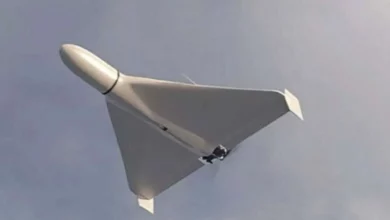
The minister separately reported that the team managed to find a way to scale up production of cheaper missiles to counter jet-powered “Shahed” drones and signed a record contract in this area.
Basic drone provisioning for brigades
The ministry launched a basic level of drone provisioning for combat brigades and corps. Under the plan, starting from July 2026 they are to begin receiving predictable volumes of UAVs without constant manual approval of each delivery.
According to Mykhailo Fedorov, this will allow military commanders to plan operations in advance, knowing how many drones they are guaranteed to receive.
A large grant program for Ukrainian manufacturers of explosives and rockets was also launched.
Service-term contracts and pay for infantry
One of the toughest and least popular reforms, Mykhailo Fedorov said, was the transformation of conditions for military service.
Among the proposed changes he listed:
- contracts with clearly defined lengths of service;
- deferments after contract completion;
- substantial pay increases for infantrymen and assault troops;
- the opening of a transparent market for recruiting foreigners;
- new mechanisms to return service members who left their unit without authorization.
According to the minister, they planned to set one of the highest salaries in the world for infantry and assault units.
$40 billion in aid and a European loan
During the tenure of Mykhailo Fedorov‘s team there were three meetings of the Contact Group on Ukraine’s Defense in the “Ramstein” format.
The minister said that the Ukrainian side managed to convince partners of Ukraine’s ability to continue resisting and to counter Russian claims of the alleged inevitability of the Ukrainian army’s defeat.
As a result of the meetings, partners announced $40 billion in support for Ukraine during 2026. This amount, Mykhailo Fedorov noted, does not include funds from the European loan.
He singled out the launch of a mechanism that allows European loan financing to be used specifically for the war priorities defined by Ukraine.
Ukrainian ballistics and a Gripen contract
On the day the government was dismissed, Mykhailo Fedorov said Ukraine carried out a successful test of its own ballistic development that was under the responsibility of the Ministry of Defense.
The team changed the technical specifications, achieved maximum accuracy and reduced the unit cost by 30%. The former minister did not disclose detailed characteristics of the system.
Mykhailo Fedorov also reported the signing of a contract to purchase Swedish Gripen fighters. According to him, these aircraft should help Ukraine destroy Russian Su-series aircraft that release guided aviation bombs.
Operation “Ashan” and stopping the Russian offensive
The list of results also included an operation called “Ashan”. Mykhailo Fedorov said it was planned and executed jointly with the military.
He claimed the operation made it possible to halt the Russian mechanized offensive for half a year. He did not disclose details of the operation or the combat area.
Weapon exports, Trophy Lab and artificial intelligence
During the work of the defense team, exports were opened under the Drone Deal program. Its goal was to attract foreign investment and increase the production capacity of the Ukrainian defense-industrial complex.
They also launched Trophy Lab — a mechanism that allows international partners to study captured Russian military developments.
Another direction was the Defense AI Center A1, created to accelerate the introduction of artificial intelligence into military processes.
What Fedorov did not manage to do
Among unfinished tasks, Mykhailo Fedorov named the incomplete organizational transformation of the Ministry of Defense to NATO standards.
According to him, the new structure of the ministry has already been launched, some employees have been dismissed, and many processes have begun to change. At the same time he admitted that personnel decisions should have been tougher.
The former defense chief believes they should have more decisively fired people who blocked or slowed down changes.
The second failure, he said, was that not all procurements could be moved to tenders. The third was the absence of a stable culture of personal responsibility for decisions made.
Summing up the work, Mykhailo Fedorov thanked the service members, his team and his family, and said he will continue to work on technologically strengthening Ukraine.
“I will continue to work for the mission with which I originally came to the Ministry of Defense — to defeat the enemy by asymmetry, the speed of innovation and the strength of organization. More to come.”
Earlier we wrote:
- Drones, procurements and the fight for influence: why Fedorov fell out with the generals
- The Ministry of Defense will inspect all TTCs: complaints of unlawful detention and violence to be reviewed
- The army faces new rules: what will change for those serving since 2022
- Next-generation Ukrainian FPV hit at 25 km despite EW
- The first 3 months: Mykhailo Fedorov announced the Ministry of Defense’s “ailments” and large-scale changes