Not just forest: steppes are returning to the site of the Kakhovka Reservoir
Together with the surrounding areas, the natural landscape will cover almost 300,000 hectares


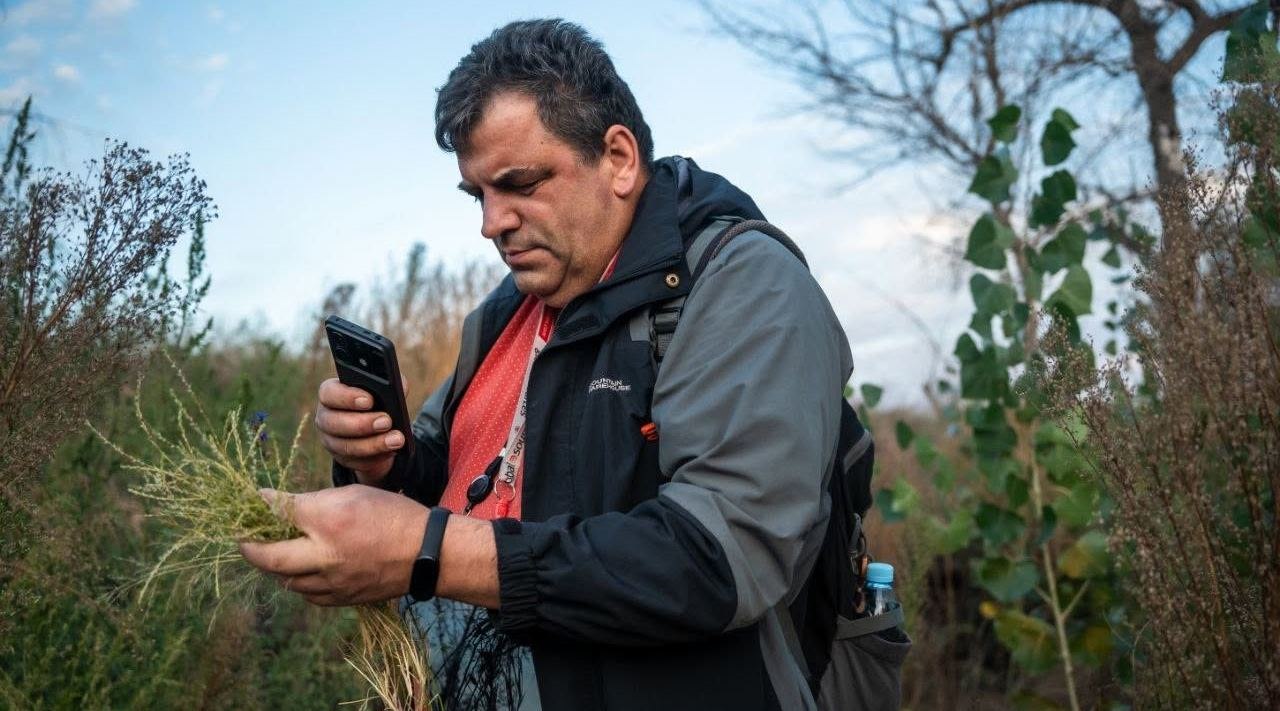
At the site of the former Kakhovka Reservoir, not only is the floodplain ecosystem of the Great Meadow recovering. Nature is returning to the adjacent areas too — rocky and sandy steppes that were once submerged. According to ukrinform.ua.
Ivan Moisiienko — a researcher at the Askania-Nova Biosphere Reserve, Doctor of Biological Sciences, professor, and board member of the Ukrainian Nature Conservation Group — spoke to Ukrinform about the scale of these changes.
A new ecosystem is taking shape following the destruction of the Kakhovka Hydroelectric Power Plant by Russian forces. In just three years, an even-aged willow forest has grown across the former reservoir site, covering around 65,000 hectares.
The scientist explained that when the reservoir was filled, it submerged steppe slopes with rocky, or petrophytic, steppes. Once the water receded, only washed-out white stones remained in these areas. Sandy, or psammophytic, steppes were also submerged. They are now gradually recovering: typical steppe plants are growing again, along with species characteristic of sandy habitats.
Before the reservoir disappeared, vegetation along its banks was arranged in narrow strips: first aquatic plants, then uncultivated steppe areas on steep slopes, followed by fields. Now, instead, a vast natural complex is taking shape. A poor and uniform ecosystem is giving way to a diversity of habitats.
According to Ivan Moisiienko, the future area will bring together:
- the basin of the former Kakhovka Reservoir, covering 215,000 hectares;
- adjacent steppe areas, adding another 50,000–70,000 hectares.
Together, they will form a single natural area of nearly 300,000 hectares.
The scientist draws attention to a process unusual in wartime: while military operations usually destroy ecosystems and nature, here nature is being restored. In his view, given the enormous overall losses, this recovery has significant compensatory value.
We previously reported:
- Billions of tonnes of water engulfed cities and villages: anniversary of Russia’s terrorist attack on the Kakhovka HPP
- More than a third of the water in the Kakhovka Reservoir has been lost, Ukrhydroenergo says
- Consequences of the destruction of the Kakhovka HPP: natural forests in southern Ukraine may disappear for good
- Around 1,200 hectares of the Kinburn Peninsula flooded after the destruction of the Kakhovka HPP