Mysterious tunnels, drums and chains: how the defensive heritage of Mykolaiv disappeared in the Korabelnyi District
How Mykolaiv residents dismantled their own history: traces of the Totleben and Kaufmann batteries


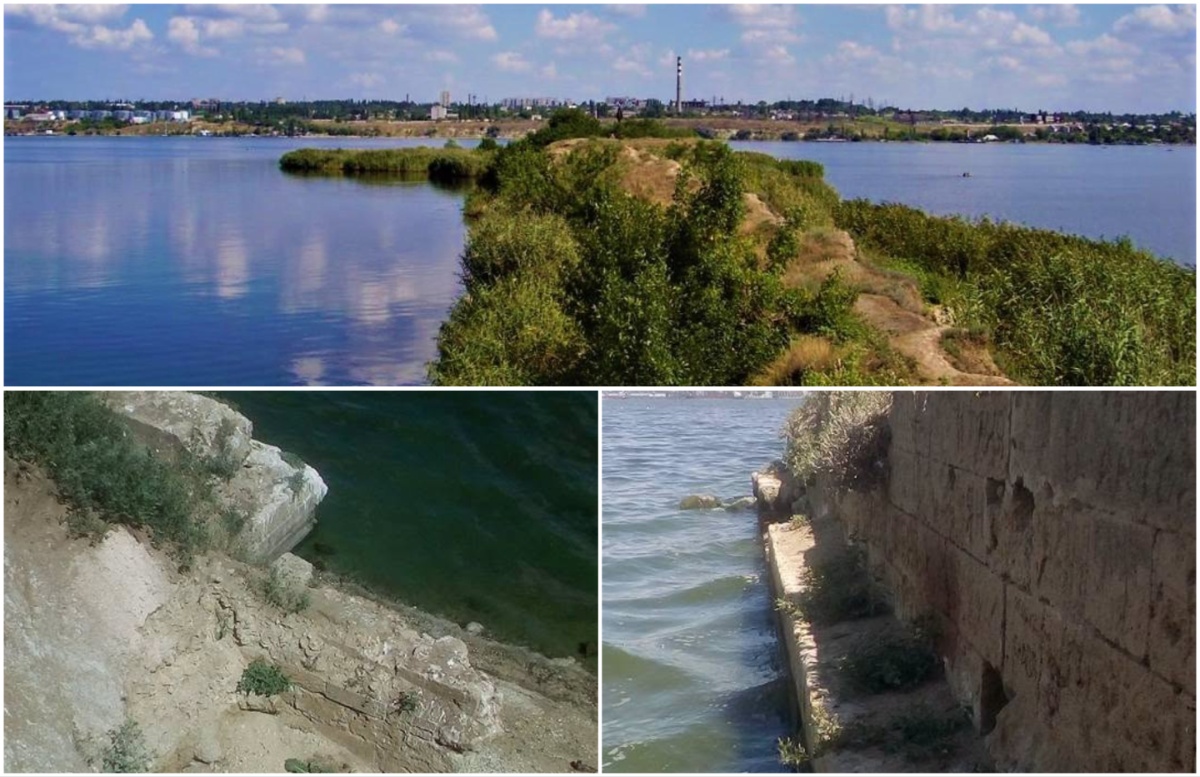
Family memories of Mykolaiv residents supplemented the history of the old fortifications on the shores of the Buzkyi Liman. Local historian Irina Ivkova collected stories about a mysterious tunnel in Shyroka Balka, huge metal constructions by the water and underwater collapses opposite Battery Island. Some of these accounts echo known facts about the defensive system created near Mykolaiv during the Crimean War.
One reader passed on the memories of her 88-year-old father. In the late 1940s, still a teenager, he and his friends found a large tunnel on the shore of the liman opposite Battery Island. The boys went inside but, because of the darkness, decided to return later with a real “expedition”. However, the next time people and construction equipment were already working by the tunnel. At first the workers dismantled the stone masonry, then they began to cut away layers of soil and haul the stone off for construction. According to the man’s recollections, railway tracks ran nearby and the area was called “Nemka” or the “German pier.” Metal parts from sunken barges, boats and ships were also raised there.
The local historian suggests that the object found by the teenagers could have belonged to the fortifications of the so-called Kaufmann Battery, or the Buzky Redoubt, built in the Shyroka Balka area in 1855. On the opposite bank, according to the design of military engineer Eduard Totleben, a dam was built from Mala Korenykha and an artificial island with the Kostiantynivska Battery was created. Both positions covered the narrow passage for ships with artillery fire.
At the same time, there is no documentary evidence that the tunnel ran under the liman to the island. Irina Ivkova believes it could have been a local military gallery, a dugout or a powder magazine that sloped toward the water. Because of the incline, the teenagers might have thought the passage ran directly to the Battery.
According to family accounts, similar underground structures also existed on the other bank. Reader Lyudmyla passed on the memories of her grandmother, born in 1904, who told of a stone quay, a solid dam and a wide gallery on the side of Mala Korenykha. Allegedly even wagons with horses could pass through it, and after housing development expanded the entrance was filled in.
Another reader, Yevhen, told of large drums and remnants of chains that his acquaintance saw at one of the enterprises in Shyroka Balka. According to the author’s version, these could have been elements of coastal capstans intended to tension a heavy barrier across the fairway. However, the purpose of these specific mechanisms is not documented.
It is known that during the construction of the defensive system the passage by the island was blocked with timber cribs (ryazhy) — large wooden structures loaded with stone. They formed an artificial underwater obstacle, forcing ships to move through a narrow fairway under the fire of shore guns. During seabed scanning specialists discovered about 20 artificial underwater objects, some of which reached approximately four meters in height, as well as remnants of piles around the stone fill.
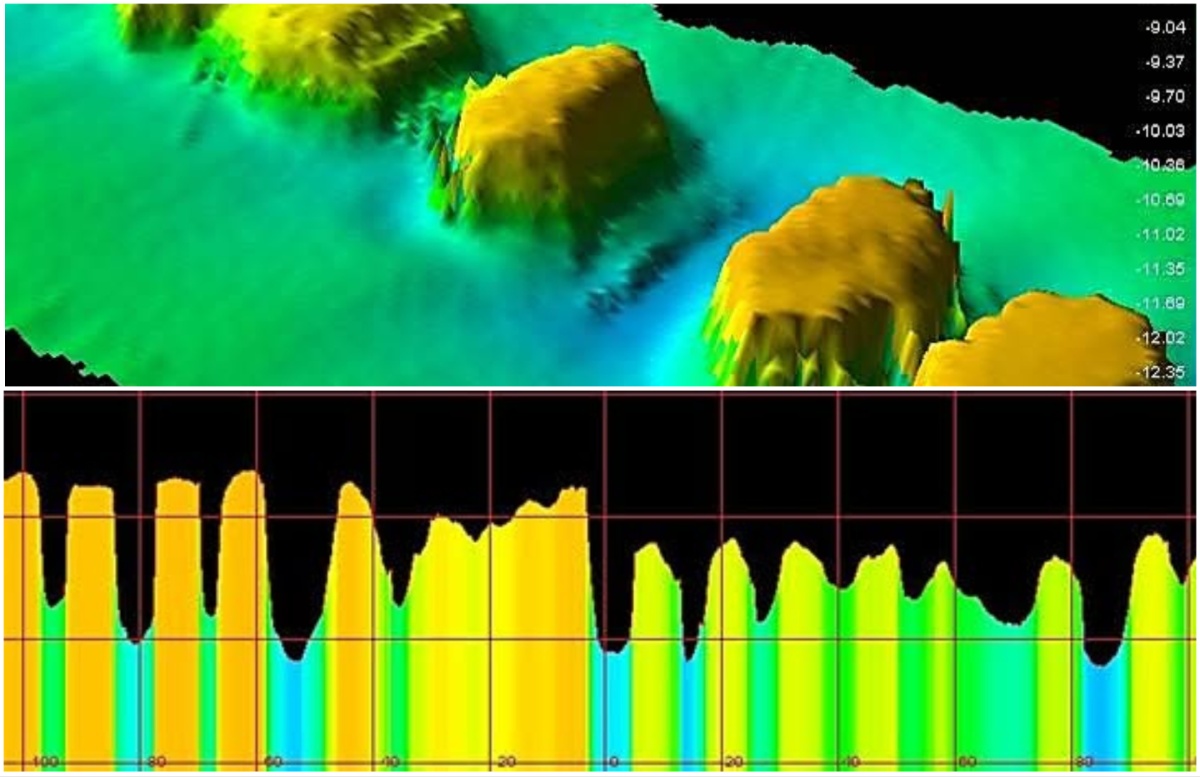
In Irina Ivkova’s opinion, metal barriers could also have been used above the stone obstacles. A similar principle of port protection is known as a boom barrier: logs, chains, piles or submerged constructions were installed across the passage to stop a ship or damage its hull.
Traces of large metal constructions were noticed by locals as early as the 1970s. According to the local historian’s recollections, her father snagged an underwater obstacle with his fishing gear while fishing opposite the Battery. After diving he saw a pile of rusty iron, massive fragments resembling chains, and an accumulation of shell limestone. In the 1990s, locals say metal was also retrieved from the bottom for scrap.
Some of the old constructions may have been damaged during the clearing and deepening of the navigation channel. It is known that a significant part of the ryazhy in the fairway area was destroyed, although some elements near the island survived. The version about large-scale explosions during the preparation of the passage for large ships requires additional documentary confirmation.
Another reason for the disappearance of the fortifications could have been postwar reconstruction. In 1948–1950 the city was acutely short of building materials. According to long-time residents, the stone masonry of abandoned structures was dismantled to build houses, and the rocky area in Shyroka Balka was turned into a quarry. The stone quarried there was reportedly used during the development of the Sadky near YUTZ district.
Thus, part of Mykolaiv’s defensive history may literally have been turned into the walls and foundations of postwar homes. At the same time, stories about tunnels, horse-drawn mechanisms and chain barriers remain a combination of confirmed historical facts, family memory and local-history hypotheses that require further archival and underwater research.
Irina Ivkova urged residents to share memories of their relatives about underground passages, old batteries, finds in the liman and Mykolaiv’s postwar reconstruction.
Earlier we wrote:
- Across the shoal — to the fort: expedition to Battery Island near the Korabelnyi District
- Destroyed cultural memory of Mykolaiv: 77 historical objects destroyed — will there be restoration?
- Ancient Mykolaiv in 3D: recording destructions in the war zone
- Secrets of Mykolaiv catacombs: myths and facts
- “An armored train stopped at Kulbakine station and began shelling Bohoyavlenske…”