1,097 reports of violence in Mykolaiv region: police keep returning to the same addresses
Crisis rooms for victims are operating in the Pivdennoukrainsk community


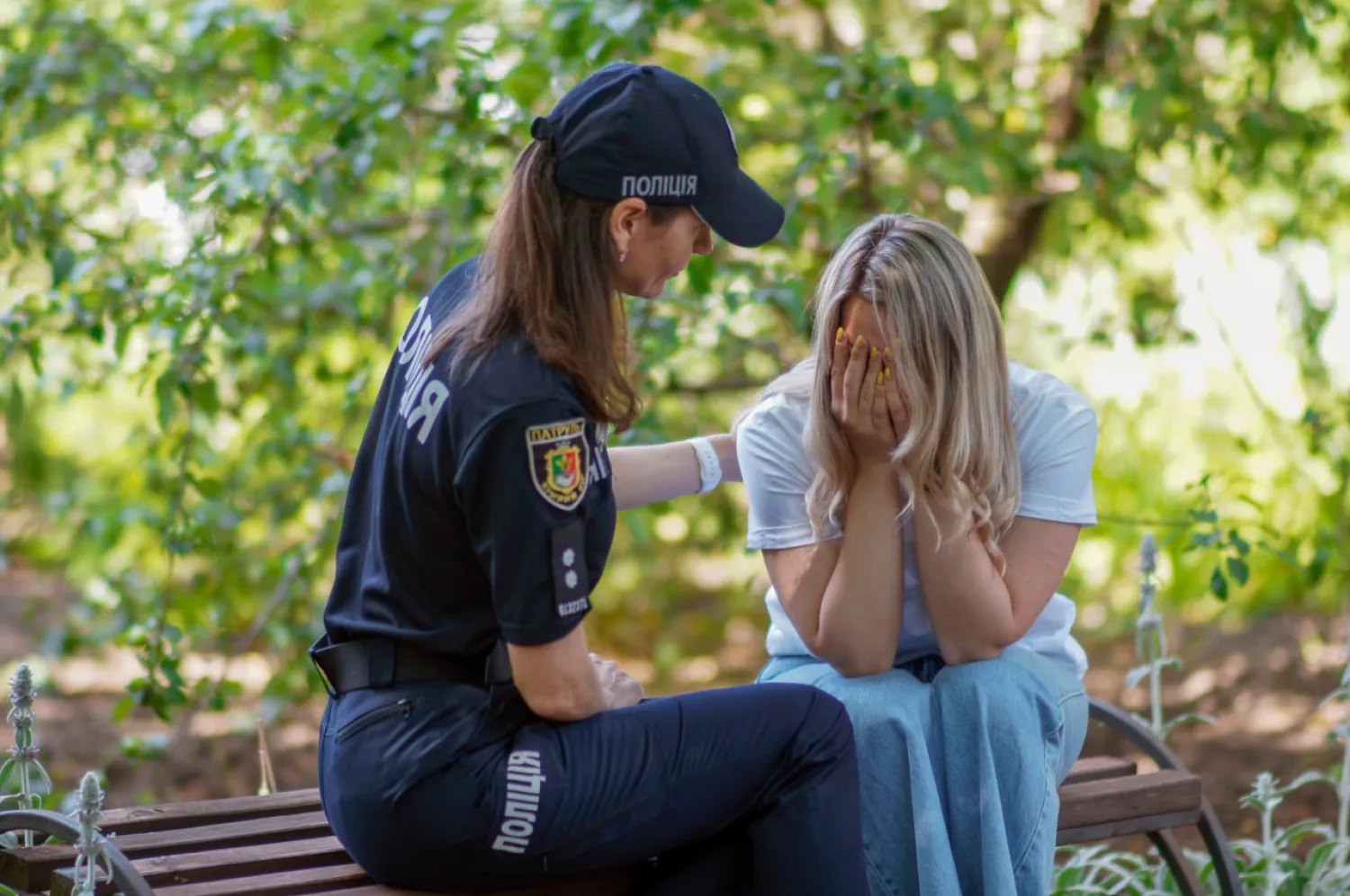
Since the beginning of 2026, the 102 emergency line in the Mykolaiv region has received 1,097 reports of domestic and gender-based violence. Police officers have to return to homes where violence is recurring, and some of those calling for help are children.
The statistics and circumstances of these calls were described on air at “Ukrainian Radio Mykolaiv” by regional patrol police spokesperson Yuliia Riabokin. By comparison, over the course of 2025, police registered 1,573 reports of domestic and gender-based violence. During the first half of the year, regional police received 1,020 complaints and reports of domestic violence.
The spokesperson also provided separate figures for reports from adults and cases involving child victims:
- People under the age of 60 made 9 reports from men and 128 from women.
- Among people over the age of 60, there were about 5 reports from men and 56 from women.
- 12 cases of domestic violence against children were recorded.
- A further 41 calls concerned violence in the presence of children. The law also recognizes such children as victims.
The most common types of violence patrol officers encounter are psychological and physical. Usually, victims themselves ask for help, though calls also come from bystanders. Patrol officers respond to every call.
“When police receive a report of domestic violence, they are given an address and dispatched there. They then act in accordance with the procedure. They determine who the perpetrator is, who the victim is, what happened, and what type of domestic violence occurred, and then draw up administrative documents,” said Yuliia Riabokin.
One recent call came from the mother of a woman who had suffered domestic violence. After attending the scene, police drew up an administrative report, issued an emergency restraining order, and completed a risk assessment form.
Children also contact the police themselves when they witness violence between their parents.
“Yes, children now also call the 102 line without being afraid of the number anymore. We work with young and underage children to explain that calling is nothing to be afraid of; it is necessary if they really see that something is happening and someone needs help. They can reach out to us,” said Yuliia Riabokin.
At the same time, some reports are repeated calls from the same homes.
“We often respond to the same addresses when violence recurs. Sometimes, within a week, police officers may go to the same address, and sometimes an officer comes several times a month, draws up administrative documents, and explains to the woman what she can do,” said Yuliia Riabokin.
Among the reasons victims do not immediately contact support services is the hope that the perpetrator will change their behavior.
Lidiia Leshchuk, a counseling psychologist with the mobile social and psychological support team at the Yuzhnoukrainsk City Social Services Center, described how support services operate in the Yuzhnoukrainsk community. She shared the following statistics on reports of violence:
- During the first 9 months of 2026, the team received 70 reports: 54 concerned adults and 16 children.
- In 2025, it received 145 reports: 120 concerning adults and 25 concerning children.
“The number of reports does not always reflect the true scale of the problem. We understand that many victims may not dare to talk about what is happening at home for a long time. This may be due to fear, shame, financial dependence, or concern about being judged by others,” explained Lidiia Leshchuk.
The mobile team receives 8–10 new requests each month. Its permanent staff consists of two specialists:
- a social work specialist;
- a counseling psychologist.
When needed, other specialists join the work. People most often need psychological and legal support. In addition to responding to reports, the team makes scheduled visits to provide social support and consultations.
According to Lidiia Leshchuk, repeat reports of domestic violence are common. This does not necessarily mean that support services are ineffective or that the victim does not want things to change. Violence often follows a recurring cycle, and psychological or financial dependence on the perpetrator, as well as a lack of separate housing, can make it difficult to leave the situation.
The community also has a day center providing social and psychological support to victims of domestic violence. It has crisis rooms where people can stay temporarily.
“You are not to blame for what happened or for someone choosing to use violence against you. You should not have to endure humiliation, threats, control, or physical pain simply because it is happening within your family. Asking for help is not a sign of weakness,” emphasized psychologist Lidiia Leshchuk.
She also urged people not to abandon those who may need help and not to ignore incidents of violence.
We previously reported:
- 61 cases of domestic violence confirmed in one of Mykolaiv’s districts
- After a disturbance at a hospital and conflicts with his mother, he became the subject of another criminal case
- A young child saw everything: in Mykolaiv, a man beat and humiliated his wife, then set fire to the door
- Putting up with it is not the answer: how women in Mykolaiv can escape violence
- Police checked 83 families in the Korabelnyi district where domestic violence had occurred and spoke with the perpetrators