More than 1,500 people could be brought back from captivity: details of the agreements in Abu Dhabi
Russia has already approved some of the names; the rest are still being negotiated


Ukraine hopes to bring back more than 1,500 people from Russian captivity as part of an exchange whose terms were finalized in Abu Dhabi. If the plan goes ahead, this could be the largest exchange of the full-scale war. Russia has already approved some of the proposed names, while work on the others is ongoing. According to mod.gov.ua.
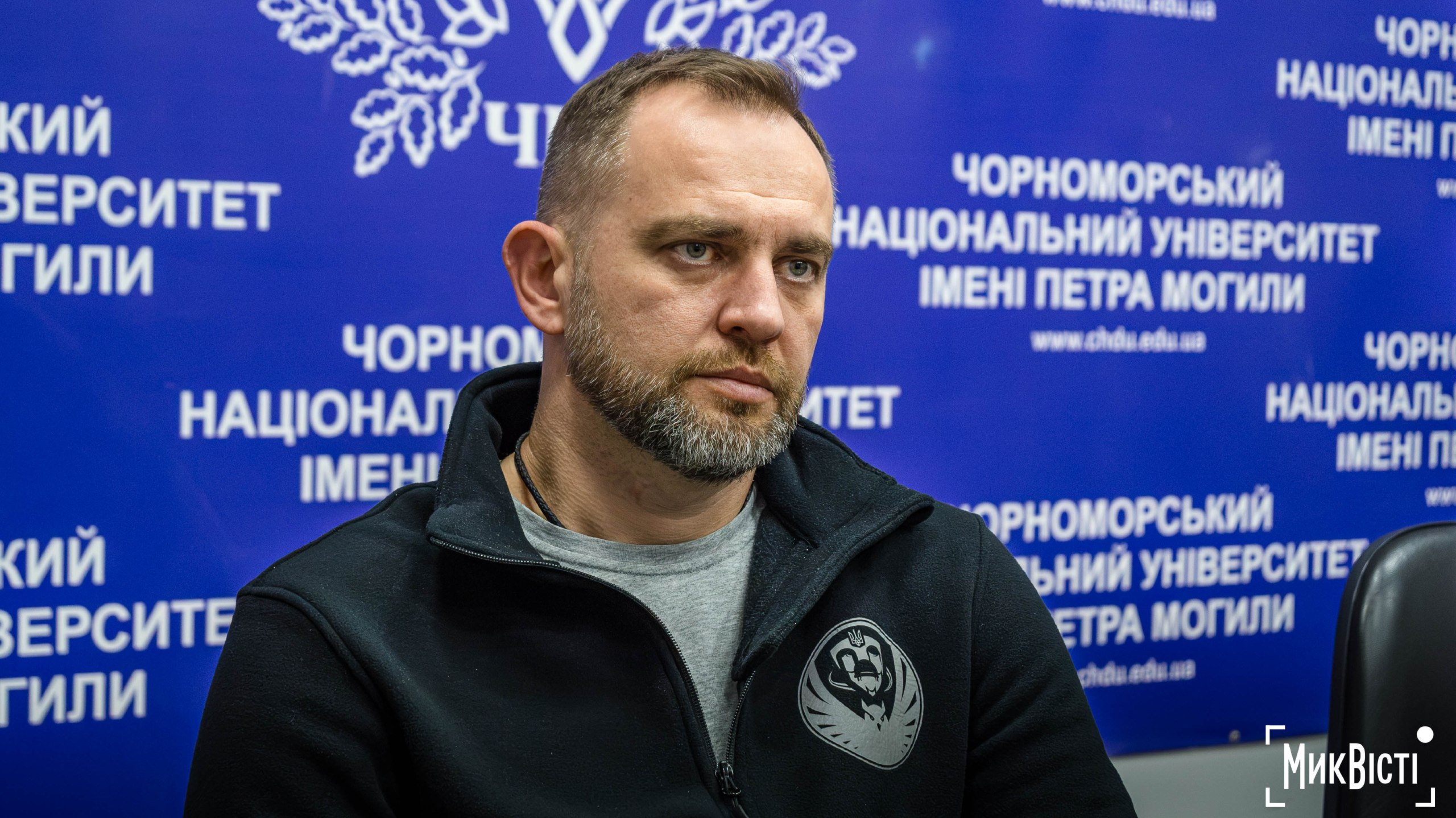
Details of the exchange preparations and work with families were discussed at a meeting at Petro Mohyla Black Sea National University in Mykolaiv. The conversation with relatives of captured and missing defenders lasted more than 3 hours. The questions were answered by:
- Dmytro Usov — brigadier general and secretary of the Coordination Headquarters for the Treatment of Prisoners of War;
- Ihor Kopytin — Member of the Ukrainian Parliament.
Usov explained that the headquarters team began preparing the exchange about 2 months before the talks in Abu Dhabi, where the negotiating team and Ukrainian delegation finalized the agreements. However, the end of the negotiating stage does not mean that every name has already been confirmed.
The question to the general referred to estimates given by Dmytro Lubinets — from 1,000 to 1,500 people. Usov stressed that the headquarters is working on a larger list. For comparison, he cited the exchange following the talks in Istanbul, which he currently considers the largest:
“Anything above 1,200 will be the largest exchange. But we hope it will be even more than 1,500,” said Dmytro Usov.
According to the general, Ukraine has submitted requests and is reviewing each name individually. In his assessment, the portion of the list received from Russia matches what was discussed and finalized in Abu Dhabi. The remaining people are now awaiting confirmation. Usov could not say which categories the Russian side might exclude from this particular exchange: the arrangements have not yet been finalized.
The general also explained how the sentences imposed by Russia on Ukrainian defenders affect the timing of their return. According to him, the Russian side does not offer any specific legal rationale for leaving convicted prisoners off the lists. However, their return requires going through the pardon or amnesty procedures provided for by Russian law.
“In any case, this is then decided politically. Because the pardon is signed by one person in the aggressor state. So I wouldn’t say they are harder to bring back, but a more complicated process has to be followed. When our service member is prosecuted on fabricated grounds, and there is a sentence that carries a long prison term, the approval process for an exchange becomes more difficult. It’s not enough to agree that they will approve the exchange. We also have to ensure that they complete this bureaucratic and legal procedure,” explained Dmytro Usov.
According to him, completing these procedures can take anywhere from 2 weeks to several months. This is why the exchange originally planned for August 24 had to be divided into 3 stages. The lists included Ukrainian service members who had been captured and sentenced before the full-scale invasion. Usov stressed that the headquarters has not forgotten them and wants to include this category in the exchange now being prepared.
The general outlined the stages below; the Ministry of Defence of Ukraine (mod.gov.ua) published the numbers for the first and final stages:
- August 19 — the first stage took place, and 103 Ukrainian service members returned home;
- August 24 — the second stage took place;
- October 23 — the final stage, in which 270 people returned: 261 service members and 9 civilians. Most of those released had been in captivity since 2022. Usov described this as the most recent exchange at the time of the conversation.
He explained that the delay between August and October was due specifically to processing pardons for convicted Ukrainian service members.
The return of civilians has a different legal basis. Usov stressed that civilians should not be exchanged at all: they should be returned or handed over. However, the Russian side forces Ukraine to agree to an exchange mechanism in order to free convicted civilians and hostages.
“Usually, it’s either an exchange for a civilian or for a service member. These cases do happen, as you’ve seen. We even have some statistics on civilians returned through exchanges. But we focus more on service members,” said Dmytro Usov.
Dmytro Lubinets announced plans to establish the Center for the Return of Ukrainian Civilians, which will deal with these issues directly. At the same time, the Coordination Headquarters will continue its work on civilian cases: it has a dedicated working group headed by a representative of Lubinets. Usov explained that this will remain a joint effort, rather than transferring all responsibility to one institution.
An important part of the visit to Mykolaiv was meeting directly with families. In November 2022, the headquarters opened the first regional office in Ukraine here — the Southern Region Consultation Center. Its specialists help relatives of captured and missing defenders, advise them on how to search for service members, and explain how returns from Russian captivity are organized. Another reason for the visit was to congratulate the regional office on its establishment.
According to the general, families want to understand what the state is doing to bring their loved ones home, establish the fate of the missing, confirm that someone is being held captive, or obtain any information about them.
“We’ve started visiting the regions and holding in-person meetings with our families. They’ve asked us to do this: they can’t travel to Kyiv, to the central reception office, and want to speak directly with the leadership of the Coordination Headquarters — the head, a deputy, or the secretary, which is my position. Sometimes they have questions after speaking with our consultants or with certain agencies, where they haven’t been able to get a complete answer. So they want to speak with officials who have access to more information,” explained Dmytro Usov.
He added that lengthy conversations with families are not unusual on these visits; some meetings have lasted even longer than the one in Mykolaiv.
This time, representatives of several family groups gathered, including relatives of:
- Marines;
- service members of Azov, part of the National Guard of Ukraine;
- defenders from other mechanized brigades.
The organizers wanted different communities to be able to ask questions and hear one another. The most painful issues are similar for everyone:
“Why hasn’t my loved one been brought back? Or why were so few members of this or that brigade included in the exchange? Or why aren’t those who have been in captivity since 2022 coming home? Naturally, relatives want their own loved ones, or representatives of the group they formed a community to support, to be included in the exchanges,” said Dmytro Usov.
When a meeting is held with just one group, its members may feel they are fighting alone, the general explained. A joint conversation shows that families from different units face the same problems. The headquarters’ task is to understand everyone’s pain while working objectively for all families and communities.
During the interview, Usov did not disclose the number of prisoners connected to Mykolaiv region. He said the headquarters’ information system can produce a search by the required criteria in a few minutes — for example, to identify service members who:
- were born in Mykolaiv region;
- served there;
- are registered in the region.
At the same time, the general clarified that regional figures are not made public and are used for internal work. Each week, the headquarters analyzes how many people from a given region have been captured and how many are considered missing. If the figures change, the consultants and social services in that region are alerted.
Another question families ask is why someone might return in an exchange even though their personal account still showed a “person search” status beforehand. Usov explained that the headquarters knows the names of those expected to return, but information confirmed by Russia does not always make it possible to reliably identify them in advance.
Sometimes, in response to a Ukrainian request, the Russian side reports that a missing service member is in captivity. Before that, there may be no information at all about their whereabouts — from either relatives or fellow service members who were with them or have already returned. If Russia agrees to hand the person over, they are added to the exchange list, but their status in the system is not changed yet.
The reason is that a surname, first name, patronymic, and even date of birth may match. Identical details can belong to different service members — for example, a Marine and a member of the National Guard.
“Since the Russians have only confirmed that the person is in captivity, but haven’t provided a photo or video, or information about which penal colony they’re in or their health, we still aren’t sure exactly who it is. We can only confirm this directly during the exchange, when we verify their identity. Once we’ve verified the person during the exchange, we know that it is a specific service member. Then, once they are in territory under our control, we change their status and notify their relatives. The status is changed only then. After that, we announce that a certain number of people previously considered missing have returned,” clarified Dmytro Usov.
Such returns have already taken place: during a special exchange stage, Ukraine brought back 10 service members who had previously been considered missing. They were members of the Armed Forces of Ukraine and the National Guard of Ukraine who had taken part in the defense on the Donetsk front. They returned home via Belarus.
The International Committee of the Red Cross (ICRC) also helps establish whether someone is in captivity. The headquarters’ information system has separate labels for this:
- “Captivity (other sources)”;
- “ICRC-confirmed captivity.”
The headquarters provides the Red Cross with information about people marked with the first label so the organization can obtain confirmation from the Russian side. After this additional confirmation, the status is changed to the second label. According to Usov, the ICRC has agreed to cooperate in this way.
However, the organization’s representatives do not have access to every detention facility. As a result, confirmation does not always mean they have personally seen the prisoner.
“We even know that many of our people in captivity, or hostages, are confirmed by the ICRC based on information from the Russian side. They don’t see them or speak with them, but they confirm their captivity based on what the Russian side says. Our defenders who have returned from captivity can confirm this, including those who were there since 2022. They can say that, while listed as prisoners confirmed by the ICRC, they never once saw ICRC representatives,” said Dmytro Usov.
He added that the headquarters is working to ensure the ICRC fulfills its mandate in Russia.
At the end of the conversation, the general addressed families for whom the main question is still when their loved one will come home. He said the headquarters aims to earn their trust not with formal answers, but through action and open communication.
“We try not to give them empty promises or formal, procedural answers. Through our actions and our communication, we try to show them that perhaps we aren’t working in the way you want right now, or specifically on your case, because we’re working on everyone’s. But thanks to the systematic work we’re doing, we’ll be able to bring your loved one back too,” emphasized Dmytro Usov.
He explained that it is important for families to conserve their strength: when their loved one returns, they will have a great deal of work ahead to support and rehabilitate them. Constantly visiting offices and turning to everyone who works — or merely claims to work — on captivity issues exhausts families even before their defender is released.
“That’s how we want to divide the responsibilities: you wait and trust us, and we work to bring them back,” said Dmytro Usov.
Asked whether they were managing to build that kind of trust, the general replied:
“Well, somehow we are. Everyone left satisfied today,” concluded Dmytro Usov.
Earlier, we reported:
- Five Ukrainians who were thought to have died in Olenivka return from captivity. 270 people in total
- Ukraine and Russia exchange extensive lists of missing service members; continuation of visits to prisoners agreed
- Three years of hell: heroes who miraculously survived return from captivity
- “We won’t be able to bring everyone back”: Ukraine faces a catastrophic shortage of prisoners to exchange
- A regional office of the headquarters for the treatment of prisoners of war to open in Mykolaiv