491 days in position, self-amputated legs, and evacuation by aerial drone: how a Ukrainian fighter held on until rescue
Lost Both Legs, Buried a Fellow Soldier, and Waited Months for Evacuation: The Story of “Mahura”

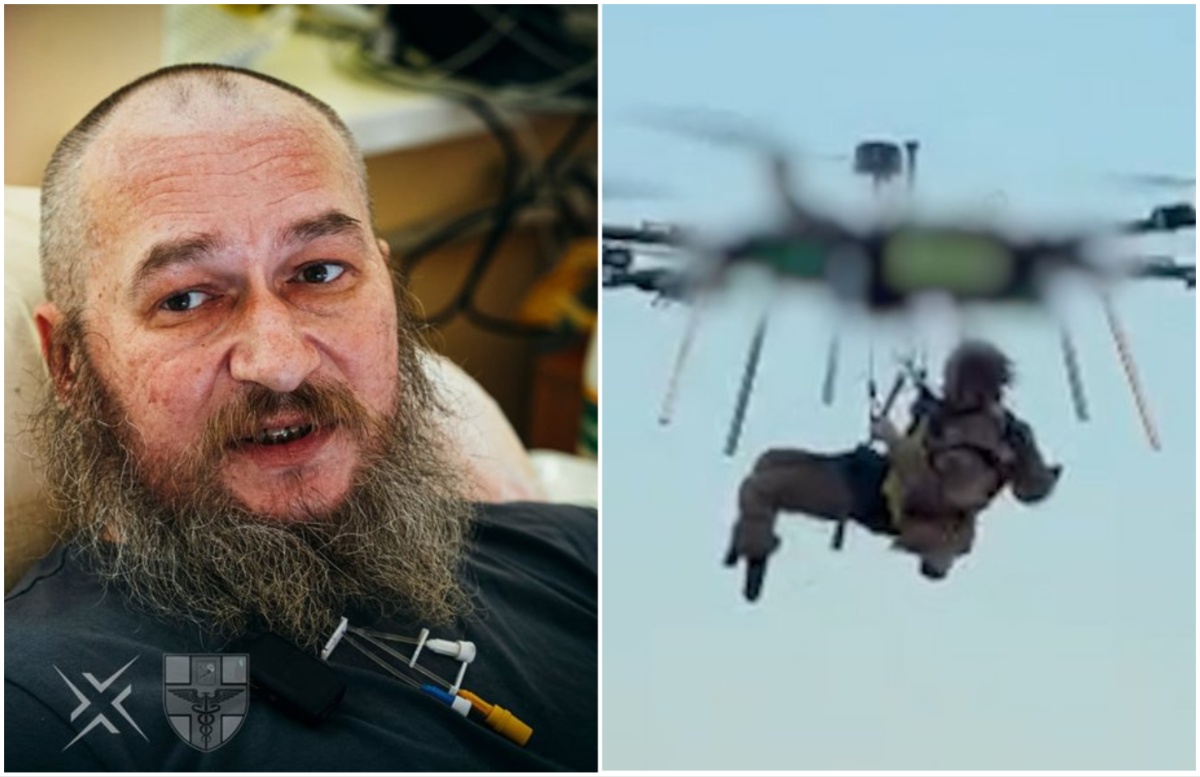
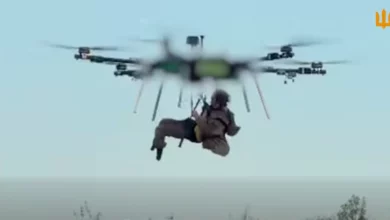
In the Kharkiv region, an unusual evacuation operation was carried out: a wounded Ukrainian service member who was unable to leave his position on his own because of severe injuries was airlifted using a heavy drone. The operation used a Heavy Shot “Ayudag-6” hexacopter, capable of carrying a substantial payload.
For 491 consecutive days, 49-year-old Konstantin Vlasenko, call sign “Magura,” a service member of the 30th Separate Mechanized Brigade, remained at a combat position. During that time, he suffered severe injuries, lost both legs, was left without his comrade, and survived for a long time in a shelter, receiving food and medicine thanks to drones.
As Susпilne Kharkiv reports, the rescue was organized through the joint efforts of several military units and the Ukrainian defense company “Gurzuf Defence.” Russian drone activity made a conventional evacuation too dangerous. As a result, the service member was transported by air, and the drone carrying him covered 62 kilometers.
Injuries, a comrade’s death, and months in a shelter: how Konstantin survived
Konstantin Vlasenko said he was wounded on the Kupiansk axis by ammunition dropped from Russian drones. He lost his right leg in April, and his left one in May.
The service member recalled that conditions at the position were especially difficult because of the weather. When the snow melted, the shelter flooded. His clothes were soaked, and frost set in overnight. Although his comrades tried to drop off dry clothes, changing in those conditions was dangerous and uncomfortable. He also suffered frostbite in addition to his injuries.
“The enemy would fly in on a ‘bird’ and drop munitions. Our position flooded when the snow was melting. The enemy spotted us and dropped a munition. It hit my legs, broke the left one and struck the right. Everything was wet, our clothes were soaked. The guys dropped dry clothes to us, but changing at night was very dangerous and uncomfortable, so we sat in wet clothes, and then frost set in overnight. Frostbite started to set in too,” the service member recalls.
Another source of deep pain for Konstantin was the death of his comrade, which happened on February 16. According to the soldier, it was his friend’s 50th birthday. He died after an enemy munition drop, and Konstantin was unable to protect him because of his own injuries.
“It was his birthday, his jubilee—he was turning 50. I failed to protect him. It was hard for me with him there; I looked after him. This time I couldn’t, because I was wounded and couldn’t protect him like I used to. There was a munition drop. It hit him. The enemy likes to drop munitions at night, so you can’t see the wounds, where to wrap or what to wrap. He didn’t make it until morning. From February 16, I was left alone,” Konstantin says.
After that, the service member was left alone at the position. He had to look for shelter where he could wait out the danger. He found it in a damaged building, eventually hiding beneath a stove.
“Then they destroyed that place too, and I had to crawl under the stove. I stayed under that stove until October,” the soldier says.
Despite his grave condition, Konstantin tried to treat himself. He applied a tourniquet, then, once the bleeding slowed, made a bandage and removed it. His comrades dropped medicine to him, which helped him hold on.
“I knew I couldn’t keep the tourniquet on for too long. First I applied it, then, once the blood wasn’t flowing so heavily and had slowed to a drip, I made a bandage for myself and took the tourniquet off. They dropped medicine to me.”
The service member said he took painkillers for about a month or a month and a half. Eventually, he decided to gradually stop taking them.
“I didn’t want to get used to them, so I gradually got used to the pain. Once I did, I didn’t take a single painkiller before the evacuation,” the soldier said.
Evacuation by heavy drone: “The pilot carried me like a person, not a sack of potatoes”
It was not possible to evacuate Konstantin by conventional means for a long time. Russian forces had increased their use of drones, making it extremely dangerous for troops to move to the position.
At first, the plan was to carry out a rotation, not an evacuation. However, the service members could not reach the wounded man. Konstantin understood the danger this posed to anyone who might go after him and no longer expected to return.
“The first attempt was to replace us, not evacuate me, but carry out a rotation. The guys couldn’t get there because the enemy had already increased its flying capability. They were becoming ‘200s.’ I didn’t want anyone to come after me anymore. I was already willing to stay there forever,” Konstantin says.
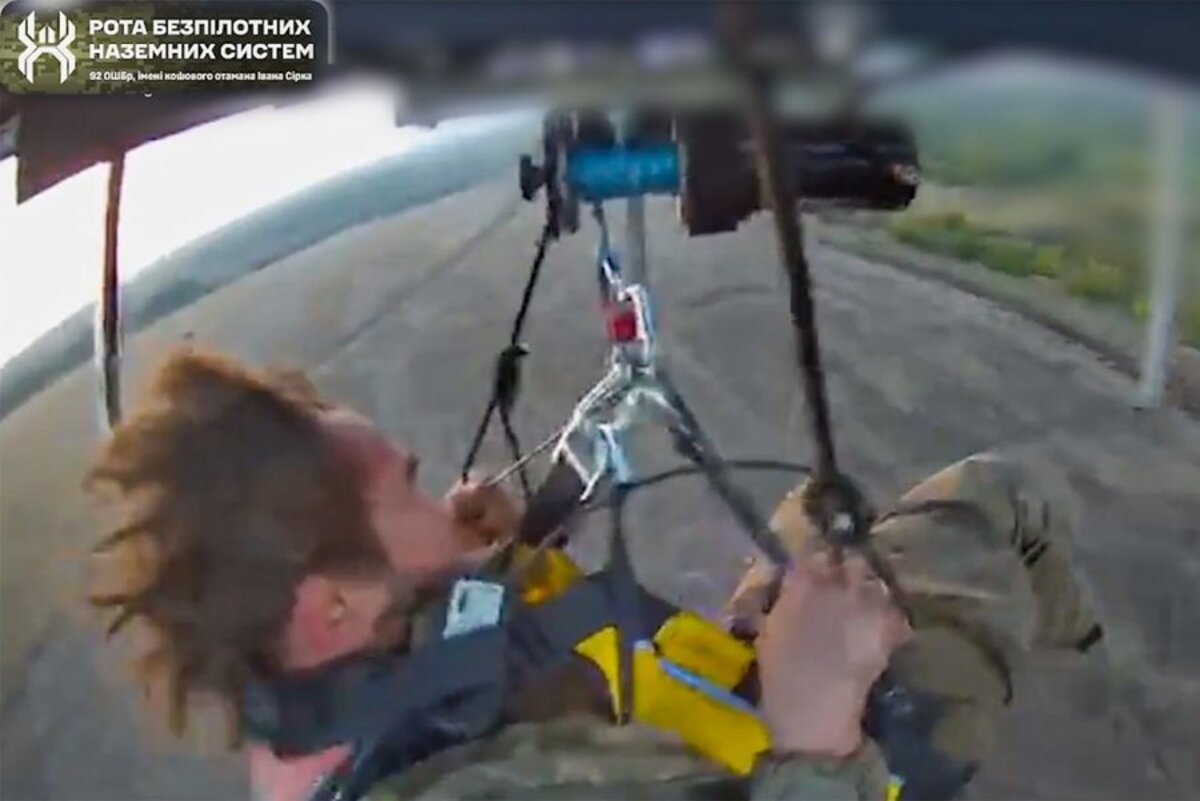
The soldier calls the team that eventually organized his rescue angels. A heavy drone was used for the evacuation, with a design that allows it to carry a person in a special seat.
“It’s a big, low-flying drone that stands on legs. You can crawl underneath it while lying down. It has a seat you have to get into, and carabiners.”
Konstantin especially praised the pilot who operated the drone during the flight. They later found out they were from the same hometown: both were from Kryvyi Rih.
“A bow isn’t enough. My whole soul, my whole life belongs to them. I’ll do anything I can for them. A lot of people were involved. The pilot… He carried me not like a sack of potatoes, but like a person, as if I were on a real airplane. I’m very grateful to him. I found out he was from my hometown, Kryvyi Rih, and even from the same district where I live. That was quite a shock for us,” Konstantin says with a smile.
The service member also emphasized that his faith and the support of his comrades and commanders helped him endure his long stay at the position.
“The command kept my spirits up. I have a very good company commander and very good guys—my comrades. They all worried about me. Knowing that someone was still thinking of me, that no one had abandoned me—that kept me going,” says the soldier from the 30th Brigade.
Help kept coming even when the enemy destroyed parcels dropped by drones.
“If they brought me a parcel and the enemy destroyed it, another one would be sent straight away—to feed me and drop off medicine.”
Heavy Shot “Ayudag-6”: a drone for exceptionally challenging missions
Several military units and the Ukrainian company “Gurzuf Defence,” which manufactures heavy Heavy Shot bomber drones, took part in Konstantin’s evacuation.
One of the company’s directors, named Ivan, said the Heavy Shot modification called “Ayudag-6” had been developed about a year before the operation. It was originally conceived as a multifunctional platform for logistical tasks, which the military could adapt to different needs.
“Our company, ‘Gurzuf Defence,’ has been manufacturing Heavy Shot bomber aircraft in series for over three years now. They are used along the entire front line. This aircraft is a Heavy Shot modification called ‘Ayudag-6’; it was developed about a year ago. It was designed as a kind of multifunctional platform intended for logistics and logistical missions. But it was built so that the military could use it for various purposes,” says Ivan.
When the military approached the manufacturer asking for a drone to evacuate a wounded service member, the company agreed to help. Engineers and service members worked together to refine the design and adapt the platform for its new task.
“When the guys asked us for help and requested a drone for this kind of mission, of course we agreed right away. We did everything possible and worked on all the details together with them to make sure the platform was fully adapted for this mission.”
According to information published on the company’s website, during the evacuation the drone stayed airborne for more than an hour and flew 62 kilometers with the service member aboard.
Ivan said the company’s drones had previously been used to transport cargo, including munitions weighing up to 100 kilograms, and to carry out logistical tasks. But evacuating a living person was an especially responsible mission for him.
“We’ve taken part in many missions, dropping 100-kilogram bombs alongside the military, and carrying out various logistical missions. But when we took part in this mission and saw that it wasn’t logistics or a bomb, but a living person, I started praying to all the heavens and all the saints that it would work. You feel the level of responsibility and keep your fingers crossed so tightly,” says Ivan.
Preparations for the operation lasted up to two months. According to the company representative, the military consider it the first airborne evacuation of a wounded person directly from a frontline position using a drone of this kind.
“This is, essentially, the only evacuation mission—the first in the history of the war—in which a person was evacuated by aircraft. I think everyone understands how difficult this mission was, because when you have to carry a person not one or two kilometers, but more than 10–15, and you know that aerial combat is going on constantly and jamming is constant… Under these conditions, it’s very difficult, and this is a last-resort option. The pilots have to understand that, the person being evacuated has to understand it, and the commanders have to understand it,” Ivan says.
He also spoke about the platform’s technical capabilities. According to him, the hexacopter lifted 135 kilograms, a result recorded as a Ukrainian record among manufacturers of this type of drone. He estimates the working payload at 70–80 kilograms for a flight range of up to 20 kilometers. The company is also completing development of another platform in the same class, designed to carry a load of up to 150 kilograms. Its stated operating range will be 15–20 kilometers.
“At the moment, it’s a hexacopter. We lifted 135 kilograms with it, and recorded that; we even set a Ukrainian record with this aircraft among manufacturers. Its working payload is 70–80 kilograms if we’re talking about a range of up to 20 kilometers. We also have another aircraft in the final stages of development, in the same class but for 150 kilograms, with a range of 15–20 kilometers.”
“Konstantin worked more precisely than any of us”: how the military organized the operation
A service member of the 92nd Separate Assault Brigade with the call sign “Vader” said the team had overlooked some practical details while preparing for the evacuation. In particular, they did not give the wounded man a neck gaiter or protective glasses, so he felt cold during the flight and the wind blew into his eyes.
“I have to say, we didn’t think about a neck gaiter, so Konstantin was a little cold. We also didn’t give him goggles to keep the air from blowing into his eyes, so he could enjoy the views,” says “Vader.”
According to him, the pilot during the evacuation was a service member of the 30th Brigade. Before the flight, Konstantin was briefed on how to handle the drone and what to do while airborne. The team could monitor the soldier’s condition and stay in touch with him. Despite his injuries, Konstantin followed all the instructions precisely, which helped the team carry out the operation quickly.
“We could see what was happening with the soldier and communicate with him. I should point out that Konstantin followed every instruction incredibly precisely and quickly, despite his injuries. He probably did his part more precisely than any of us, because the operation went very quickly. He did everything that depended on him perfectly.”
Organizing the evacuation required coordination across several areas of work. The military involved specialists in radio reconnaissance, electronic warfare equipment, aerial cover, and drones for diversionary maneuvers. At the same time, they carried out fire strikes against the enemy.
“The main difficulty was coordinating all the units’ work: from radio reconnaissance and EW cover to aerial cover. There were also certain diversionary maneuvers involving UAVs. And, of course, fire strikes against the enemy were carried out at the same time,” says “Vader.”
What is known about Konstantin’s condition: rehabilitation and prosthetics lie ahead
After the evacuation, Konstantin was taken to a hospital in Kharkiv, where he underwent several operations. Volodymyr Kupriianchuk, head of the department of surgical infections and thermal injuries, explained that the wounded man’s condition depended largely on the care he received directly at his position.
His comrades dropped medicine and food to Konstantin by drone. This treatment helped prevent a number of dangerous complications, including infection and gangrene, which could have threatened the service member’s life.
“Since medicine and food were dropped to the position by drone, there were no serious complications such as suppuration, gangrene, or other complications that could have taken his life. By the time he was admitted to us, he already had granulating wounds around the ankle joints. It was clear that he had been using antibiotics and anti-inflammatory drugs, which helped prevent complications that could have been fatal,” the doctor explains.
The service member now faces comprehensive treatment, rehabilitation, and preparation for prosthetics. According to Volodymyr Kupriianchuk, the doctors have already determined the next steps in his care. Konstantin is to be transferred to another hospital in Kharkiv that specializes in prosthetics.
“He’s a complex patient. We need to treat him comprehensively and work out how to fit him with prostheses. We’ve already planned everything. We’ll transfer him to another hospital in Kharkiv that will handle his prosthetics.”
The story of Konstantin Vlasenko showed how important cooperation between military units, medical personnel, and Ukrainian drone developers can be. When conventional evacuation was too dangerous, a heavy drone became the way to get the wounded defender off the position and bring him to doctors.
We previously reported:
- A heavy drone evacuated a wounded soldier from a frontline position
- Two weeks in one dugout with a Russian soldier: wounded Odesa man survives, enemy captured
- Commander killed, wounded soldier bled out, no evacuation: how Russians seized the command post in Huliaipole
- Ukrainian soldier held his position for five days while completely surrounded
- An example of courage: defender from Mykolaiv awarded the Golden Cross for bravery