School lunches under the microscope: Mykolaiv has begun checking what children are being fed
Porridge, cutlet — and an inspection: the State Service of Ukraine for Food Safety and Consumer Protection has arrived at Mykolaiv schools


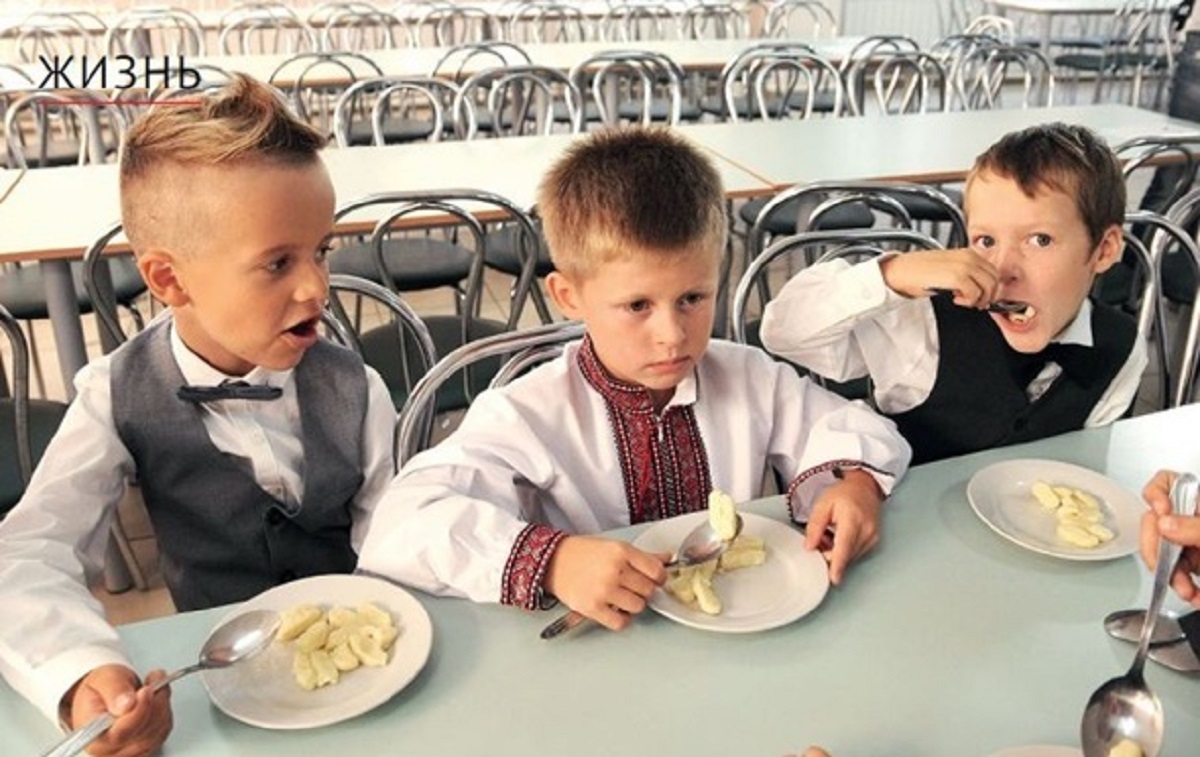
In Mykolaiv, they are checking how school meals are organized. Specialists from the State Service of Ukraine for Food Safety and Consumer Protection are to inspect all general secondary education institutions in the city that operate in in-person and hybrid formats. This was reported on 24 September 2026 during a session of the Mykolaiv City Council by the head of the education department, Hanna Lychko, in response to a question from councilor Iryna Boichenko.
According to the official, Mykolaiv joined the nationwide campaign to monitor the organization of school meals. Inspections are carried out without prior notice to educational institutions. As Hanna Lychko explained, specialists must visit every school that meets the specified operating conditions.
“The city of Mykolaiv is no exception. The State Service for Food Safety and Consumer Protection is visiting every general secondary education institution, checking the organization of meals,” — said Hanna Lychko.
After that Iryna Boichenko asked whether councilors will be able to receive the results of the inspections conducted.
“If they provide them to us, we will send them to you,” — replied the head of the education department.
The nationwide monitoring campaign started in September 2026. On 4 September the State Service for Food Safety and Consumer Protection announced strengthened control over the quality of meal organization for students in grades 1–11, and from 10 September respective control measures began being conducted in various regions.
Such inspections have also already been carried out in the Mykolaiv region. In particular, during the period from 14 to 16 September 2026 specialists from the Pervomaiskyi district administration conducted 3 unscheduled state supervision measures in the schools of the Vradiivka and Pervomaisk communities. During them they checked the sanitary-hygienic condition of kitchen facilities, conditions for storing products, food preparation technology, the compliance of actual meals with the approved menu and the provision of kitchen facilities with necessary equipment.
In Mykolaiv, large-scale inspections of the organization of children’s meals in schools began on 18 September 2026. Among other things, specialists are to assess the sanitary condition of kitchen facilities, compliance with temperature regimes, storage conditions for products and whether actual dishes correspond to the approved menu. Special attention during the control is paid to the technological processes of food preparation and staff adherence to personal hygiene rules. They also check the organization of drinking water provision and whether children receive the exact dishes and quantities specified by the agreed menu.
Laboratory control is also provided. Specialists may take samples of drinking water and finished dishes, in particular to determine their caloric content. Swabs are also taken from equipment, utensils, dishes, work surfaces and the hands of kitchen staff for bacteriological testing.
The State Service notes that the purpose of such measures is to check compliance with sanitary legislation and requirements for the safety and quality of food products, as well as to ensure safe feeding conditions for children. Measures should be taken to promptly eliminate detected violations.
The issue of school meals in Mykolaiv has recently been the subject of repeated discussion. On 16 September 2026 the head of the education department, Hanna Lychko, reported that 3,337 schoolchildren refused free hot meals. Overall such a service was available to 20,983 children, and among the reasons for refusal the official cited that some children do not like the dishes offered.
At the same time, on 18 September 2026 it became known about an appeal from parents of pupils of one of Mykolaiv’s gymnasiums, who reported possible problems with portions, the compliance of dishes with the published menu and other aspects of the canteen’s operation. The circumstances reported by the parents require verification, and the statements themselves are not established facts of violations.
Against this background, the city continues to spend significant funds to provide meals for children. In August 2026 the education department announced a procurement of catering services for students in 55 schools with an expected cost of 135.5 million hryvnias. Catering under this contract was planned to be organized from 1 September to 31 December 2026.
Separately, in June 2026 the education department announced a procurement for organizing meals in 44 kindergartens. The expected cost then amounted to 69.1 million hryvnias, and the services were to be provided until the end of October.
The problem lies not only in the quality of meals but also in their funding. Earlier the city council reported a need for additional funds until the end of 2026. According to the education department’s calculations, the city needs almost 150 million hryvnias more: over 109 million hryvnias — for kindergartens, over 33 million hryvnias — for co-financing school meals, and another about 7 million hryvnias — for a special school and vocational education institutions.
Despite the fact that the city provides free meals, some schoolchildren do not use them. According to the education department, this concerns more than 3 thousand children. The organization of school meals is now additionally being inspected by the State Service for Food Safety and Consumer Protection.
Earlier we wrote:
- Plan to spend 1.39 million hryvnias on disposable plastic for Mykolaiv schools
- After complaints about portions and canteens: water, dishes and sanitation will be checked in Mykolaiv schools
- Large “to-go” bags, smaller portions and 20-hryvnia buns: parents noticed possible violations at a Mykolaiv gymnasium
- “Children don’t like it”: 3,337 schoolchildren in Mykolaiv refused free hot meals
- One proposal and a contract for 6.9 million hryvnias: how much juice was purchased for children in Mykolaiv