From the melon patch to the Cabinet: how Mykhailo Fedorov sold in-game currency, grew onions and "hacked" the civil service
From the melon patch in Vasylivka to "Diia" and the Ministry of Defense: the story of Mykhailo Fedorov

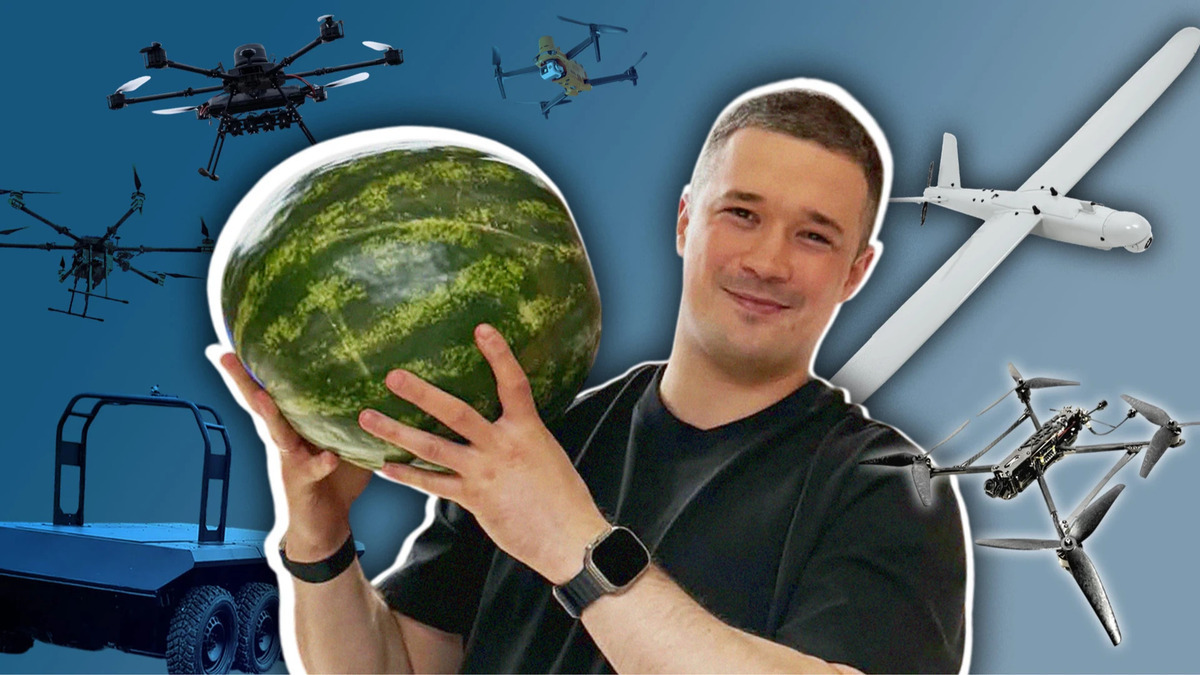
“Ukrayinska Pravda” September 21, 2026 published a major feature about Mykhailo Fedorov, in which the former defense minister spoke about his childhood, first earnings, joining Volodymyr Zelensky’s team, battling a serious illness, work in government and plans after his resignation. A large part of the piece is dedicated to Fedorov’s personality and how his habitual approach formed — searching for unconventional solutions and trying to “hack the system”.
Fedorov grew up in Vasylivka, Zaporizhzhia region. He himself describes the environment of his childhood as harsh, with post-Soviet and street culture. At the same time, the boy seriously played chess, traveled to tournaments, and after them returned to the yard where, in his words, fights were quite common. Chess later became for Fedorov not just a childhood hobby but one of the main life metaphors. He remembers a coach who could flip the board when a pupil began to win, forcing him to continue the game from a losing position.
“Everything is like in life: sooner or later the board will be flipped,” explains Fedorov as his takeaway from those trainings.
At the same time, he does not consider himself a piece on the chessboard. In an interview with UP Fedorov characterizes himself more as a person who tries to build and change systems themselves.
An entrepreneurial character showed itself while he was still in school. In eighth grade Fedorov worked on a melon field to earn money for a trip with a friend to Yalta. Another source of income was computer games — he earned virtual money there and then sold it to peers for real hryvnias.
Getting his first personal computer was an important event for him. Part of the money was given by his grandmother, the rest his parents, who worked in the civil service, took out on credit. It was then, according to Fedorov, that he already understood well that he did not want to repeat his parents’ career path. He recalls seeing a much wealthier godfather and deciding that he wanted to be an entrepreneur, make money and get out of Vasylivka.
As a student Fedorov also constantly experimented with business. He grew Yalta onions, ran children’s attractions, rented out toy cars, and sold advertising in elevators. Later he realized he wanted to work in a more technological area and created SMMStudio, which did digital marketing, websites, sales, online stores and online promotion. At the same time, he does not romanticize his student years. Friends, in his words, called him a “scatterbrained nerd”: he could party until dawn, but then go to class and get high marks.
At about 19 years old an event occurred after which he decided to sharply change his life. Fedorov said that together with friends he got into a serious fight after which the police arrived.
“Either change your life now, or die like many of my friends,” — that’s how he describes the decision at that time.
After that, in his words, he remained mostly a “nerd”: Fedorov started focusing more on studies, civic projects, entrepreneurship and self-education.
The meeting that changed his life
It was not a political party or civil service that brought Fedorov into high politics, but advertising. In July 2018 the 27-year-old digital marketer came to the Kyiv office of “Kvartal 95”. He wanted to propose a concept for promoting the sports blog “Ze kubiki”, in which Volodymyr Zelensky showed his workouts. Fedorov’s ideas appealed to one of the studio’s leaders, Serhiy Trofimov, who immediately decided to show them to Zelensky. That was their first meeting.
According to Fedorov, Zelensky was pleased with the presentation, but already during the first conversation unexpectedly shifted the topic from the sports blog to the future of the state. He asked the marketer whether it was possible to make a country where public services are available online in a few clicks.
“We can do everything. But we need to figure it out,” replied Fedorov.
What at the time could have seemed like a casual business conversation eventually became the beginning of almost eight years of their joint work.
When Zelensky decided to run for president, Fedorov headed the digital direction of his campaign. The team bet on Telegram, Instagram, YouTube and mobilizing supporters through the internet. UP notes that it was Fedorov who persuaded the campaign headquarters to use digital marketing much more actively in the political campaign.
After Zelensky’s victory Fedorov initially wanted to remain a presidential adviser and continue doing business in parallel. However, he ended up in the top ten of the “Servant of the People” list, and on August 29, 2019 became Vice Prime Minister — Minister of Digital Transformation. It was during this period that his name became primarily associated with “Diia”, electronic documents and the concept of a “state in a smartphone”.
“I learned that I was dying”
One of Fedorov’s most personal confessions was the story about events in 2020, which he, by his own account, had not previously talked about publicly. Then, already while serving as minister, he was diagnosed with a serious illness.
“They found a disease in me with a 17% chance of survival. In one of the clinics they told me: ‘That’s it, good luck. You can go home to say goodbye,'” — Fedorov recounted.
According to him, the situation changed with the appearance of new targeted medicines that had recently begun to be used in Europe. He moved to another clinic and continued treatment. Even his fight with the disease Fedorov tried to “digitize”: he created a dashboard for himself that showed how many days were left until the end of therapy and what percentage of the course had already been completed. The treatment also coincided with the start of the COVID-19 pandemic. Fedorov says he had to stay in isolation because even a common infection could be dangerous. Despite this he continued to work. He says that at six in the morning he would go for treatment, and after procedures — to the Cabinet of Ministers.
Fedorov completed therapy in October 2020. Doctors, he says, explained that five years must pass before one can confidently speak about recovery. In the 2026 interview he stated that that period has already passed and he is now healthy.
From “Diia” to drones
After Russia’s full-scale invasion the scope of Fedorov‘s interests began to change rapidly. To civilian digitalization was added the war of technologies. In the summer of 2022 he joined the development of the “Army of Drones”, and later began to regularly travel to the front and meet with the military directly. UP interlocutors claim that at a certain stage up to 80% of his time was related to frontline issues. Fedorov himself increasingly spoke about the need for an asymmetric response to Russia — mass use of cheaper technologies, robotization and unmanned systems.
Later he headed the Ministry of Defense, where he tried to transfer the managerial approach familiar to him to a much more complex military system. It was there, as follows from the UP piece, that the strong and weak points of his style began to manifest especially vividly.
Fedorov sought to quickly break old mechanisms, centralize decision-making and move procurement to different principles. Representatives of the defense industry at the same time criticized the Ministry of Defense for the closed nature of processes and delays in forming tender conditions. The head of the Ukrainian Arms Makers Council Ihor Fedirko called the created model a “black box” and said that sector associations had effectively lost normal contact with the ministry.
Fedorov explained his actions by a desire to break inefficient procurement schemes and change priorities. In particular, he spoke about disputes with the General Staff over which munitions and equipment should be purchased. That is his version of the reasons for conflicts, while interlocutors from the defense industry in the UP piece provide other assessments of the effectiveness of his approach.
Conflicts in power
Fedorov links the start of a long conflict with the then head of the Presidential Office Andrii Yermak to personnel disputes around the State Special Communications Service. UP, citing its sources, writes that an additional irritant was Fedorov‘s direct access to Zelensky. This is the publication’s sources’ description and Fedorov‘s position, not an established fact about other participants’ motives. Another turning point were events surrounding NABU and SAP in 2025. Fedorov claims he opposed limiting the independence of anti-corruption bodies and personally persuaded Zelensky of the need to quickly change the decision after public protests.
“I think my role was more in saving the president,” he told UP.
Resignation and protests
In the summer of 2026 Fedorov still remained within the president’s close circle and, according to UP, took part in closed discussions about possible elections. However, already in July during a government reshuffle his candidacy was not re-nominated for the position of defense minister.
After that, in Kyiv and other cities rallies took place whose participants, among other things, demanded Fedorov’s return to the government and criticized the opacity of personnel decisions. Fedorov himself did not personally come out to the protesters. When asked why, he answered jokingly:
“I was worried that if I came out and we felt that it was for real, nobody else would be needed in this love,”
At the same time Fedorov denies attempts to create a cult around himself and asserts that people protested not personally for him but because of broader dissatisfaction with the situation in the country.
What next
After his resignation Fedorov began to build a new stage of life. In early September he traveled to the USA where he sought partners and investments for a future venture fund. Among the directions that interest him are robotization and sensorization of the front, interceptor drones and cheap missiles for air defense and strike tasks. At the same time he does not hide that he sees two fundamentally different scenarios for himself: go abroad, earn money and help Ukraine from there, or stay in the country, develop technological projects and remain a participant in public processes. According to Fedorov himself, he chooses the second option.
His vision of the future of the war remains as technological as possible. Fedorov believes Ukraine needs an analogue of a new “Manhattan Project”, but in the field of robotic and autonomous weapons.
“AI and cheap drones will become the new nuclear deterrent. Ukraine is experiencing the last war of humans — later robots will fight,” he said.
And his own life after the sharp turns of recent years Fedorov again describes with the same principle he remembered from his chess coach:
“The board will be flipped sooner or later.”
This phrase, as the UP feature shows, nicely ties together different stages of his biography — a boy from Vasylivka, an entrepreneur, creator of digital projects, a patient with a 17% chance of survival, a minister and a person who after leaving the government is once again trying to start a new round.
Earlier we wrote:
- Fedorov did not communicate with Zelensky after the statement about elections and called to respond regarding corruption
- Mykhailo Fedorov called to develop a mechanism for holding elections in Ukraine during the war
- “It may cost ranks and positions”: a military woman reported persecution for supporting protests
- Lies, chaos and “a man with a baton”: Fedorov accused Syrskyi of splitting Ukraine
- 22 victories and three shortcomings: Fedorov reported and left the Ministry of Defense