Ukraine expands long-range strikes against the Russian Federation: experts assessed the military, economic and political effect
Attacks are forcing Russia to repair infrastructure, strengthen air defenses, and reorganize logistics


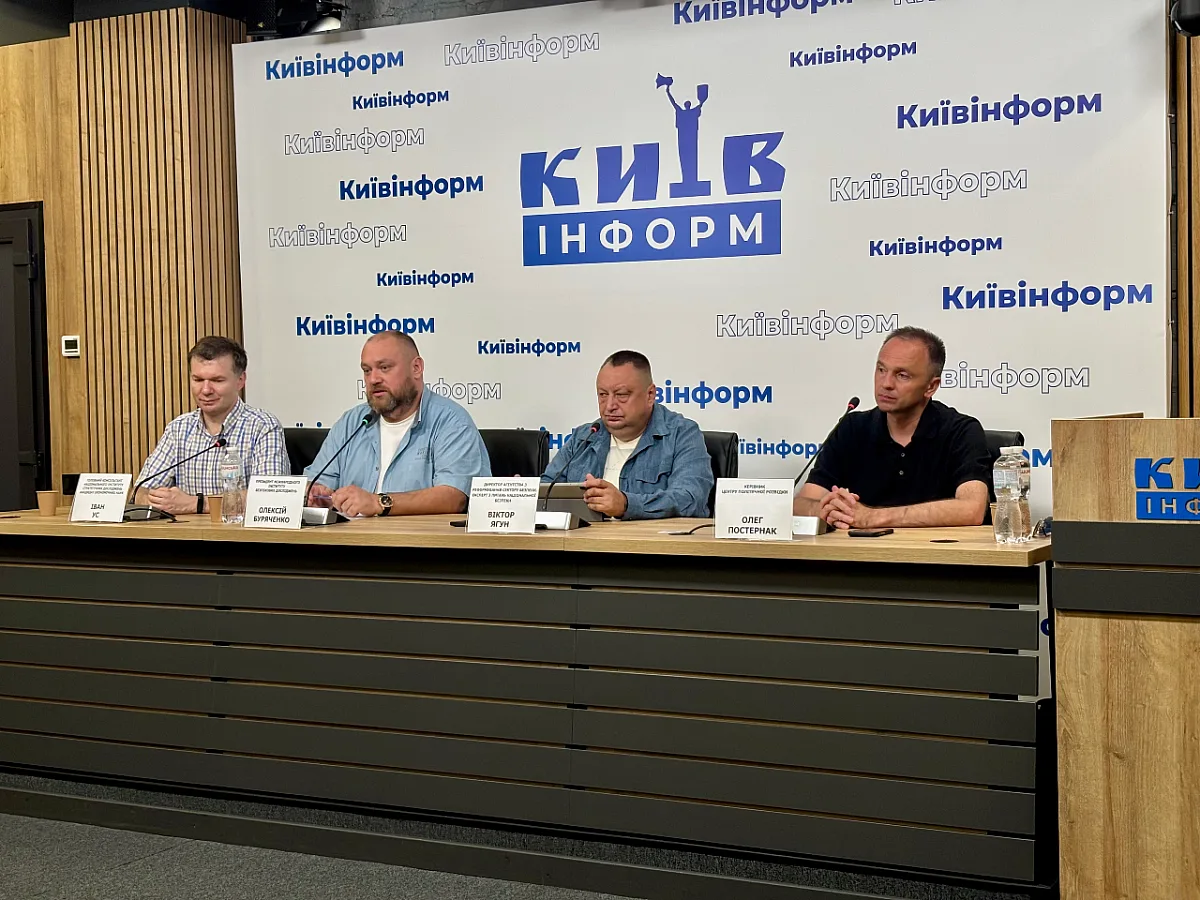
Ukraine continues to expand its capability to strike targets on the territory of the Russian Federation. Ukrainian drones have already covered over 2,000 kilometers, and some systems have ranges of more than 3,000 kilometers. Experts discussed the impact of such strikes on Russia’s military system, its economy and political decisions at the press center of Kyiv.
Participants of the discussion focused on the consequences of the attacks for Russian logistics, defense industry, the costs of defending strategic facilities and the possible readiness of the Kremlin to negotiate. Key targets named included logistical hubs, energy facilities, military production and infrastructure that enable the continuation of aggression.
As of July, since the beginning of the year Ukraine has carried out over a thousand fire missions against oil facilities, critically important production sites and systemically important logistics of the Russian Federation. Striking these facilities forces Russia to repair infrastructure, strengthen air defenses and divert resources to cover the deep rear.
The director of the Agency for Security Sector Reform, Viktor Yagun, emphasized that the effects of the strikes should be assessed as an accumulative strategic process.
“The range of strikes into the Russian Federation already exceeds 3,000 km. The campaign forces Russia to repair damage, redeploy air defenses, restructure logistics and build up fuel reserves. This is an accumulative strategic effect together with sanctions, technology shortages and broken supply chains,” said Viktor Yagun.
The chief consultant of the National Institute for Strategic Studies, Ivan Uss, stated that strikes deep into the Russian Federation are changing the economic conditions of waging war. They destroy the traditional Russian model of locating strategic facilities far from the front.
“The war has become a war of attrition — a war of economies. Long-range strikes are destroying the paradigm of the Russian Federation, in which distance of facilities was considered a guarantee of safety,” said Ivan Uss.
Experts also noted the effectiveness of combining deep strikes and middle strikes with hits on maritime logistics. Such tactics make it possible to simultaneously affect production, supply and the transportation of resources.
The energy infrastructure remains an important direction. Limiting its operation affects not only the Russian army but also the economic activity of the Russian Federation. The president of the International Institute for Security Studies, Oleksiy Buriachenko, stressed that increasing the cost of the war for Russia could become a factor of political pressure.
“The war must cost the Russian Federation as much as possible. That will, in one way or another, push the leadership toward ending it,” said Oleksiy Buriachenko.
Ukraine is expanding its range of weapons: by 2026 among long-range systems will be ” Flamingo“, ” Ad“, ” Palyanytsia“, ” Neptune” and other developments with ranges up to 3,000 kilometers.
The head of the Center for Political Intelligence, Oleh Posternak, noted that strikes on the territory of the Russian Federation create domestic political challenges for the Kremlin and affect its social contract with the public.
“Systematic strikes by Ukraine on the Russian Federation are a challenge for the Kremlin. When the social contract cracks, the authorities must either explain or pretend nothing is happening,” said Oleh Posternak.
Experts separately considered the political effect of expanding the geography of attacks. In particular, they discussed whether additional military and economic costs could force the Russian Federation to abandon ultimatums and move to a real negotiation process.
Thus, the expansion of Ukraine’s long-range capabilities simultaneously affects logistics, production, energy, resource allocation and the political cost of continuing the Russian Federation‘s aggression. This forms a multi-layered strategic pressure on the Russian military system.
Earlier we wrote:
- Ukraine struck a Roscosmos facility, the Savasleyka airfield and an oil facility in Russia
- From Ryazan to Crimea: Zelensky confirmed new strikes on refineries, logistics and a base of Russian boats
- “Flamingo” reached a rocket factory 1,200 kilometers away: strategic plant in Kirov engulfed by fire
- Almost half of Russia’s oil refining is halted: Ukrainian drones inflicted $13.5 billion in losses to the sector
- 700 kilometers didn’t save them: Zelensky reported strikes on two refineries in Russia