The poverty rate in Ukraine in 2026 is estimated at around 41%—about the same as in 2025. Despite some indicators of well-being stabilizing, many households remain vulnerable to new shocks.
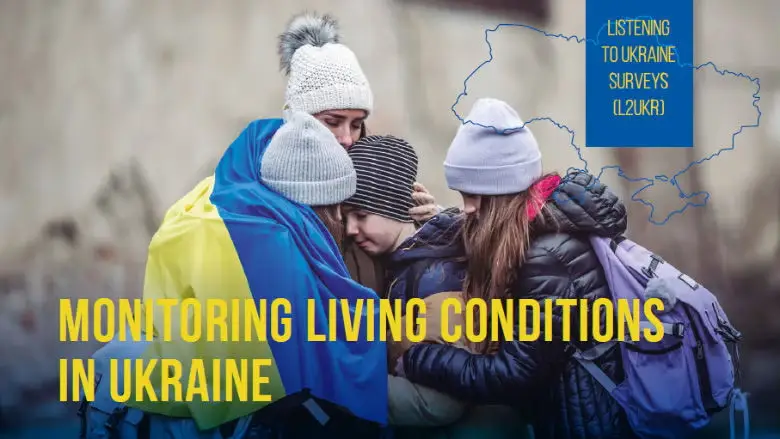
These findings are included in the autumn results of the Listening to Ukraine (L2UKR) study for Q3 2026, presented in a report dated October 28, 2026. The World Bank conducts the telephone surveys in cooperation with the Kyiv International Institute of Sociology.
The data show how limited people’s financial resources remain:
- More than 60% of households say their financial situation is worse than it was before February 2022.
- 26% of households have no savings at all.
- Among households with the lowest incomes, 35% have no savings. In this same group, nearly one in four recently had difficulty paying utility bills.
- For households that receive income from agricultural production, these earnings fell by around 13% in real terms between 2025 and 2026.
- Real income from self-employment and businesses among households with these sources of income fell by more than 19% over the same period.
Meanwhile, labor income has so far remained resilient. However, prolonged disruption to everyday life and work could increasingly threaten employment and earnings. Pensions and social assistance support family budgets: the stability of these payments has helped curb further increases in poverty. Households with children, pensioners, and no employment income remain particularly vulnerable.
The problems go beyond money. Poor mental health indicators remain elevated, while food insecurity affects poorer and more vulnerable households the most. Damaged property, the cost of medicines, and utility bills add to the strain—especially for displaced people and low-income families.
Researchers identify winter as the most immediate risk. Limited financial reserves, difficulty paying bills, inadequate heating, and damaged homes leave many families exposed. Assistance must be accessible and prioritize households facing several disadvantages at once.
The L2UKR study aims to show how households across Ukraine are adapting to the large-scale shocks that have continued since 2022. It tracks changes in income and employment, as well as people’s financial security. Researchers also assess access to services, housing and health conditions, and citizens’ own priorities.
Data collection is organized in the following waves:
- Telephone surveys were conducted monthly from April 2023 to December 2024, except in September 2024.
- The next survey period ran from May to December 2025.
- For 2026, surveys were scheduled to run from May to December.
Each monthly wave covers between 1,500 and 2,000 households. The telephone format makes it possible to survey people in areas with Ukrainian mobile coverage. However, the study does not cover Luhansk Oblast or Crimea.
Respondents include residents of regions with active hostilities who can be reached by phone. However, the number surveyed in Donetsk and Kherson oblasts is small, and coverage is limited. Since October 2024, random telephone number dialing has been used exclusively to contact all respondents.
Combining data from several waves makes it possible to analyze results separately for urban and rural areas, as well as by region, with reasonable reliability. The exception is regions affected by the Russian invasion, where survey capabilities are limited.
The study is also expected to continue in 2027, with monthly data collection planned from January to December.
Since 2022, opportunities to collect data through traditional household surveys have been limited. Regular telephone surveys, analysis, and data panels help fill this gap, update estimates of poverty and living conditions more frequently, and identify emerging forms of vulnerability. The findings inform decision-making, recovery planning, social protection, and World Bank programs. They are presented in analytical reviews, infographics, quarterly summaries, and data dashboards.
The work received support through the following mechanisms:
- Multi-Donor Trust Funds co-financing the Public Expenditures for Administrative Capacity Endurance project in Ukraine—PEACE. Their donors include:
- Belgium;
- Finland;
- Germany;
- Iceland;
- Ireland;
- Japan;
- Spain;
- Switzerland;
- United States of America.
- The Ukraine Relief, Recovery, Reconstruction and Reform Trust Fund (URTF), including the government of the United Kingdom through the SPIRIT project, implemented by the World Bank.
We have previously reported:
- Another $841 million for Ukraine’s budget: World Bank to finance pension payments
- Cabinet approves one-time payment of UAH 1,500 in April for pensioners and vulnerable Ukrainians
- Olena Shuliak: Government introduces a new approach to supporting low-income families
- New changes and challenges: social assistance in Mykolaiv Oblast amid the war
- For all children under three: winter clothes distributed free of charge to young children in Mykolaiv