Dangerous Dormitory Renovation: What Risks Do Future Residents of Mykolaiv’s Physical Education College Face?
Children and athletes are supposed to live there: asbestos found in documents for repairs to a Mykolaiv college


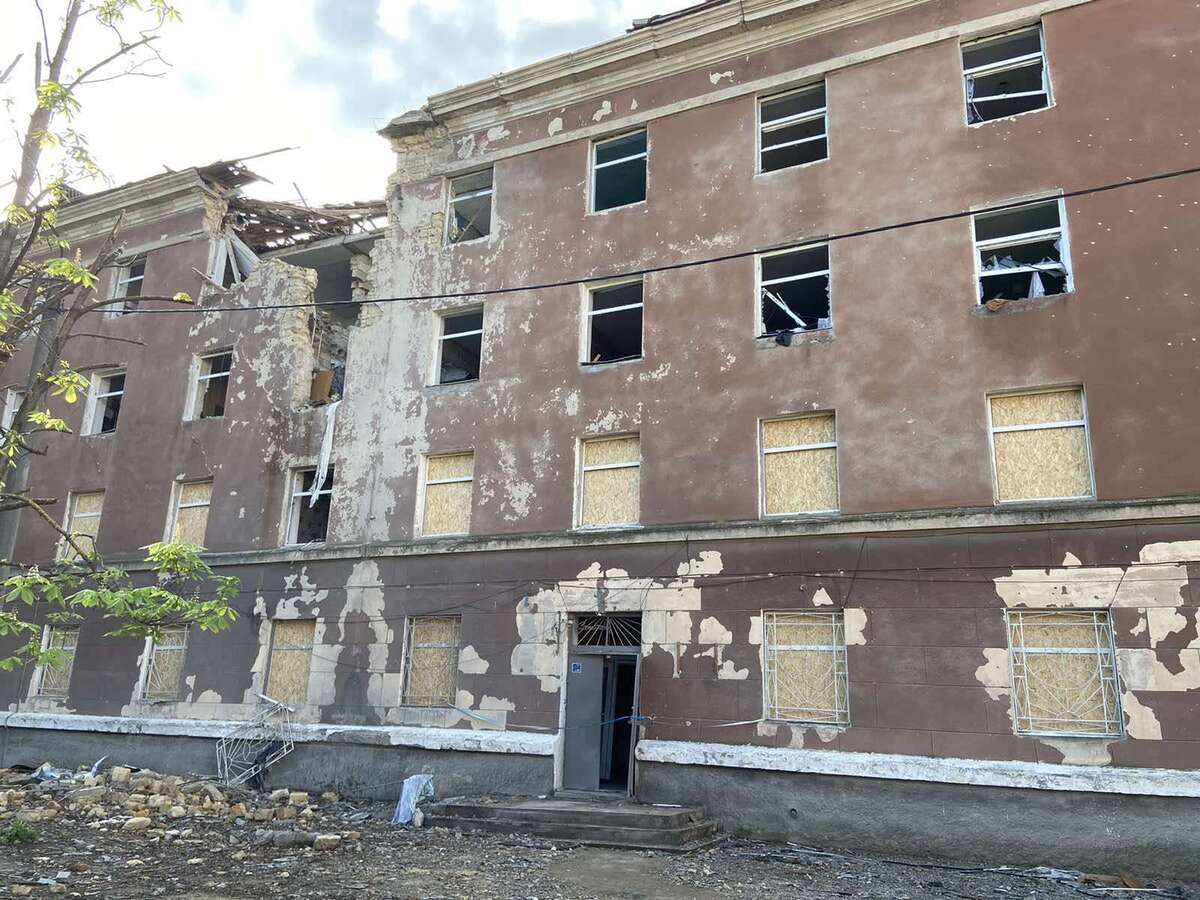
During an inspection of documents for the major renovation of the dormitory building at Mykolaiv Professional College of Physical Education, auditors found materials containing asbestos. These included asbestos cardboard and special cord, the use of which in construction work in Ukraine is expressly prohibited by law. The regional capital construction department explained that these items appeared because of the features of the AVK-5 estimating software. At the same time, officials insist there is no evidence that asbestos was actually used.
The situation came to light through the monitoring materials for the procurement, which, according to the information provided, was launched on November 4, 2026, by the Western Office of the State Audit Service of Ukraine. The project concerns the major renovation of the college’s four-storey dormitory building at 41 Pohranychna Street, Mykolaiv. The contracting authority is the Department of Urban Planning, Architecture, Capital Construction and Development Project Support of the Mykolaiv Regional Military Administration.
The project is registered in the public procurement system under number UA-2026-09-30-011508-a. The tender was announced on September 30, 2026, with an expected value of UAH 69.26 million excluding VAT. Inter Stroy Group LLC was selected as the winner. During the monitoring, auditors scrutinized the materials listed in the project and estimate documentation. In particular, the resource schedules and contract included asbestos cardboard with a thickness of 4 and 6 millimeters, as well as asbestos cord with a diameter of 8–10 millimeters. The issue is not merely that these materials are named in the documents. Their use conflicts with Ukrainian law.
Part Three of Article 28 of Ukraine’s Law “On the Public Health System” prohibits the production and use of asbestos, regardless of its type, as well as asbestos-containing products and materials in technological processes and construction and installation work at any site. On November 6, the auditors asked the department to explain why prohibited materials had appeared in the renovation documentation.
In its response dated November 11, 2026, the contracting authority said there was no documentary evidence that asbestos had actually been used. According to the department, no acceptance certificates for completed work that included these materials had been signed either. Officials attributed the asbestos items in the estimate to the way the AVK-5 software suite, used to calculate construction costs, operates. The department stressed that the presence of the relevant items in the resource schedule does not, by itself, prove that these materials were actually used during the renovation.
“The mere inclusion of the relevant material resources in the resource schedule cannot be equated with the actual use of such materials in construction and installation work; it is explained by the specific features of the AVK-5 software suite,” the department said.
The contracting authority also assured that measures would be taken during the work to prevent the use of asbestos and other prohibited materials. However, its response did not explain whether it plans to formally amend the estimate documentation and remove the relevant items. It is also notable that the renovation project received a positive expert opinion on September 14, 2026. The opinion was prepared by the Scientific and Technical Center for Construction Expertise LLC. Experts reviewed the project documentation, including its compliance with public health and sanitary and epidemiological requirements, as well as the cost estimate. The project received a positive assessment, allowing it to be approved.
According to the expert report, the total estimated cost of renovating the dormitory building is UAH 129.8 million. Of this amount:
- UAH 98.5 million is allocated for construction work;
- UAH 3.4 million for equipment, furniture and inventory;
- UAH 27.9 million for other expenses.
At the same time, the documentation states that work and other expenses totaling UAH 44 million have already been accounted for as completed. Importantly, this figure covers the entire renovation project, not just the separate contract worth UAH 67.9 million.
Once the work is complete, the four-storey building, with a total area of more than 5,000 square meters, is expected to accommodate 200 beds. The project involves not only renovating the premises but also upgrading the building’s engineering infrastructure. Planned work includes repairs to the water supply, sewerage, ventilation, electrical and fire alarm systems, as well as fire protection measures.
However, asbestos is not the only issue that drew the state auditors’ attention. They also asked the contracting authority to explain how it determined the expected procurement value and why the contract price did not specify the date on which the cost of materials and work had been calculated.
The department replied that the cost had been determined on the basis of project and estimate documentation that had undergone expert review. The missing date in the contract price was attributed to a technical error that occurred when the document was printed from the estimating software.
The explanation that the issue stemmed from the software’s features does not, in itself, resolve the question of why prohibited materials appeared in the documentation for a renovation project that passed expert review. At the same time, there is currently no basis for claiming that asbestos was actually used at the construction site.
A separate question remains open: will the estimates be corrected, will the project plans be reviewed, and who will be held responsible for including prohibited materials in the documentation for a publicly funded renovation?
Asbestos poses a serious health hazard. According to the World Health Organization, all major types of asbestos are carcinogenic. Inhaling its fibers is associated with lung cancer, mesothelioma and other serious diseases. The risk is particularly high when fibers become airborne during the handling, removal or destruction of asbestos-containing materials.
We previously reported:
- UAH 1.126 million for its own premises: Regional Administration department plans renovation in Mykolaiv
- “The mayor demanded that the department head be framed”: Manziuk accused Sienkevych of revenge and revealed million-hryvnia spending
- Supervisory boards to be established at six colleges in Mykolaiv region
- Corruption: Mykolaiv City Council introduces price controls for construction materials
- Russian occupiers destroy Mykolaiv fencing hall where Olympic champions Kharlan and Khomrova trained