At the treatment plant, the water is drinkable; from the tap, it’s a matter of luck: Mykolaiv’s water saga continues
Areas with microbiological deviations remain in two districts

In dead-end sections of the water supply network in Zavodskyi and Inhulskyi districts of Mykolaiv, microbiological deviations persist, so the network is being flushed additionally. At the same time, the city is chlorinating the water within sanitary standards, maintaining a residual chlorine level typical of summer. The current state of water supply was discussed yesterday at an executive meeting of the Mykolaiv City Council by Mykolaivvodokanal utility director Hennadii Iziumov.
The discussion followed the mayor’s remarks about informing residents about water quality and its testing.
“Since the start of the week, I haven’t seen any information about changes in water quality or laboratory monitoring,” said Mayor Oleksandr Sienkevych.
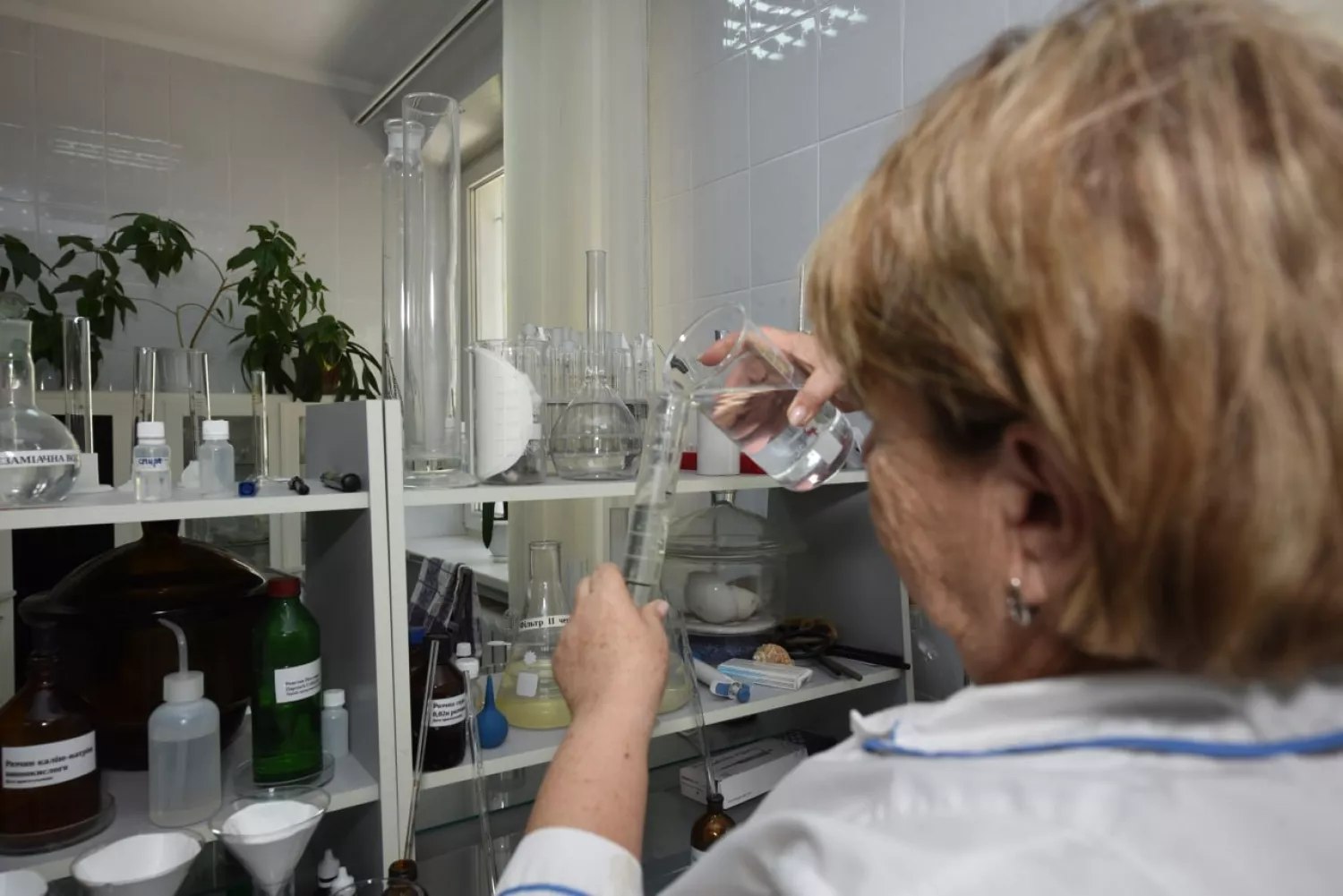
According to the utility director, test results confirm that water is of drinking quality as it leaves the treatment facilities. He said chlorination complies with DSanPiN—the state sanitary rules and standards.
“At the treatment facilities and pumping stations, residual chlorine is 0.5 mg/dm³, which complies with DSanPiN. At the monitoring points, residual chlorine is 0.1 mg/dm³. Water quality at the monitoring points is checked five times a week. Every day, 10–11 samples are taken,” said Hennadii Iziumov.
Dead-end sections on the following streets remain problematic:
- Bila and Ozerna in Zavodskyi District;
- Kazarskoho in Inhulskyi District.
“We are carrying out additional flushing of the network in these sections, with continuous laboratory monitoring,” explained Hennadii Iziumov.
The director does not consider the current situation critical. In his assessment, the quality of the water entering the system is currently good, but the residual chlorine level is being maintained above the usual winter level.
“This level is more typical of summer, when the quality of the incoming water deteriorates. At present, we can see that the incoming water is of good quality. In essence, we are carrying out chlorination at the usual summer level. In winter, residual chlorine at the outlet should be around 0.2–0.3 mg/dm³,” said Hennadii Iziumov.
The utility director expects the minor deviations in the problem areas to be eliminated soon. He says chlorination will end once stable test results have been obtained.
Separately, in response to an information request, Mykolaivvodokanal explained that colder weather had helped stabilize microbiological indicators. The utility said it was operating as usual, without hyperchlorination.
Water quality problems at the tap have persisted even after the new water pipeline was commissioned. It was connected to the Mykolaivvodokanal network on October 7, 2025. In November, Mykolaiv Regional Military Administration head Vitalii Kim estimated that drinking water would reach homes in half a month to a month. He attributed this timeline to the need to complete work at the treatment facilities and obtain official laboratory reports.
At a briefing in late May 2026, Hennadii Iziumov said that the water failed to meet the standard for one indicator—oxidizability.
On June 18, Ukraine’s Minister for Communities and Territories Development Oleksii Kuleba announced the completion of a stage in restoring Mykolaiv’s water supply: the construction of a pretreatment station with a capacity of 120,000 cubic meters per day.
“We have created a modern, resilient system that will serve people and meet European standards, and we can say that Mykolaiv once again has high-quality drinking water,” said Oleksii Kuleba.
However, on June 24, Oleksandr Sienkevych warned that people should not drink water straight from the tap. He acknowledged that water quality had improved following the launch of the new pipeline and treatment facilities, but explained that although the water leaving the facilities now meets the main sanitary standards, aging city pipes could affect its quality on the way to homes. The mayor cited oxidizability as one of the deviations.
On October 2, acting head of the Mykolaiv Regional Military Administration Heorhii Reshetilov said that the water pipeline would be chlorinated and hyperchlorinated for approximately three months.
At a meeting on October 5, the city council once again discussed deteriorating water quality in the city’s networks and preparations to flush them.
“At the outlet of the water utility’s treatment facilities, the water’s indicators improve and it is of drinking quality. But at monitoring points located in different districts, the water does not always reach end consumers in the same condition as when it leaves the utility. More specifically, its quality deteriorates in 46% of tests. Some bacteriological indicators appear,” Oleksandr Sienkevych said at the time.
On November 2, Mykolaivvodokanal began additional chlorination of the network. While this work is underway, tap water must not be consumed or used for cooking. During disinfection, the utility’s laboratory also increased checks of free chlorine levels.
The chief state sanitary doctor of Mykolaiv Region, Dmytro Makarov, commented on individual water indicators falling short of standards and the risks associated with chlorination. Meanwhile, the State Production and Consumer Service explained that it does not conduct state supervision of water quality in Mykolaiv’s water pipeline because the water is not classified as drinking water. Monitoring is nevertheless being carried out.
We previously reported:
- Water in Mykolaiv is being chlorinated additionally: the smell may become stronger
- Plans to hyperchlorinate Mykolaiv’s water: the decision is already being challenged in court
- Indicators have returned to 2021 levels, but the water still isn’t safe to drink: Sienkevych on water quality
- Mykolaiv has drinking water again: construction of the new water supply system is complete
- The water is cleaner but still not suitable for tea—Mykolaiv switches to a new water pipeline