Three steps to counter an attack: how NATO plans to defeat an aggressor’s forces
Hrynkevych considers the troops’ current readiness sufficient for an immediate response


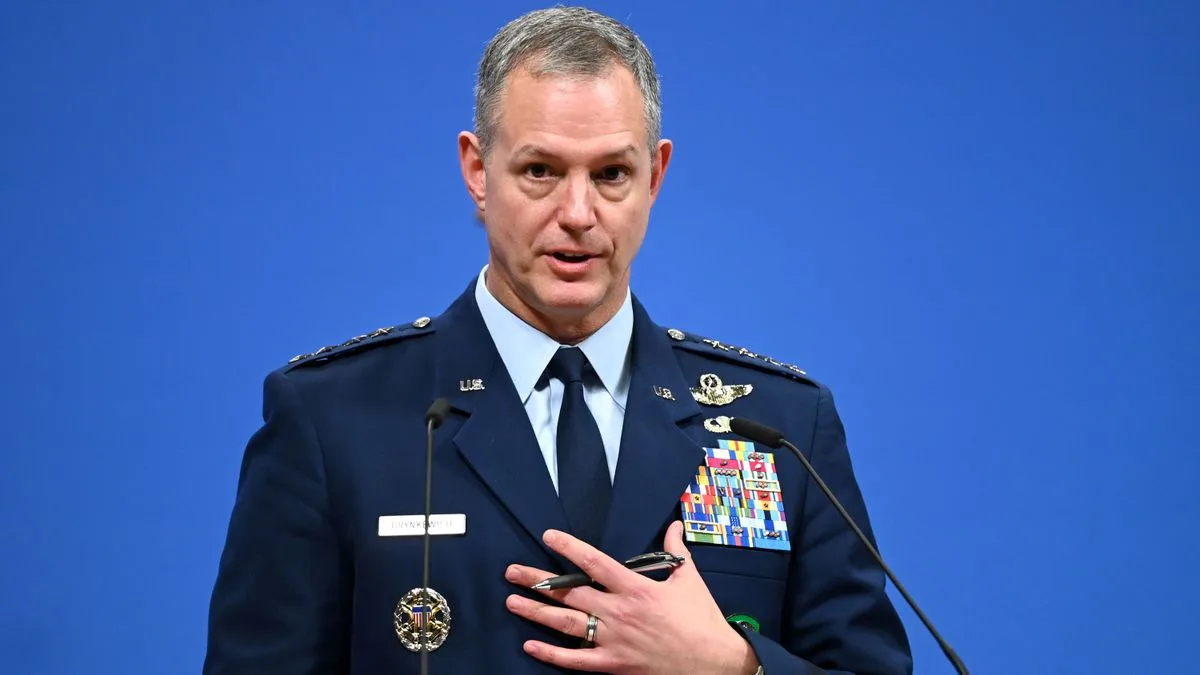
NATO is ready to repel aggression immediately and, if the attack continues, to defeat the enemy’s forces and operational system of warfare. This strategy was presented at the Warsaw Security Forum by the Supreme Allied Commander Europe, General Alexus Grynkewich. At the same time, he outlined the limits of the response: the Alliance’s defence does not envisage destroying the Russian state or changing its political regime from the outside.
Against the backdrop of a sharp escalation in the international situation and debate about possible escalation, the general set out the military doctrine of deterrence in detail. His speech stood out for its firm tone and detailed explanation of the course of action in the event of war.
Previously, this strategy—which Grynkewich calls a theory of victory—had been discussed only behind closed doors in military headquarters. The decision to bring it into the public sphere was made to ease citizens’ anxiety and send a clear signal to a potential aggressor, particularly Moscow.
“Given the level of activity involving sabotage and arson, I think our citizens across the Alliance are a little nervous. And what I want to do is reassure the one billion citizens of our Alliance that we have the situation under control. We know what we need to do. We know how we will do it,” explained Alexus Grynkewich.
The proposed approach is not limited to passive defence at the border. It involves systematically countering offensive forces at every level, with the scale of the response depending on whether the adversary ceases its aggression.
“My theory of victory is simple: we will block the initial attack. If the attack continues, we will repel it (Block); prevent any advance by the adversary (blunt); and, if necessary, we will defeat (break) the adversary’s forces and the entire operational system of warfare deployed against us… Enemy formations will be cut off from reinforcements. Enemy commanders will lose the ability to control their forces. And the adversary’s forces and support capabilities will be degraded and destroyed,” Grynkewich said.
Answering a question about the possible limits of a military response, the general stressed the Alliance’s defensive purpose. The aim is to make an attack pointless and exhaust the aggressor’s own capabilities, not to expand the objectives of the war beyond defence.
“In carrying out what I have described above, we are not seeking to inflict a strategic defeat on our adversary, nor do we need to… Our Alliance exists to preserve peace. But let there be no doubt: if war comes, we will block and repel any attack, and then—if it does not stop—we will defeat the forces carrying out aggression against us,” Alexus Grynkewich emphasised.
Resources and weapons stockpiles remain a separate concern, particularly amid shortages of anti-aircraft missiles for air defence systems. At the same time, the Alliance does not intend to wait for some ideal moment to respond to a threat.
“As I have already said, we are ready right now. Can we be even better prepared? Absolutely. No military commander will ever tell you that they don’t need more of everything… We have rehearsed what to do and we are ready. And we will be even better prepared today, tomorrow and every day after that,” Grynkewich assured.
The psychological logic of deterrence is to ensure that a potential adversary recognises, even before hostilities begin, that an attack would be a fatal mistake.
“We know how we will fight if war comes to us, and we know we will win. And together we will ensure that any adversary contemplating an attack on our Alliance reaches the only conclusion that matters: today is not the day,” said Alexus Grynkewich.
European politicians’ and analysts’ responses to the speech combined support for a firm approach with warnings about threats and the pace of preparations:
- Donald Tusk, Prime Minister of Poland, backed the military leadership’s tone on the sidelines of the forum. At the same time, he stressed that Europe needs to adapt more quickly to the risks of hybrid warfare. The increase in drone incidents and acts of sabotage, he said, require EU and NATO countries to remain fully focused, mobilise the defence industry and invest in interception technologies.
- In the context of assessments by Danish intelligence, experts note that despite the general’s confidence, the risk of local provocations or limited military incidents by Russia on the eastern flank remains low, but is growing. That makes networked sensors and autonomous drone-detection systems—whose deployment is a focus for NATO—critically important. However, Alliance countries are rolling them out at different speeds.
- Political scientists and security experts view the decision not to pursue the strategic defeat of the adversary beyond the bounds of defence as a nuanced diplomatic signal. The Alliance stresses the purely defensive nature of its doctrine, while also warning the Kremlin that any attempt to test its borders will have catastrophic consequences for the attacking side.
This framing shifts the emphasis from passive waiting to active deterrence through a demonstrated readiness to use lethal force. Public discussion of a forceful military response is intended to convince a potential adversary that aggression against the Alliance is doomed to fail.
We previously reported:
- NATO has drawn up a ground combat plan in case of a large-scale Russian attack
- The Baltics instead of Ukraine? How a war with NATO could become Putin’s attempt to go all in
- “We are stronger”: NATO has public and covert ways to respond to Russia’s hybrid attacks
- NATO fighter jets shoot down a drone over Lithuania for the first time