Boiler plants are ready, networks are still being repaired: how Mykolaiv is preparing for winter
Mykolaiv CHP is almost 88% ready for the heating season


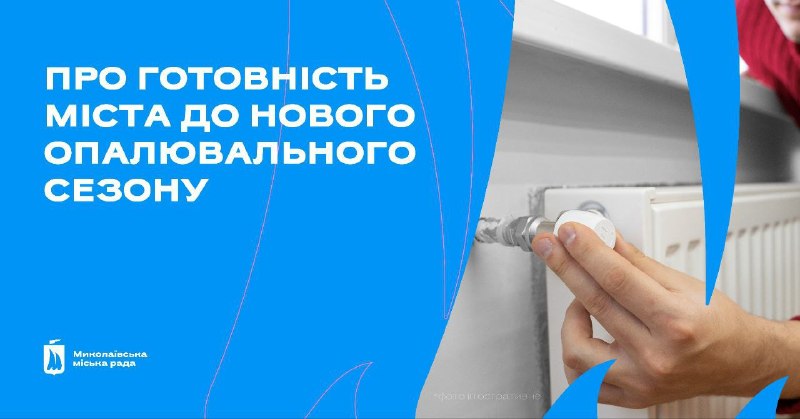
In Mykolaiv, preparations of heat-supply enterprises for the winter are being completed to ensure stable heating in residents’ homes. The completed works and the current readiness of OKP «Mykolaivoblteploenergo» and Mykolaiv CHP were reported on October 5 at the staff meeting.
«Mykolaivoblteploenergo» has already prepared all of its own infrastructure for operation. The executed works include:
- preparation of 95 boiler houses;
- preparation of 24 central heating substations;
- preparation of 130 individual heating units;
- routine repair of 351 boilers;
- overhaul of 19 additional boilers;
- installation of 17 new pumps.
A separate direction of the company’s preparations is strengthening energy independence. This year its equipment fleet was supplemented by 6 more generators. This became possible, in particular, with the support of international partners and donors.
Also, «Mykolaivoblteploenergo» renewed about 3 kilometers of heating networks. For these works, 97 sections in the city were excavated. On 33 of them the works are already completed and the areas fully restored.
At the Mykolaiv CHP, the boiler equipment is fully prepared for the heating season. The company’s own crews replaced about 3 kilometers of networks.
At the same time, repairs on certain sections of the CHP’s heat pipelines are still ongoing. They are expected to be fully completed by October 15. The overall readiness of the Mykolaiv CHP is currently almost 88%.
Source: Mykolaiv City Council.
Previously we wrote:
- Korabeliv Street in Mykolaiv will be completely closed due to heating network repairs
- In Mykolaiv, a boiler house is being modernized to ensure stable heat supply
- So that apartments don’t freeze again in winter: reserve power supply to be reinstated in the Korabelnyi district
- Adventists help insulate the heat pipeline in the Korabelnyi district
- Residents and condominium associations (OSBB) to blame: why some buildings were left without heat in winter